Four In Five Haryana Farmers Who Bale Paddy Straw Or Use It As Fodder Say They Will Keep Doing So, But Only 7% Of Balers Get Paid: CEEW Study
28 October 2026, New Delhi: Four in five Haryana farmers who take paddy straw off their fields, by baling it or using it as fodder, told researchers early this year that they plan to keep doing so in 2026 rather than burning it, according to a new independent survey of 1,588 farmers by the Council on Energy, Environment and Water (CEEW). The CEEW study finds the payment ecosystem behind it remains nascent and fragmented: only 7 per cent of farmers who bale are paid by buyers. The survey was released today at a roundtable in New Delhi alongside a second CEEW study, a satellite test in Punjab that found two to five times more freshly burnt fields in five villages than freely available imagery alone.
North India is entering its peak burning fortnight. The Commission for Air Quality Management (CAQM) invoked Stage I of the Graded Response Action Plan across Delhi-NCR on 21 October, the first time this season, and the Delhi government’s Winter Action Plan comes into force on 1 November. Punjab recorded 717 satellite-detected fire events between 15th September and 27th October, down from 890 in the same period last year. On peak days in late October and early November, stubble burning can contribute as much as 40 per cent of Delhi’s daily PM2.5.
The first CEEW study, Mitigating Stubble Burning in Haryana, surveyed farmers between January and March 2026 across 144 villages in 12 districts, which accounted for about 92 per cent of the state’s kharif fires between 2018 and 2024. Of those who bale or use straw as fodder, 80 per cent said they would continue in 2026. Farmers now use three routes: 39 per cent use residue as fodder, 38 per cent bale it and 32 per cent work it into the soil with machines such as Super Seeders. Many use more than one method. Only 6 per cent admit to burning, though the study says this is likely underreported, and 26 per cent report burning in their village.
Awareness of the Parali Protsahan Yojana, Haryana’s INR 1,200-per-acre incentive for not burning, is about 80 per cent. Researchers found that timely payments have built trust. But only 42 per cent of farmers applied, and the programme paid 57 per cent of applicants.
Kurinji Kemanth, Programme Lead and co-author on the first study, CEEW, said, “Farmers in Haryana tell us they will stick with alternatives to burning this year, and that is encouraging. But an intention is not yet a practice, and what turns one into the other is income. When straw earns farmers money, zero-burn farming begins to sustain itself.”
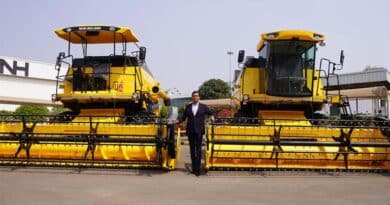
Making zero-burn pay. Of farmers who bale, 87 per cent use aggregators. Yet, only 7 per cent report being paid by buyers. About 62 per cent give their straw away and 31 per cent pay about INR 1,000 an acre to have fields cleared. Machines cost more than they should too: most Super Seeder users run the machine two or more times to achieve visually ‘clean’ and smooth fields, taking costs to INR 4,000–4,500 an acre. The CEEW study suggests the ideal approach is to use combine harvesters fitted with Super Straw Management Systems, followed by a single pass with Super Seeders. Industrial demand has yet to catch up. Haryana has raised its target for industrial straw use from 1.1 to 2.3 million tonnes, but only three of seven proposed compressed biogas plants are operational. CEEW recommends fast-tracking approved plants and building bale storage near aggregation points so demand reaches farmers.
Seeing the whole season. Of the surveyed Haryana farmers who reported burning in their village, 77 per cent said it happens between 4 pm and 10 pm. In Punjab, satellite studies show peak burning has shifted from about 1.30 pm in 2020 to about 5 pm in 2024, later than the satellites’ passes and behind official fire counts. The CAQM has flagged late-evening burning as a way to evade satellite detection and directed Punjab, Haryana, and Uttar Pradesh to intensify late-evening patrolling.
The second CEEW study, Beyond Single Sources: Fusing Open and Commercial Satellite Data for Monitoring Crop Residue Burning in India, tests whether combining commercial imagery with openly available imagery like Sentinel-2 can improve the detection of burnt fields. Across 1,600 sq km in Sangrur and Patiala, Punjab, from 23 October to 7 November 2024, it added daily PlanetScope imagery when Sentinel-2 data was unavailable. This detected two to five times more burnt fields in five villages than Sentinel-2 alone. The method has about 75 per cent overall accuracy and correctly identifies about 54 per cent of burnt pixels, so it supplements fire counts rather than replacing them. Commercial imagery is costly, at up to INR 250 per sq km, so the study proposes using it on select dates to estimate the whole season. The method has not yet been tested in Haryana.
Mohammad Rafiuddin, Programme Lead and co-author on the satellite study, CEEW, added, “India has invested thousands of crores in helping farmers stop burning, and states need to know where that support is working. Fire counts tell us where a satellite happened to see a flame. Measuring the burnt land as well could show which villages need machines and buyers, and give a fuller picture of the progress states are making on the ground.
CEEW’s satellite study recommends that the CAQM add burnt-area estimates to fire counts, building on the burnt-area protocol it has already tested with the Indian Space Research Organisation (ISRO). The study also recommends drawing on India’s own earth-observation capacity, such as the 12-satellite constellation being built by the Bengaluru-based Pixxel-led consortium with Dhruva Space, PierSight and SatSure, with the first four satellites planned for early 2027.
Together, the two studies point to a gap in money and a gap in measurement. Farmers are taking straw off the field, but markets still do not pay most of them for it adequately. Monitoring still does not show governments where help is needed at the scale and timeliness needed. CEEW’s study recommends a CAQM portal that tracks compliance with its directions and links satellite fire and burnt-area data to action on the ground.
Also Read: USDA to Invest $57 Million to Boost American Meat Processing Capacity and Support U.S. Ranchers
Global Agriculture is an independent international media platform covering agri-business, policy, technology, and sustainability. For editorial collaborations, thought leadership, and strategic communications, write to pr@global-agriculture.com