Leaps by Bayer Leads Series A Funding for Robigo’s Engineered Biopesticide Platform
19 September 2026, Massachusetts: Robigo, a Cambridge, Massachusetts-based biologicals startup has announcedthat it has closed a Series A financing round led by Leaps by Bayer, Bayer’s strategic investment arm, to advance a synthetic biology platform that engineers microbes into crop protection products. The round also drew participation from Illumina Ventures, SVG Thrive, Congruent Ventures and Endeavor8, according to the company’s own announcement.
The financing is notable less for its size, which was not disclosed, than for what it signals about where large agrochemical companies are placing bets on biologicals. Bayer, one of the world’s largest crop protection companies by revenue, is backing a small platform company rather than developing the technology entirely in-house, a pattern increasingly visible across the industry as chemical giants look to biologicals to supplement an aging pipeline of synthetic active ingredients.
Robigo’s core technology, called the ARGO platform, uses synthetic biology to reprogram the genetics of microbes so they function as living, engineered biopesticides. Rather than formulating a fixed chemical compound, the company designs microbial “engines” computationally and tunes them to produce specific active compounds once applied to a field. According to the company, this approach cuts the typical development timeline for a new biological product from three to five years down to under 20 months, because a working microbial chassis can be reprogrammed for a new target rather than discovered and optimized from scratch each time.
In practice, the products are applied once and then continue producing their active compound in the field for an extended period, which the company says can silence genes in target pathogens and provide season-long protection without repeat applications. That contrasts with many existing biological products, which typically require the microbe or its extract to already be at effective concentration at the time of application and can lose efficacy quickly in field conditions.
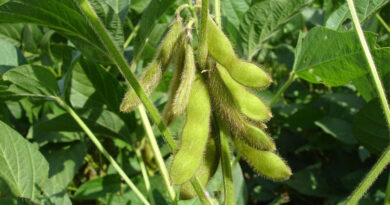
Robigo’s furthest-along candidate is a treatment for sudden death syndrome (SDS) in soybeans, a soil-borne fungal disease that causes significant yield loss across the U.S. Midwest and currently has limited effective chemical controls. The company says early data show the treatment matching the performance of existing commercial chemistry at roughly half the cost, with a targeted U.S. launch in 2028. A second program targets Fusarium wilt in specialty crops including lettuce and berries, where the company has reported a threefold yield increase over untreated controls in trials, with a targeted 2029 launch.
Robigo frames its addressable opportunity around soil-borne pathogens broadly, an area the company estimates represents a $10 billion global market, spanning row crops and specialty crops where growers currently have few effective options beyond crop rotation and resistant varieties.
Dr. Andee Wallace, Robigo’s founder and chief executive, was quoted in the announcement saying growers should not have to choose between a product that works and one they can afford, framing cost parity with existing chemistry as central to the company’s commercial strategy. Dr. Juergen Eckhardt, executive vice president and head of Leaps by Bayer, was quoted emphasizing the platform’s potential to scale across a range of crop pathogens beyond the initial two programs, rather than functioning as a single-product venture.
Also Read: CropLife India Flags Narrowing Crop Protection Options for Farmers
Global Agriculture is an independent international media platform covering agri-business, policy, technology, and sustainability. For editorial collaborations, thought leadership, and strategic communications, write to pr@global-agriculture.com