Biome Makers Introduces Predictive Carbon Capacity Model to Help Agriculture Target Soil Carbon Opportunity
17 September 2026, USA: New AI-powered metrics in BeCrop® Farm help users identify areas with higher carbon growth potential, strengthen regenerative agriculture monitoring, and connect field decisions with sustainability goals.
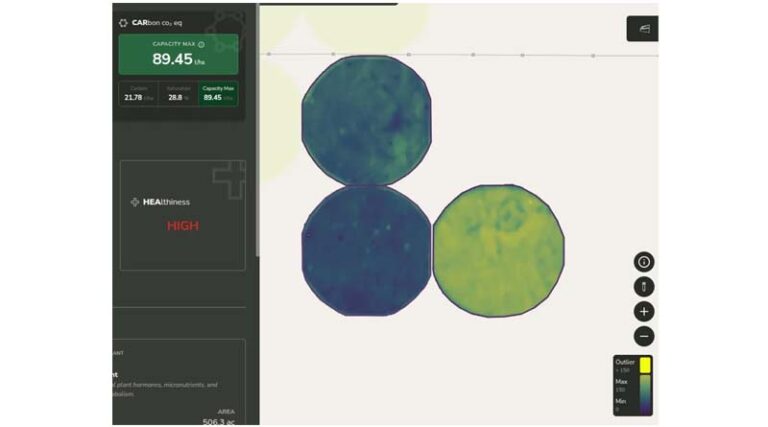
Biome Makers, a global leader in soil intelligence, today announced the release of two new carbon metrics within its BeCrop® platform: Maximum Carbon Capacity (CO₂eq/ha) and Carbon Saturation Percentage (%).
Together, these layers help agronomists, farmers, land managers, and sustainability professionals understand current soil carbon in the context of what each soil is predicted to hold. Users can identify areas with greater modeled carbon growth potential, set more relevant priorities, and make better-informed decisions about where to focus regenerative agriculture programs and investments.
The Maximum Carbon Capacity metric uses a proprietary AI model that combines BeCrop® biological data, physicochemical parameters, and spectral environmental indices to predict the theoretical upper limit of carbon, expressed as CO₂eq, that a given soil can hold. This metric is available immediately and at no additional cost to all BeCrop® Farm users on BeCrop version 4.0.
The Carbon Saturation Percentage metric shows how current carbon levels compare with the predicted maximum, providing a clear visualization of remaining modeled capacity. Saturation is available for new farm projects configured with the Physicochemical pH/Ch Carbon dimension.
From Carbon Measurement to Better Decisions
Most carbon measurements show where a soil stands today. The new metrics add the context needed to understand where greater potential may exist.
Farmers and agronomists can use this information to identify fields and zones that may warrant additional assessment or changes in management. Organizations running regenerative agriculture programs can prioritize farms with higher modeled carbon growth potential, establish soil-specific reference points for monitoring, and direct grower support and investment more effectively.
The layers also give sustainability, agronomy, sourcing, and farm operations teams a shared field-level view, helping them align program goals with conditions on the ground.
Analysis of more than 11,000 soil samples from Biome Makers’ proprietary database reveals the scale of the opportunity:
- 99% of the soils analyzed measured below 50% of their predicted maximum carbon capacity
- Average carbon saturation was 3.1% of modeled capacity
- The average difference between current carbon and modeled maximum capacity was 153 tonnes of CO₂eq per hectare
These findings do not mean that every soil will reach its modeled maximum. They demonstrate why current carbon measurements alone may provide an incomplete view of a soil’s potential.
Users can access these metrics by navigating to the Sustainability section within their Farm Map results. To learn more or request a quote, visit portal.becrop.com and sign up for free.
“Until now, carbon measurement in agriculture has been retrospective: it tells you what’s there, but not what’s possible,” said Alberto Acedo, PhD, Co-founder and Chief Scientific Officer of Biome Makers. “With Maximum Carbon Capacity, we’re giving users a biological ceiling they can plan around. That shift, from measuring the past to modeling the potential, is what turns carbon data into a decision-making tool.”
Key Capabilities
Maximum Carbon Capacity (t/ha): Predicts the theoretical upper limit of CO₂eq storage using AI trained on biological, physicochemical, and environmental data. It is computed for farms on BeCrop 4.0, including those without historical pH/Ch data.
Carbon Saturation (%): Visualizes current CO₂eq as a percentage of predicted Maximum Capacity at the farm, and field level. It is available for new projects configured with the pH/Ch Carbon dimension.
Availability
Maximum Carbon Capacity is live today for BeCrop® Farm users on BeCrop version 4.0. Carbon Saturation Percentage is available for new farm projects configured with the pH/Ch Carbon dimension.
Global Agriculture is an independent international media platform covering agri-business, policy, technology, and sustainability. For editorial collaborations, thought leadership, and strategic communications, write to pr@global-agriculture.com