Exploring Solutions for Rapid Soil Carbon Measurement Tool to Scale Agroecology Practices through Carbon Markets: From the AgriTech4Tunisia Bootcamp to Field Testing
24 April 2026, Tunisia: In the heart of Tunisia’s push for agricultural resilience, the Multifunctional Landscapes (MFL) science program of the One CGIAR is exploring digital innovations for soil health. ICARDA and MFL scientists recently participated to an innovation bootcamp in Tunis followed with a hands-on field exploration of a Sci Reflectometer for rapid and reliable soil carbon monitoring, with national partners in Tunisia.
Pitching carbon measurement solutions at the AgriTech4Tunisia Innovation Challenge
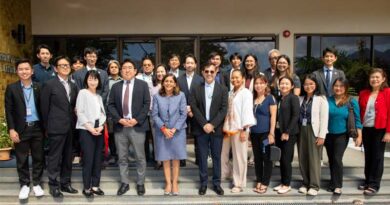
The activity began with the AgriTech4Tunisia Innovation Challenge, a program and designed to support breakthrough technologies that strengthen food security and build long-term resilience for Tunisia’s agriculture. Led by the Alliance of Bioversity International and CIAT through the CGIAR Accelerate for Impact Platform (A4IP) and partly supported by the MFL science program in Tunisia, the challenge aims to empower scientists to scale innovations into market-ready solutions.
The MFL program’s proposed innovations were retained among the 25 winners from a competitive pool to attend a fully funded, 4-day immersive bootcamp at the Startup Village in Tunisia. During this intensive week, the team pitched a game-changing tool: the SOC spectrometer (Sci Reflectometer).
This hand-held reflectometer is a low-cost, rapid alternative to traditional laboratory soil analysis of SOC as conventional lab tests are often slow and costly. This hand-held device uses 10 LEDs spanning the ultraviolet to near-infrared spectrum (365–940 nm) to capture a soil’s spectral signature. This technology has already been validated in African contexts and rigorously calibrated in drylands in Morocco where a scientific workflow transformed raw spectral data from over 400 soil samples into actionable field-level recommendations under Sustainable Farming Science Program (Devkota et al., 2025). At the bootcamp, the MFL team demonstrated how this “cheap and fast” tool could empower Tunisian smallholders, extension services, and policy makers to monitor soil organic carbon (SOC) in real-time.
Field Exploration at Bourbia – early Co-Designing for the Carbon Market
Building on the momentum of the bootcamp, the MFL science program moved from the “pitch” to the “paddock.” Dr. Asmae Baggar, author on the Moroccan calibration protocols, joined researchers from the National Agricultural Research Institute of Tunisia (INRAT) for a field demonstration at the Bourbia station in Tunis.
The goal was to test the tool in real Tunisian conditions, discuss it with NARS researchers from Tunisia, and explore first steps and asseses the need for local calibration. This field day served as a planning purpose for two strategic activities—or PODs (Packages of Deliverables)—under the MFL Tunisia science program:
- Rapid Soil Organic Carbon Assessment Tool and Context-Specific Land Management Guidance: This POD aims to develop a farmer-friendly version of the spectrometer, co-producing science-based guidelines that provide immediate advice on fertilizers and compost application or conservation practices based on real-time SOC levels.
- Responsible Investment and Carbon Stewardship Framework for Community-Managed Common Lands: This activity focuses on co-designing guidelines for Corporate Social Responsibility (CSR) and carbon market investments, specifically for the restoration of common lands. It also requests reliable carbon measurement tools to take it forward.
These efforts are perfectly aligned with other national initiatives, such as the GIZ “Soil Matters” project, which is currently scoping how to support Tunisian smallholders in transitioning toward and accessing global carbon markets.
By integrating the reflectometer’s multi-sensor platform—which records not only spectral data but also ambient temperature and humidity for higher accuracy—the MFL program is laying the groundwork for a transparent, geo-referenced monitoring system. This collaborative effort between One CGIAR, NARES (INRAT, DGACTA, etc.), and aligned with GIZ programs in Tunisia ensures that the “Advisory Engine” of the future is built on Tunisian soil, for smallholder farmers.
Devkota, M., A. Baggar, K. Devkota, S. Attaher, and TerAvest, D. 2025. Stepwise Calibration & Field Application of Our Sci Reflectometer for Soil Organic Carbon Monitoring and Advisory Services in Moroccan Drylands. https://hdl.handle.net/20.500.11766/70506
Also Read: Amazon Signs Deal with Bayer-Backed The Good Rice Alliance, Commits to 685,000+ Carbon Credits
Global Agriculture is an independent international media platform covering agri-business, policy, technology, and sustainability. For editorial collaborations, thought leadership, and strategic communications, write to pr@global-agriculture.com