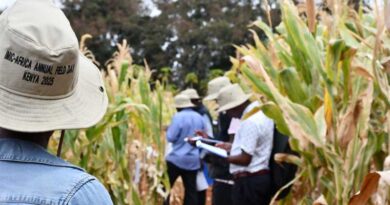
25 July 2026, UK: A shifting climate has made farming in Guatemala’s eastern Dry Corridor and western highlands a gamble. Erratic rainfall, prolonged dry spells, and unpredictable weather have eroded the harvests that families depend on. An enduring pain point has been the lack of timely, trustworthy, local climate information.
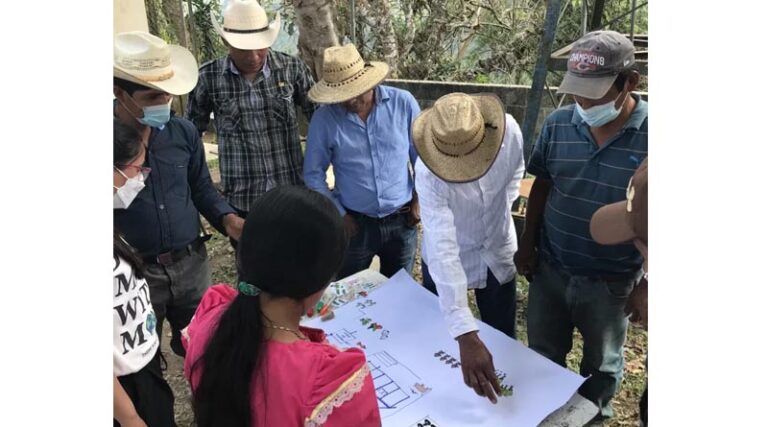
Guatemala’s Local Technical Agroclimatic Committees (known by its Spanish initials “MTA”), a CGIAR innovation, is helping to close that gap. Developed in 2015 and scaled across Guatemala since 2017, MTAs bring together meteorologists, government agencies, scientists, and farmers to turn seasonal forecasts into plain-language advice, delivered through printed bulletins, WhatsApp, Facebook, and radio. The guidance is specific, e.g.: when to plant maize or beans, which varieties to choose, and how to time fertilizer applications, conserve soil moisture, and protect livestock against disease.
In 2025, a CGIAR Scaling Fund investment sharpened and expanded the model. The team used farmer interviews and workshops to redesign recommendations around what communities actually needed and how they preferred to receive them. “These refined bulletins integrate seasonal forecasts, local observations, and farmer knowledge into location-specific recommendations,” says Carlos Navarro Racines of CGIAR’s Alliance of Bioversity International and CIAT. “They’re helping smallholders make informed decisions and reduce their climate risks.”
Expanding reach
Before the Scaling Fund work began in 2025, MTAs were already operating across multiple departments in Guatemala, providing seasonal climate information through a well-established institutional network. The Scaling Fund built on this foundation by introducing a redesigned, human-centered model for developing agroclimatic bulletins in two pilot departments—Santa Rosa in the country’s southeastern Dry Corridor (Corredor Seco) and Chimaltenango in the cooler, largely indigenous central highlands. In these two departments, the Committees had built on three years of partnership with organizations, including the Private Institute for Climate Change Research (ICC) and Guatemala’s Ministry of Agriculture, Livestock and Food (MAGA).Following the successful pilots, the Scaling Fund supported the rollout of this improved bulletin model to four additional departments: Zacapa and Chiquimula in the drought-prone eastern Dry Corridor, and Quiché and Huehuetenango in the wetter, more topographically varied western highlands. The expansion focused on applying the Human-Centered Design approach to better tailor climate recommendations to local farming contexts and communication preferences, rather than establishing new MTAs.
The Alliance’s Emmanuel Zapata, who leads much of the field engagement, described the Scaling Fund investment as the catalyst that made this expansion of the LTACs possible: “We wanted to bring this improved, farmer-centered approach to climate bulletins to four additional departments, but we didn’t have the resources. The Scaling Fund allowed us to expand the model quickly and reach many more farming communities.”
By 2025, nearly 60,000 Guatemalan farmers were receiving tailored climate advice, and new partners were seeking the team out. The next step is regional: mapping how to bring the model to the rest of Central America.
Moving to 2026
The 2025 Scaling Fund investment also helped the LTAC innovation team to develop an actionable 2026 agenda. This includes finalizing agroclimatic bulletins that are highly accurate, detailed, and context specific; exploring more efficient AI-assisted radio advisories and other communications; and conducting an annual monitoring and evaluation study with LTAC participants in all 22 of Guatemala’s departments. And this year the innovation team is also employing its approach in a climate information services package within CGIAR’s science programs as well as in bilateral programs funded by the World Food Programme, the International Union for Conservation of Nature (IUCN), and others.
Climate information for managing climate realities
In summary, CGIAR’s 2025 Scaling Fund support made climate information that was already reaching nearly 20,000 Guatemalans more usable (because redesigned around real farmer needs), more measurable (because credibly monitored), and more widespread (because it tripled the innovation’s departmental footprint), all while drawing in new institutional partners. In addition to providing more relevant and usable climate information for more farmers, this scaling work also built capacity within partner institutions to produce agroclimatic advisories and laid the foundation for scaling these services nationally and regionally.
As always, the region’s farming families will measure the value of this work the only way that counts—by the harvests they are able to wrest from an increasingly unpredictable climate.
Global Agriculture is an independent international media platform covering agri-business, policy, technology, and sustainability. For editorial collaborations, thought leadership, and strategic communications, write to pr@global-agriculture.com