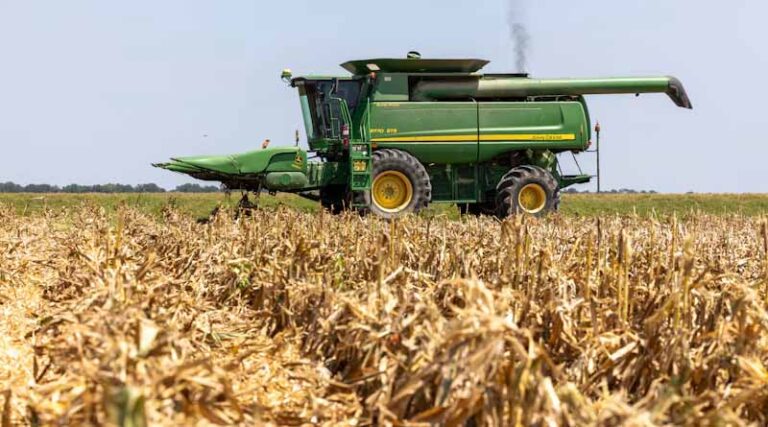
23 October 2026, Washington, D.C.: The United States Department of Agriculture will pay farmers up to $8 billion in one-time relief this harvest season to offset a sharp rise in diesel costs, President Trump and Agriculture Secretary Brooke Rollins announced on October 19. The program, called the Harvest Fuel Relief Program, is one of the largest emergency farm payments of the year and comes as diesel prices in the United States have hit record levels.
Trump announced the program at a campaign rally in Park City, Kansas, saying the USDA “will be launching a new harvest fuel relief program, providing our farmers with $8 billion in support to offset diesel costs during this harvest season.” The USDA confirmed the announcement in a press release the same day, and Rollins followed with her own statement calling Trump “the most pro-farmer president of my lifetime.”
How the Payments Will Work
The $8 billion is authorized under the Commodity Credit Corporation Charter Act and will be administered through USDA’s Farm Service Agency. Farmers will not need to be enrolled in crop insurance to qualify. According to USDA’s own release and reporting from Farm Policy News, payment rates will be calculated using a formula that combines FSA-reported planted acres, Economic Research Service cost-of-production estimates, and USDA’s WASDE yield and price projections.
Commodity-specific payment rates for Title I crops such as corn, soybeans, wheat and cotton are expected to be released in November 2026. Producers of non-Title I commodities, including specialty crop growers and fishermen, have been asked to submit data on their increased fuel costs to a dedicated USDA email address so the agency can factor those costs into final payment rates. The program is modelled on an earlier USDA relief effort, the Farmer Bridge Assistance program, which used $12 billion in CCC funding.
Diesel Costs Tied to Middle East Supply Disruptions
The relief program responds to a genuine spike in input costs. Reporting from Fox Business and Farm Policy News links the surge primarily to disruptions in Middle East energy supply tied to the conflict involving Iran, which has constrained fuel exports moving through the Strait of Hormuz. Bloomberg reported that US retail diesel prices hit a record $6.50 a gallon in September. This built on an earlier, smaller step: on October 7, Trump signed an executive order expanding access to tax-exempt, red-dyed diesel for farmers and truckers and delaying a federal diesel tax deadline, a move that industry groups at the time called only modest relief given the scale of the cost increase.
Trump has argued that diesel prices will fall once the broader Middle East conflict ends, citing ample global oil and diesel supply. In the meantime, the administration is also encouraging farmers to use new risk-management tools under the Working Families Tax Cuts Act to hedge against future input-cost swings. Triumph Financial CEO Aaron Graft, commenting separately on the relief package, noted it would help but would not immediately resolve the squeeze that high diesel costs are putting on trucking and farm margins.
For agri-input readers outside the United States, this story matters beyond its American politics. The same Middle East supply disruptions pushing up US diesel prices are affecting shipping fuel, fertilizer logistics and crude-linked input costs worldwide, including in India and Latin America. A fuel subsidy of this scale could also influence how much US farmers plant and harvest in the coming months, with knock-on effects for global corn, soybean and wheat supplies that Indian edible oil and feed importers, and LATAM grain exporters, watch closely. Large, repeated US farm relief payments also tend to shape how other governments think about their own support programs when input costs spike, a dynamic Indian policymakers have faced with diesel and fertiliser subsidies of their own in recent seasons.
Critics within US agriculture have noted that the November payment-rate announcement will determine how meaningfully this program offsets real-world losses, since the October announcement set the total budget without yet specifying what individual farmers will receive per acre or per commodity. Until those rates are published, the practical impact on farm cash flow remains an estimate rather than a certainty.
Global Agriculture is an independent international media platform covering agri-business, policy, technology, and sustainability. For editorial collaborations, thought leadership, and strategic communications, write to pr@global-agriculture.com