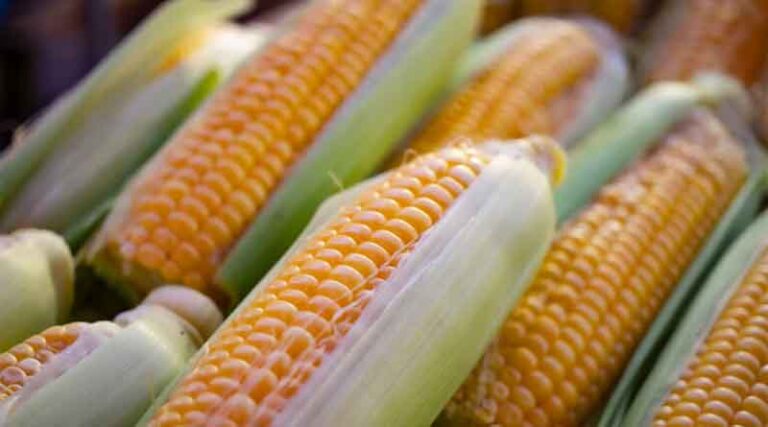
23 October 2026, Missouri: New research from the Donald Danforth Plant Science Center in St. Louis, working with the University of Minnesota, shows that corn plants hit by heat and drought at the same time suffer more lasting damage than plants facing either stress on its own. The finding, drawn from a controlled study of 47 corn varieties, adds a note of caution for breeders who typically test heat tolerance and drought tolerance separately before combining the two traits into a single hybrid.
The study was co-led by Dr. Malia Gehan, the Danforth Center’s director of research for innovation, and Dr. Cory Hirsch of the University of Minnesota, with co-lead authors Dr. Anna Casto, Dr. Katie Murphy and Alejandra Quinones. It was published this month in the journal The Plant Journal and announced by the Danforth Center on October 14, with funding from the USDA’s National Institute of Food and Agriculture, the National Science Foundation, the Wells Fargo IN2 program, the Taylor Geospatial Institute and the University of Minnesota’s Experimental Station.
Researchers grew 47 genetically diverse, publicly available corn varieties under four conditions for 13 days, starting shortly after the seedlings emerged: normal growing conditions, drought alone, heat alone, and heat and drought together. The timing was designed to mimic the kind of early-summer stress corn faces across much of the US Midwest. Rather than measuring plants by hand at the end of the trial, the team photographed every plant daily at the Danforth Center’s Bellwether Phenotyping Facility, a greenhouse set up for this kind of large-scale imaging work, and ran the images through PlantCV, a free, publicly available image-analysis program that tracks changes in plant size, height, water use and leaf color over time.
The daily imaging turned up a pattern that a single end-of-trial measurement would have missed: how a corn variety responded to drought alone did not reliably predict how it would respond once heat was added to the mix. Heat and drought each reduced plant size when applied on their own, but drought also slowed overall development and left plants with fewer, less green leaves. For most of the 47 varieties, the combined stress shrank plants more than either stress alone, a sign that heat and drought do not simply add their effects together but can compound each other in corn’s early growth stages. Just as notably, how a plant looked a few days into the stress period did not reliably predict how severe the damage would be by the end of it, meaning early visual screening alone could lead breeders to misjudge which lines are genuinely resilient.
In a follow-up experiment, researchers returned two of the tested varieties to normal watering and temperatures after about two weeks of stress, then kept tracking them until 61 days after planting, roughly two months into the growing cycle. Plants that had experienced the combined heat-and-drought stress early on remained significantly smaller than unstressed plants even weeks after the stress had ended, pointing to damage that outlasts the weather event that caused it. Early drought delayed flowering in the two lines tested, while early heat sped it up, and the two stresses combined affected flowering timing differently depending on the variety, underscoring that there is no single, predictable “combined stress” response across genetics.
“A corn plant that performs well under drought may respond very differently when heat is added,” Gehan said, noting that the daily imaging approach let the team see differences a single measurement would miss. Danforth Center president Dr. Giles Oldroyd said the work reflects a broader need in breeding programs: “Farmers need crops that can withstand difficult conditions from the start of the growing season.”
The study does not introduce a new corn trait, gene or hybrid. Its contribution is methodological: a high-throughput way to screen many genetic lines under combined, rather than single, stresses, and evidence that combined-stress screening turns up resilience patterns that single-stress trials do not. The authors say this kind of screening could help breeders and seed companies select parent lines more realistically for the compound heat-and-drought conditions farmers increasingly face, rather than relying on traits validated against heat and drought in isolation.
Global Agriculture is an independent international media platform covering agri-business, policy, technology, and sustainability. For editorial collaborations, thought leadership, and strategic communications, write to pr@global-agriculture.com