19 October 2026, New Delhi: The Indian government has constituted a high-level committee chaired by former NITI Aayog member Professor Ramesh Chand to examine sugarcane farmers’ demands for higher prices, a revision of the minimum selling price of sugar and concerns over weighing practices at sugar mills.
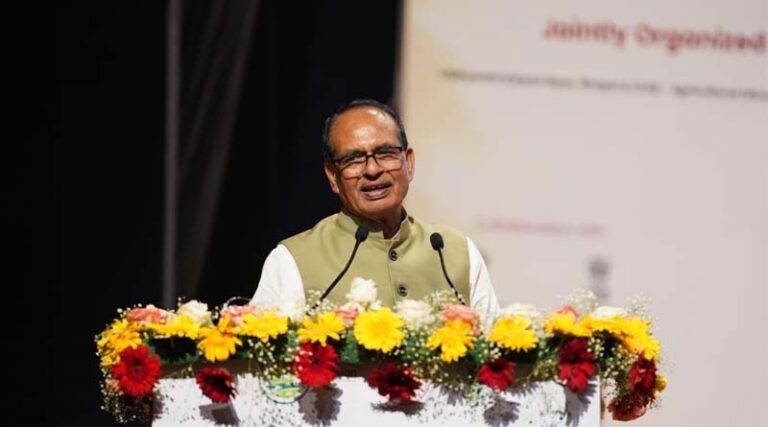
The decision follows a meeting held in New Delhi on October 12 between Union Agriculture Minister Shivraj Singh Chouhan, Union Minister of Consumer Affairs, Food and Public Distribution Pralhad Joshi, and farmer representatives from Karnataka and Maharashtra. The government had indicated that a committee would be formed within a week, with Chand’s appointment announced two days later.
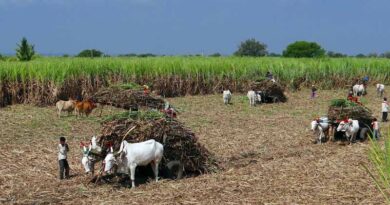
The move comes amid growing protests by sugarcane farmers in Karnataka and Maharashtra ahead of the crushing season. In Karnataka’s Belagavi district, farmers blocked National Highway 48 at the Kognoli toll plaza on October 13 and 14, disrupting traffic along the Pune–Kolhapur route near the Karnataka–Maharashtra border.
Following the October 12 meeting, Chunnappa Pujeri, a leader of the Karnataka State Raitha Sangha, said the discussions had failed to deliver a concrete decision on sugarcane prices. Joshi described the meeting as constructive and appealed to farmers to refrain from blocking roads.
Farmers have been demanding a sugarcane price of ₹5,500 per tonne, a minimum selling price of sugar of ₹60 per kg, implementation of the Swaminathan Commission’s recommendations and government procurement of ethanol produced in Karnataka.
Committee to Review Sugarcane FRP and Sugar MSP
The committee will examine five key areas concerning sugarcane pricing, sugar production economics and transparency in mill operations.
First, it will assess demands for an increase in the Fair and Remunerative Price (FRP) of sugarcane, taking cultivation costs into account. The FRP is the minimum price that sugar mills are required to pay sugarcane growers under the central government’s pricing framework.
Second, the committee will review demands for a revision of the minimum selling price (MSP) of sugar at the mill gate, considering production costs and the financial position of sugar mills.
Third, it will examine existing mechanisms for measuring, reporting and verifying sugar recovery rates, an important factor in determining the quantity of sugar obtained from cane and the economics of sugar production.
Fourth, the panel will investigate sugarcane weighing practices at mills, including the calibration and inspection of weighing equipment.
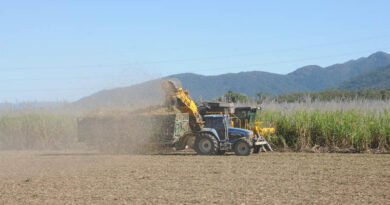
Fifth, it will assess deductions applied to the weight of mechanically harvested sugarcane and their implications for payments received by farmers.
The committee will include the Agriculture Commissioner, the Joint Secretary (Sugar) in the Department of Food and Public Distribution, and the Joint Secretary responsible for Legal Metrology in the Department of Consumer Affairs.
Chand previously served as director of the ICAR–National Institute of Agricultural Economics and Policy Research and as a member of the 15th Finance Commission.
Farmers Seek Higher Returns and Greater Transparency
The demands reflect longstanding concerns among sugarcane growers over production costs, remunerative prices and the transparency of payments made by sugar mills.
In Karnataka, farmers have pressed for a higher state-level price for sugarcane, while concerns over weighing practices and sugar recovery rates have featured prominently in Maharashtra. The distinction between the central government’s FRP and state-level pricing mechanisms is particularly relevant to the dispute.
The central government sets the FRP annually, while some states announce a higher State Advised Price (SAP). Farmers in Karnataka have sought better price realisation through state-level pricing, alongside other measures to improve returns from sugarcane cultivation.
Weighing accuracy and sugar recovery rates are also significant because they affect the assessment of cane delivered to mills and the financial calculations underpinning the sugar production chain.
Recommendations Awaited Ahead of the Crushing Season
The committee will consult farmer representatives, sugar mill associations, state governments and experts before submitting its recommendations. The government has stated that the panel should submit its findings as early as possible, after which the competent authority will consider them.
No immediate revision of sugarcane prices or the minimum selling price of sugar has been announced.
Farmer organisations are expected to monitor the committee’s proceedings, with some warning that protests could intensify if the process does not produce timely results.
The outcome could have implications beyond Karnataka and Maharashtra. Uttar Pradesh, Karnataka and Maharashtra are among India’s leading sugarcane-producing states, and changes to pricing mechanisms or the oversight of weighing and recovery practices could affect farmers and sugar mills across the country.
With the crushing season approaching, the committee’s recommendations will be closely watched by growers and the sugar industry. However, any changes to existing prices or regulations will depend on the government’s consideration of the panel’s findings.
Global Agriculture is an independent international media platform covering agri-business, policy, technology, and sustainability. For editorial collaborations, thought leadership, and strategic communications, write to pr@global-agriculture.com