Paraquat Under Fresh Review in India as Registration Committee Seeks Final Report
18 June 2026, New Delhi: India’s pesticide regulator has intensified its review of the herbicide Paraquat Dichloride, a widely used but controversial weed control product, amid growing concerns over its health and environmental impacts.
India’s Central Insecticides Board and Registration Committee (CIB&RC) reviewed the ongoing assessment of Paraquat Dichloride and directed the concerned expert committee to submit its final report without delay.
The Registration Committee noted the progress made in evaluating the herbicide and called for the “immediate submission of the Final Report,” signaling that regulatory scrutiny of the product is entering a crucial phase.
The meeting was chaired by Dr. P.K. Singh, Agriculture Commissioner of the Ministry of Agriculture and attended by representatives from the Directorate of Plant Protection, Quarantine & Storage (DPPQS), the Indian Council of Agricultural Research (ICAR), and other technical experts associated with pesticide regulation and toxicology.
Growing Global Concerns
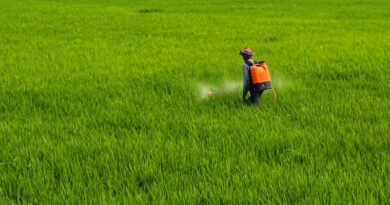
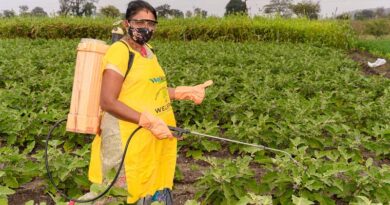
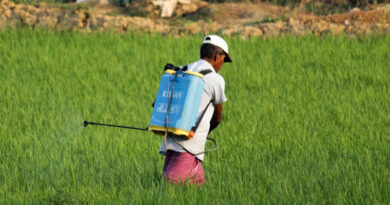
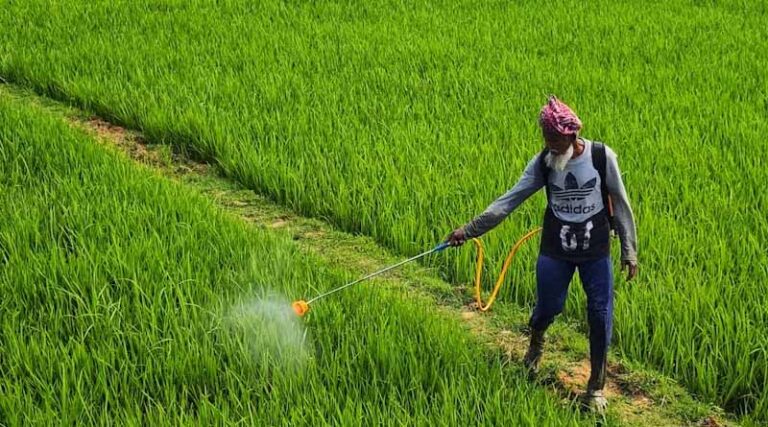
Paraquat is among the most widely used non-selective herbicides globally for weed management in plantation crops, orchards, and conservation agriculture systems. However, the molecule has been the subject of increasing international scrutiny due to its acute toxicity and concerns regarding operator safety.
Several countries, including members of the European Union, have either banned or severely restricted its use. Public health advocates have long argued that accidental or intentional ingestion of paraquat can be fatal even in small quantities, while researchers continue to debate potential links between long-term exposure and neurological disorders.
Regulatory Spotlight in India
India currently permits the use of Paraquat Dichloride under approved formulations and label recommendations. However, the decision of the Registration Committee to seek an expedited final report indicates that the government is actively examining the herbicide’s risk profile in light of emerging scientific evidence and international regulatory developments.
Industry observers note that any future regulatory decision could have implications for weed management practices across several crops where paraquat is used as a burn-down herbicide. Farmers, agrochemical companies, and agricultural stakeholders are therefore closely watching the outcome of the review process.
Concerns Extend Beyond Weed Control
In parts of central India, the Paraquat herbicide has reportedly been used by some farmers to artificially dry mung bean (moong) crops before harvest, allowing quicker and more uniform harvesting.
Agricultural experts point out that paraquat is registered in India as a herbicide and not as a crop desiccant for mung bean. The use of the product for pre-harvest drying of pulses is therefore not an approved recommendation under its registered label claims.
What Happens Next?
Once the final report is submitted to the Registration Committee, recommendations regarding the continued registration, possible restrictions, or other regulatory measures concerning Paraquat Dichloride in India will be announced.
While no decision has yet been announced regarding a ban or restriction, the latest development confirms that paraquat remains under active regulatory evaluation by Indian authorities due to concerns related to human health and environmental safety.
Also Read: FMC and Corteva Partner to Expand Rimisoxafen Herbicide Access Across the Americas
Global Agriculture is an independent international media platform covering agri-business, policy, technology, and sustainability. For editorial collaborations, thought leadership, and strategic communications, write to pr@global-agriculture.com