Transforming Nepal’s Maize Sector Through Innovation, Partnerships, and Investment
16 June 2026, Nepal: Nepal’s maize sector stands at a pivotal moment. As the country’s second most important cereal crop after rice, maize plays a critical role in food security, livestock feed production, and rural livelihoods. Yet despite cultivating more than 916,000 hectares and producing over 3.19 million tons annually, Nepal continues to import between 400,000 and 500,000 tons of maize every year to meet growing demand.
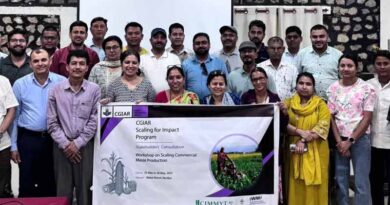
Recognizing both the challenges and opportunities, CIMMYT, in collaboration with the Ministry of Agriculture, Forests and Environment (MoAFE), the Nepal Agricultural Research Council (NARC), the Government of the United States of America, private-sector partners, local governments, and farmer cooperatives, convened a two-day Partners Forum and Field Visit in Banke, Nepal, on 5–6 June 2026. The event brought together policymakers, researchers, development partners, private-sector representatives, and farmers to explore how innovation, collaboration, and investment can accelerate the transformation of Nepal’s maize sector.
A Model for Commercializing Maize Production
At the center of the discussions was the Maize Commercialization Model (MCM), launched by CIMMYT in 2021 in Nepal’s western Terai. The model promotes market-oriented maize production through improved seed systems, climate-smart agronomic practices, mechanization, soil fertility management, market linkages, and public-private partnerships.
What began with 872 farmers cultivating 278 hectares in Banke and Bardiya districts has expanded rapidly. By 2026, nearly 30,000 farmers were participating across 15,000 hectares in nine districts. The model is helping farmers increase productivity, improve profitability, and bring previously fallow land back into production. Its success has been recognized nationally, with the Government of Nepal integrating the approach into its regular agricultural programs in 2025.
Research and Demonstration Hubs Driving Innovation
A major highlight of the event was the inauguration of the CIMMYT-NARC Research and Demonstration Hub in Khajura, Western Nepal, by Dr. Rajendra Prasad Mishra, Secretary of the Ministry of Agriculture, Forests and Environment (MoAFE).
The hub represents an important milestone in strengthening agro-ecology-specific research and innovation. By bringing together researchers, extension services, farmers, and private-sector stakeholders, the facility will help identify and test solutions tailored to local production environments and farming challenges.
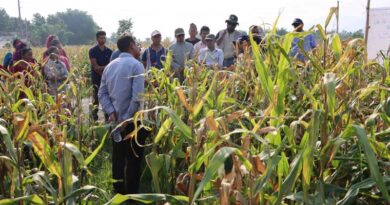
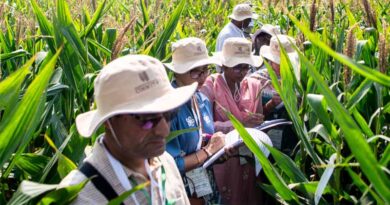
Participants toured demonstration plots showcasing hybrid maize varieties, improved agronomic practices, soil fertility management approaches, and seed production systems designed to enhance productivity and resilience.
Women Farmers Leading Change
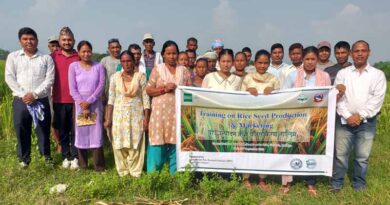
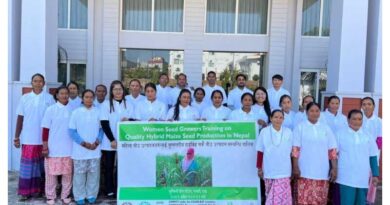
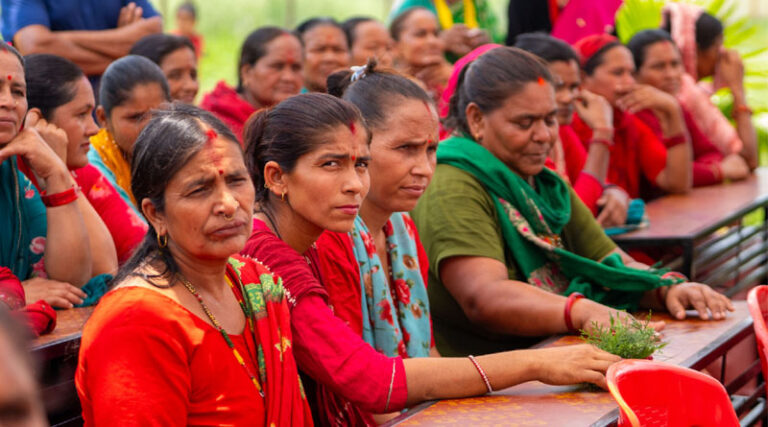
One of the most inspiring moments of the forum took place in Balarpur, Banke, where participants visited the Mahila Jagaran Multi-Purpose Cooperative (MJMC), a women-led organization established in 2006 to improve the socio-economic status of women farmers.
Today, the cooperative has 815 members, all engaged in agriculture. Through savings and credit services, input supply, fertilizer distribution, maize grain aggregation and market support, the cooperative has become a catalyst for agricultural transformation in the region.
Since joining CIMMYT’s Maize Commercialization Model in 2021, cooperative members have embraced improved maize production practices, participated in training programs, and strengthened connections with markets and service providers. As a result, spring maize cultivation among members has expanded from just 10 hectares in 2022 to 100 hectares in 2026. During the event, the cooperative signed a purchase agreement for 200 tons for maize with the Nepal Wellhope Company, highlighting their integration into industrial maize value chains.
During the visit, women farmers shared their experiences directly with policymakers, researchers, and private-sector representatives. They spoke openly about the challenges they continue to face, as well as the opportunities created through access to training, technology, and markets.
The visit also featured the handover of agricultural equipment supported by the Centre for Crop Development and Agro-Biodiversity Conservation (CCDABC), under the MoAFE, helping strengthen mechanization services and reduce labor constraints faced by women farmers.
Digital Innovation Supporting Smarter Farming
The event highlighted how digital technologies can create meaningful impact when they address real-world farming challenges.
Participants explored how Nepal’s Digital Soil Map is being used to generate affordable soil health reports and fertilizer recommendations, enabling farmers to make more informed decisions about nutrient management. These tools provide practical guidance that can improve soil fertility, optimize input use, and increase productivity.
Another highlight was the demonstration of drone-based liquid fertilizer application. As labor shortages continue to affect agricultural production, drones offer a promising solution by reducing application costs, improving efficiency, and creating new business opportunities for rural service providers. Such innovations have the potential to increase profitability while accelerating technology adoption across farming communities.
Building Partnerships for Scale
Throughout the forum, discussions emphasized the importance of collaboration among government agencies, research institutions, private companies, farmer cooperatives, and development partners.
Stakeholders explored opportunities to strengthen linkages between agri-food system research, extension services, mechanization providers, market actors, and industry. The signing of a purchase agreement between farmer groups and feed industry partners further demonstrated the growing role of market-driven approaches in supporting sustainable maize commercialization.
Representatives from government agencies, municipalities, development organizations, and the private sector shared perspectives on scaling successful models, attracting investment, and creating enabling environments for innovation.
Looking Ahead
The vision for Nepal’s maize sector is ambitious but achievable. By expanding sustainable maize commercialization to 40,000 hectares in the Western Terai by 2030, Nepal can significantly reduce maize imports, strengthen domestic supply chains, increase farmer incomes, and create new economic opportunities across rural communities.
The Partners Forum and Field Visit demonstrated that the building blocks for this transformation already exist: innovative technologies, strong institutions, committed partners, and farmers eager to adopt new opportunities.
The challenge now is to continue investing in the partnerships, research, digital tools, mechanization services, and market systems that will enable Nepal’s maize sector to reach its full potential.
Together, these efforts are helping shape a more productive, resilient, and commercially vibrant future for Nepalese agriculture.
Also Read: Corteva Plans Exit from Spain Manufacturing Site, Raises Restructuring Cost
Global Agriculture is an independent international media platform covering agri-business, policy, technology, and sustainability. For editorial collaborations, thought leadership, and strategic communications, write to pr@global-agriculture.com