31 July 2026, EU: After four years of collaboration, the Horizon Europe project OrganicTargets4EU has concluded, providing policymakers, researchers and practitioners with a comprehensive set of recommendations and practical resources to support the further development of organic farming and aquaculture in Europe. Researchers from the Research Institute of Organic Agriculture FiBL played a key role throughout the project, contributing scientific analyses and developing knowledge resources that provide a sound basis for future decision-making in policy and practice.
OrganicTargets4EU was launched to support the European Union’s ambition of increasing the share of agricultural land under organic management to 25% by 2030, while also fostering the development of organic aquaculture. Coordinated by IFOAM Organics Europe, the project brought together 17 partners from across Europe to analyse the opportunities, challenges and socioeconomic implications of achieving these objectives.
Evidence for Europe’s organic transition
Over four years, OrganicTargets4EU combined scientific research, policy analysis and dialogue with farmers, advisors, researchers, businesses and policymakers to explore realistic pathways towards expanding organic farming and aquaculture. The project assessed the drivers and barriers influencing the development of the organic sector, evaluated the socioeconomic implications of different transition pathways and identified measures needed to strengthen production, markets, advisory services and innovation.
Its findings demonstrate that achieving Europe’s organic ambitions will require coordinated action across the entire food system, including continued political commitment, supportive policies, stronger markets, well-functioning advisory services and sustained investment in research and innovation.
Recommendations and practical resources
The project produced a broad portfolio of resources designed for different stakeholder groups.
A series of 12 policy briefs provides concrete recommendations for European, national and regional policymakers. The briefs address topics including the drivers and barriers to the development of organic farming, different approaches to achieving the 25% target and their economic and environmental impacts. They also cover support under the Common Agricultural Policy, organic supply chains, consumer demand, advisory services, research and innovation, improved statistics and market data, Organic Action Plans, and organic aquaculture.
For practitioners, OrganicTargets4EU developed 20 practice abstracts summarising practical experiences, lessons learned and recommendations for farmers, aquaculture producers, advisors, organic organisations, retailers and food businesses across Europe.
The project also analysed Agricultural Knowledge and Innovation Systems (AKIS), examining how advisory services, research, education and knowledge exchange can better support the organic sector in eight European focus countries.
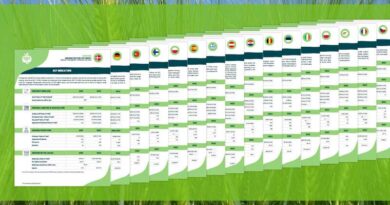
Another important legacy is a completely updated series of organic sector factsheets covering 29 European countries. They provide concise and up-to-date information on the development of organic farming and markets across Europe.
FiBL’s contribution
Researchers from FiBL in Switzerland and FiBL in Brussels contributed to several core components of OrganicTargets4EU. FiBL led the scientific analysis of the key drivers and barriers affecting the development of the organic sector and contributed to the project’s scenario development and socioeconomic assessments.
Together with the Thünen Institute of Farm Economics, FiBL also prepared updated organic sector factsheets for 29 European countries. In addition, FiBL played a key role in preparing and disseminating the project’s results by developing practice-oriented knowledge resources for different target groups, including through the Organic Farm Knowledge platform, and contributing to the platform’s further development.
Together, these outputs provide a lasting knowledge base for the continued development of organic farming and aquaculture across Europe. The policy briefs, organic sector factsheets, practice abstracts and additional project publications are freely available on the OrganicTargets4EU project website and through the Organic Eprints platform.
Funding
“OrganicTargets4EU – Transformation scenarios for boosting organic farming and organic aquaculture towards the Farm-to-Fork targets” was funded by the European Union under the Horizon Europe research and innovation programme (Grant Agreement No. 101060368). The Swiss contribution to the project was supported by the Swiss State Secretariat for Education, Research and Innovation (SERI) under Grant No. 22.00155.
Global Agriculture is an independent international media platform covering agri-business, policy, technology, and sustainability. For editorial collaborations, thought leadership, and strategic communications, write to pr@global-agriculture.com