Philippines Declares Calamity In 109 Areas As El Niño Cuts Rice Buffer
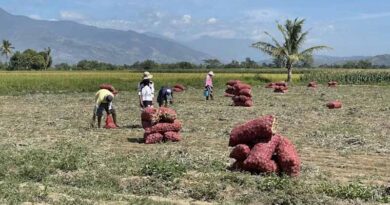
30 October 2026, Manila, Philippines: The Philippines’ Office of Civil Defense said on October 15 that 109 areas across the country have declared a state of calamity this year as a strong El Niño weather pattern drives drought and dry spells that have cut farm output, pushing total agricultural damage for the year to 6.8 billion pesos (roughly $118 million) and leaving the state rice buffer stock covering only about 51 days of supply, well short of the 70-to-90-day level officials consider ideal.
Office of Civil Defense spokesperson Junie Castillo said the agency is tracking the calamity declarations as dry conditions, driven by what he described as a very strong El Niño phenomenon, reduce the rainfall and irrigation water that rice and vegetable farmers depend on. The National Food Authority’s thinner buffer reflects lower domestic output rather than a sudden demand shock, and officials have flagged that vegetable production, while still favourable for now, could decline in the first quarter of 2027 if dry conditions worsen as expected. Danilo Fausto, president of the Philippine Chamber of Agriculture and Food Inc., an industry group, said the figures underline how exposed the country’s food supply remains to a single bad rainy season.
A second shock compounds the drought
The timing is especially difficult because the Philippines is simultaneously absorbing higher fertiliser costs tied to the Strait of Hormuz conflict in the Persian Gulf, a connection the country’s own agriculture policy community has been warning about for months. The Philippines imports roughly 90% of its fertiliser, and international urea prices nearly doubled between February and April 2026 as the Hormuz conflict disrupted Gulf supply, according to analysis citing former Philippine Agriculture Secretary William Dar. Rice alone accounts for an estimated 38% of the country’s national fertiliser use, based on analysis from the Philippine Institute for Development Studies, a state-linked policy research body, so higher input costs risk pushing cash-strapped farmers to cut application rates just as water for irrigation is also becoming scarcer.
The country’s Department of Agriculture has separately warned that a strong El Niño could cut rice output by as much as 700,000 metric tonnes, equivalent to about 3.5% of the government’s annual production target, with the state weather agency putting the probability of a moderate-to-strong El Niño persisting through the final quarter of 2026 at 92%. Raul Montemayor, national manager of the Federation of Free Farmers Cooperatives, and Andrew Bovarnick, global head of food systems at the United Nations Development Programme, have both pointed to the compounding risk of a weather shock arriving on top of an input cost shock, rather than either pressure acting alone. Policy analysts following the situation note that because many farmers had already planted their first-semester crops before the Hormuz conflict began in February, the fuller cost impact is more likely to show up in the 2027 harvest than in current-year output.
The Philippines has so far leaned on imports to cushion the gap. Rice imports reached almost 4 million tonnes by August, up from about 3.5 million tonnes a year earlier, with Vietnam supplying an estimated 70% to 80% of the total. That import dependence cushions supply in the near term but leaves the Philippines exposed to price swings in the regional rice trade if other importers, facing their own El Niño pressures, compete for the same supply.
Also Read: India Tops $4.39 Billion Emerging-Market AgTech Funding
Global Agriculture is an independent international media platform covering agri-business, policy, technology, and sustainability. For editorial collaborations, thought leadership, and strategic communications, write to pr@global-agriculture.com