India’s 2026 Monsoon Forecast at 92%: Irrigation Gains to Buffer Output, Rainfed Risks Persist
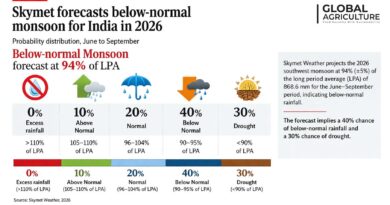
02 May 2026, New Delhi: India’s weather authorities have projected a below-normal southwest monsoon for the June–September 2026 season, raising concerns about its uneven impact on agriculture. While the overall rainfall is expected to remain manageable at the national level, the real risk lies in its distribution across regions and crop stages.
According to the India Meteorological Department, monsoon rainfall this year is likely to be around 92% of the long-term average—making it one of the lowest initial forecasts in the past 26 years. Experts suggest that despite this shortfall, a significant disruption to total foodgrain production may be avoided due to the steady expansion of irrigation coverage across the country.
Irrigation Expansion Cushions Foodgrain Output
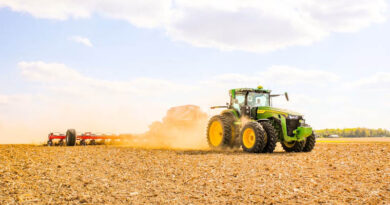
India’s agricultural resilience has improved over the past decade, with irrigated area rising to 56% of the total sown land, up from 49% in 2014–15. This structural shift has reduced the sector’s vulnerability to monsoon variability, particularly for staple crops like rice and wheat.
Additionally, water availability remains relatively strong. As of now, 166 major reservoirs across the country are filled to 41% of their capacity—14.7% higher than last year and 26% above the ten-year average. This buffer is expected to support irrigation needs during critical crop growth phases.
Rainfed Regions Remain at Risk
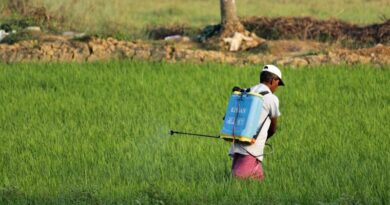
Despite these gains, nearly 15% of kharif crop production still comes from rainfed regions. Farmers in these areas are likely to face income pressures if rainfall remains below normal or becomes erratic. Large parts of central, western, and peninsular India continue to depend heavily on direct rainfall for cultivation.
Regional variations may offer some relief. Parts of northwestern, northeastern, and southern India are expected to receive normal to above-normal rainfall, which could benefit paddy cultivation. However, the timing of rainfall remains crucial. A deficit during key stages such as vegetative growth or flowering could adversely affect crops like pulses, oilseeds, and cotton.
Distribution of Rainfall Key to Output
Experts emphasize that total rainfall figures alone do not determine agricultural outcomes. The temporal and spatial distribution of rainfall—especially between July and September—will play a decisive role in shaping crop yields.
Prolonged dry spells early in the season can damage crop establishment, while excessive rainfall later can lead to waterlogging, pest outbreaks, and quality losses. This variability, rather than aggregate rainfall, is seen as the primary risk factor for the 2026 kharif season.
Stocks Provide Cushion, But Price Risks Persist
India currently holds comfortable buffer stocks of major cereals. As of April 1, 2026, rice stocks are nearly five times the buffer norm, while wheat stocks are about three times higher. These reserves ensure food security and support government welfare programs, including free distribution under the public system.
However, crops such as pulses, oilseeds, fruits, and vegetables remain more vulnerable to weather fluctuations. A shortfall in their production could trigger price pressures, potentially necessitating higher imports to stabilize domestic markets.
Growth Outlook and External Risks
The National Statistical Office has projected a 3.1% growth in agricultural gross value added (GVA) for FY2026, compared to 4.6% and 2.7% in the previous two years. While this indicates moderate expansion, uncertainties linked to monsoon variability and global developments remain.
Weather experts attribute the subdued monsoon outlook partly to evolving El Niño conditions, which are typically associated with weaker rainfall in India. Additionally, ongoing geopolitical tensions in West Asia could indirectly affect India’s broader economic trajectory.
Awaiting Updated Forecast
A clearer picture is expected with the second monsoon forecast, due at the end of next month. Until then, policymakers and farmers alike will closely monitor rainfall patterns, as intra-season variability may ultimately determine the agricultural and economic outcomes for the year.
Also Read: Data Exclusivity in Agrochemicals Could Undermine ‘Make in India’ and Exports: CCFI
Global Agriculture is an independent international media platform covering agri-business, policy, technology, and sustainability. For editorial collaborations, thought leadership, and strategic communications, write to pr@global-agriculture.comv