Data Exclusivity in Agrochemicals Could Undermine ‘Make in India’ and Exports: CCFI
Industry body says extended protections may delay generics, raise costs, and weaken India’s global competitiveness
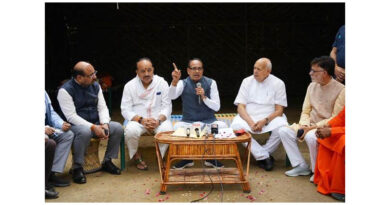
30 April 2026, New Delhi: The Crop Care Federation of India (CCFI) has raised strong concerns over the introduction of data protection or data exclusivity provisions in India’s agrochemical regulatory framework, stating that such measures could adversely impact domestic manufacturing, exports, and farmer access to affordable crop protection solutions.
Deepak Shah, Chairman, CCFI said that granting exclusivity beyond the existing 20-year patent regime would create monopolistic conditions, delay the entry of generic products, and increase input costs for farmers while weakening India’s export competitiveness.
India’s Agrochemical Export Strength at Stake
CCFI represents Indian agrochemical companies with extensive manufacturing and contribute nearly 80% of India’s agrochemical exports, supplying to more than 167 countries.
India is currently among the top three agrochemical exporters globally and has generated a trade surplus of around $16 billion from agrochemical exports over the past five years. The country’s strength lies in its ability to produce and supply generic agrochemicals at scale.
Global Market Dominated by Generics
According to CCFI, nearly 90% of the global agrochemical market comprises generic products, as patents on these molecules have already expired. All top ten agrochemicals globally fall into the generic category.
India has emerged as a global leader in this segment. The federation cautioned that granting data exclusivity for off-patent products would delay the introduction of generics and reduce the competitiveness of Indian manufacturers in global markets.
No Legislative Basis for Data Exclusivity in India
CCFI highlighted that existing laws and policy frameworks do not support data exclusivity:
- Parliamentary Standing Committee reports from 2008, 2011, and 2021 have opposed such provisions
- Government-appointed committees have indicated that even the 20-year patent term may be excessive in rapidly evolving technologies
- The Insecticides Act, 1968, and draft Pesticides Management Bills (2017, 2020/2025) do not include data protection provisions
The federation also pointed out that Article 39.3 of the TRIPS Agreement does not mandate exclusive rights over regulatory data.
White Paper on Data Exclusivity
CCFI has prepared a detailed white paper outlining ten key reasons against granting data protection or exclusivity. The document has been submitted to the Indian Agriculture Minister Shivraj Singh Chouhan, presenting the federation’s position that additional protection beyond the patent period is not in the interest of indigenous manufacturers.
The paper also disputes claims that innovation has been hindered in the absence of such provisions, stating that new product introductions have not been affected.
Concerns Over Patent Non-Commercialisation
The white paper highlights that several patented pesticide molecules held by multinational companies have not been introduced in India, despite being commercialised elsewhere. Data indicates that six out of every ten patents granted since 2010 have not been launched domestically.
Under India’s Patent Act, non-commercialisation can trigger provisions such as compulsory licensing, reinforcing the expectation that patented technologies should benefit the domestic market.
Import Surge During Past Data Exclusivity Phase
CCFI cited historical trends to underline its concerns. During the period between 2007 and 2017, when de facto data exclusivity conditions existed, agrochemical imports grew by 547%. Between 2017 and 2024, after such practices were discontinued, import growth slowed to 17%, alongside increased domestic production.
The federation warned that reintroducing data exclusivity could reverse these gains, increase import dependence, and raise costs for farmers.
Record Registrations Challenge Innovation Concerns
India has registered 36 new pesticide molecules in the last two years, marking a record high. This exceeds registrations in countries such as Brazil, Malaysia, and Thailand, which provide data protection or exclusivity.
According to CCFI, this demonstrates that innovation and product introduction have not been constrained in the absence of such provisions.
Implications for Farmers and Policy Direction
With Indian agriculture dominated by smallholder farmers, affordability and accessibility of inputs remain critical. CCFI says that data exclusivity would limit access to affordable generics, increase prices, and impact farm profitability.
The federation warned that such a move would run counter to the objectives of “Make in India,” while potentially weakening India’s position in global agrochemical supply chains.
Also Read: Biotalys Reports Full-Year 2025 Financial Results and Business Highlights
Global Agriculture is an independent international media platform covering agri-business, policy, technology, and sustainability. For editorial collaborations, thought leadership, and strategic communications, write to pr@global-agriculture.com