Agrochemical MSMEs in India May Suffer if Data Exclusivity Is Introduced: PMFAI
25 May 2026, Mumbai: The Pesticides Manufacturers & Formulators Association of India (PMFAI) has strongly voiced its opposition to the authorities to the aggressive lobbying by multinational corporations (MNCs) and import syndicates aimed at introducing a 5-year Regulatory Data Protection (RDP) or Data Exclusivity provision in the upcoming Pesticide Management Bill (PMB) and through Free Trade Agreement (FTA) negotiations with the European Union and the USA.

PMFAI emphasized that this “TRIPS-Plus” demand explicitly contradicts the statutory findings of the Parliamentary Standing Committee on Agriculture, Animal Husbandry, and Food Processing (36th Report, 17th Lok Sabha). The Committee systematically evaluated stakeholder feedback and directed that Regulatory Data Protection (RDP) should not be considered for agrochemicals, confirming that India’s existing 20-year patent protection window is more than adequate for global inventors to recoup investments and generate substantial returns.
“The aggressive campaign of MNCs to insert Data Protection for post-patent Agrochemicals into the Pesticide Management Bill (PMB) poses a critical risk to India’s agricultural economy,” said Pradip Dave, President, PMFAI.
Severe Economic Threat to Smallholder Farmers
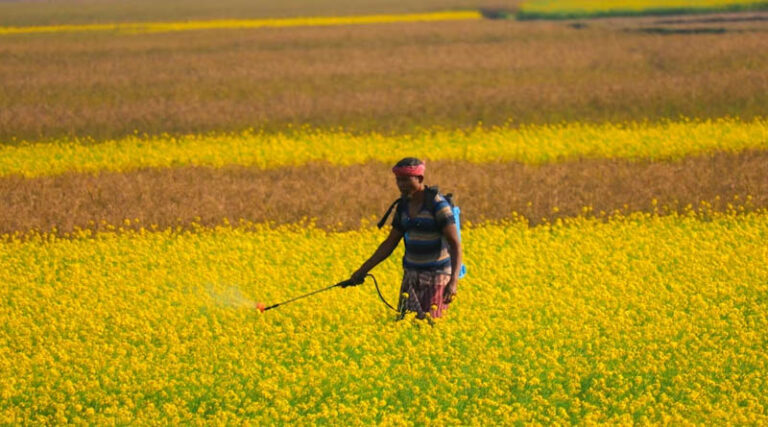
Indian agriculture is unique, overwhelmingly driven by small and marginal farmers cultivating land parcels of just 1 to 5 acres. Input affordability directly determines their farm productivity, profitability, and household survival. PMFAI warned that granting post-patent data exclusivity would artificially bar the entry of affordable, locally manufactured generic alternatives, creating market monopolies.
Without open market competition, Indian farmers will be legally compelled to purchase essential crop protection chemicals at inflated premium prices, estimated to range between 35% to 50% higher than competitive generic rates.
Exploitation of Regulatory Loopholes and Historical Abuse
PMFAI noted that western MNCs are attempting to mislead Indian policymakers by asserting that RDP is the sole mechanism to bring new chemical innovations to the country. Data completely refutes this claim: out of every ten patents granted to western MNCs in India since 2010 for new pesticide chemistries, six were never commercially launched in the Indian market despite being rolled out globally.
Instead, the lobby is actively seeking data protection to breathe commercial life into old, off-patent, or near-expiry molecules that they failed to commercialize during their active patent windows. This strategy mirrors historical precedent: between 2007 and 2017, a de facto data exclusivity environment enabled via executive orders allowed MNCs to import 20- to 40-year-old chemistries, register them as “new innovations,” and sell them to Indian farmers at exorbitant prices.
Stifling MSMEs and Dismantling ‘Make in India’
Unlike the global pharmaceutical industry, the global agrochemical market is dominated by generics, which account for roughly 90% of the total market, including all top 10 bestselling crop protection products worldwide. India has established itself as a premier global hub for generic manufacturing, rising to become the 3rd largest exporter of agrochemicals globally.
Introducing an extended regulatory protection layer beyond the 20-year patent lifespan will legally lock out Indian Micro, Small, and Medium Enterprises (MSMEs) – the backbone of the country’s manufacturing GDP. This delay in the introduction of affordable generics will severely blunt India’s global export edge and dismantle the progress of the domestic chemical industry, standing in direct opposition to the visions of “Make in India” and “Aatmanirbhar Bharat.”
Need for upholding “Make in India” and “Aatmanirbhar Bharat”
Conceding to RDP demands would directly contradict the spirit of the Prime Minister’s vision for “Make in India” and “Aatmanirbhar Bharat.” PMFAI strongly urges the valued offices of the Prime Minister, the Ministry of Agriculture & Farmers Welfare, Ministry of Commerce & Industry and the Ministry of Chemicals & Fertilisers to stand firm by domestic manufacturing and protect the livelihoods of the millions of farmers who form the backbone of our nation.
India Proves Robust Growth Without RDP Concessions
The data further dismantles the narrative that Regulatory Data Protection is needed to attract technology. Over the past two years, India recorded an all-time high of 36 new pesticide molecule registrations—averaging 1.5 new molecules per month. This velocity of technology adoption significantly outpaces countries that offer data exclusivity, such as Brazil, Malaysia, and Thailand, proving that India’s massive arable acreage and dynamic market naturally attract global innovation without requiring extra regulatory concessions.
PMFAI has submitted an urgent appeal to the government to stand firm by the Parliamentary Standing Committee’s recommendations, protect the socio-economic rights of the farming community, and reject any provisions for Regulatory Data Protection in the Pesticide Management Bill or incoming bilateral trade agreements.
Also Read: China’s Fertilizer Trade Sees Strong Export Growth in Jan–April 2026, Potash Imports Remain Critical
Global Agriculture is an independent international media platform covering agri-business, policy, technology, and sustainability. For editorial collaborations, thought leadership, and strategic communications, write to pr@global-agriculture.com