14 July 2026, Tanzania: Developing future rice varieties starts with understanding stakeholders’, especially farmers’, preferences and priorities. Ensuring that new varieties meet farmers’ needs requires a deeper reflection of how they make decisions and the trade-offs they consider in the field.
To strengthen a farmer-centered approach, the International Rice Research Institute (IRRI), together with the Tanzania Agricultural Research Institute (TARI), recently conducted a specialized training in Morogoro to equip interviewers with innovative behavioral science tools for capturing farmers’ preferences and priorities. The training is part of the CGIAR Breeding for Tomorrow program, under the Market Intelligence Area of Work.
The training brought together researchers and field practitioners from TARI and partner institutions to strengthen their skills in collecting farmer insights that can directly inform breeding programs.
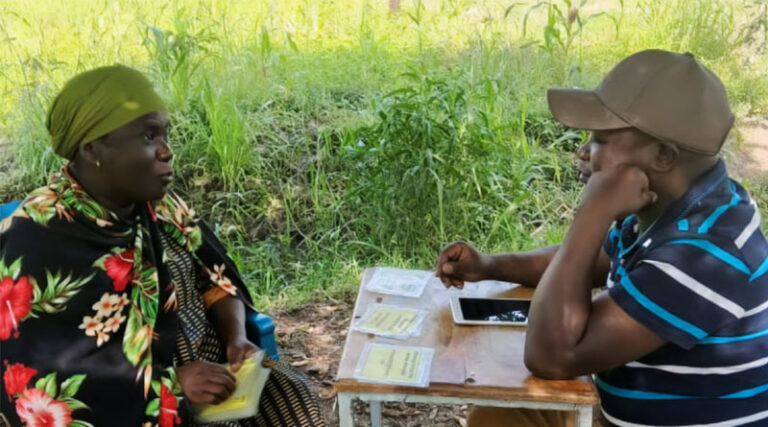
Central to the training was a card-sorting experiment, an interactive method that helps farmers sort and prioritize the rice traits that matter most to them. Using cards representing different traits or trait descriptions, farmers were guided through a structured process to compare, select, and rank traits based on their preferences.
Preliminary analysis revealed that farmers generally prefer traits such as high yield, heavy grain weight, high head rice recovery, early maturity, aroma, and drought resistance.
Unlike traditional survey questionnaires, which only often capture surface-level information and can be prone to social desirability biases, the card-sorting approach can capture how farmers evaluate different traits and trades-offs. It is easy to apply and provides insights on how people use specific attributes to categorize the world around them—a process considered a basic function of human cognition. As a result, the approach offers understanding into the complex decision-making processes of smallholder farmers.
To ensure that participants were ready for the field, interviewers were also trained to use a digital survey application called Survey Solutions and participated in simulation interviews to strengthen field readiness and data quality. Survey Solutions is a data collection tool developed by the World Bank’s Data Group.
Field pre-testing in Kilombero District revealed practical challenges, including the need for additional support for farmers with limited literacy and the time required to conduct in-depth interviews.
Training local researchers in these advanced methods help ensure that the future rice breeding in Tanzania will not only be guided by scientific priorities but also by local farmers’ experiences, preferences, and evolving needs.
Global Agriculture is an independent international media platform covering agri-business, policy, technology, and sustainability. For editorial collaborations, thought leadership, and strategic communications, write to pr@global-agriculture.com