Why India Needs One Million Agri-MSMEs for the Next Agricultural Revolution
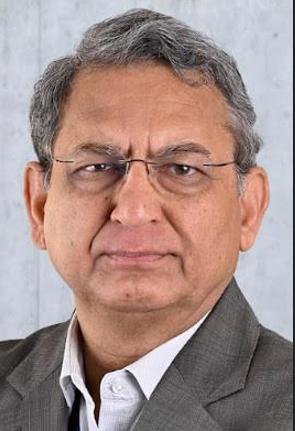
Guest Author: Pravesh Sharma, Chairman, Steering Committee, National Association for Farmer Producer Organisations (NAFPO). He is Former MD, SFAC & Ex-Agriculture Secretary, Madhya Pradesh.
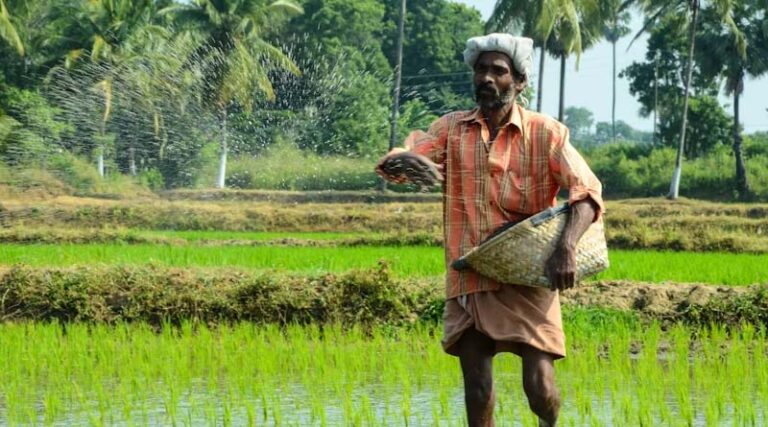
01 July 2026, New Delhi: India has spent the better part of six decades trying to solve one problem in agriculture: how to produce more. From the Green Revolution onwards, public policy has focused on irrigation, improved seeds, fertilizers, mechanisation, rural credit and procurement. The strategy worked. We banished the spectre of famines and perennial food shortages and became a food-surplus nation. India is today the world’s largest producer of milk, among the biggest producers of cereals, fruits, vegetables, pulses and fish, as well as an important exporter of several agricultural commodities. Yet, despite these remarkable achievements, agriculture continues to be associated with low incomes, underemployment and persistent rural distress. Why is this so?
The answer lies in a simple but often overlooked reality. The challenge facing Indian agriculture is no longer one of production; it is one of value creation. Once a crop is sold by the farmer in a mandi or milk collected from a woman member at the dairy cooperative, the real economic journey begins. Produce moves from the farmer to traders, aggregators, wholesalers, processors, distributors and retailers before finally reaching the consumer. Every stage in this chain creates value, generates employment and earns profits, but very little of that activity takes place in or near a village, where the produce originates. The farmer sells a commodity while others build businesses around it.
What India lacks is not another raft of subsidies or production incentives or even public procurement mechanisms, but a dense ecosystem of rural micro, small and medium enterprises (MSMEs) that can add value to existing agri produce before it leaves the village, or at least its immediate neighbourhood.
Live Newsroom
This “missing middle” layer explains many of the structural weaknesses of Indian agriculture. We continue to lose a substantial share of fruits and vegetables after harvest because storage, grading and processing facilities are scarce. Milk is sold mostly in liquid form, when it could easily convert to cheese, paneer, butter or specialty products with off-the-shelf, not-so-expensive technology. Fish is transported to wholesale markets in open crates or baskets, instead of being processed closer to landing centres. Livestock is sold live instead of moving through organised value chains that include breeding, feed, veterinary services, processing and retailing. In each case, the story is remarkably similar.
India has invested heavily in production but comparatively little in the near-farm enterprises that can help transform production into income. While an estimated one million MSMEs serve the agriculture sector today, they are heavily focused on input supplies and trading. Value added infrastructure is mostly concentrated in industrial and urban clusters.
Much of the policy discourse still remains crop-centric even though Indian agriculture itself has changed. Dairy, livestock, poultry and fisheries today account for nearly half of agricultural output and have grown consistently faster than crop agriculture over the past decade. Yet these sectors continue to suffer from the same institutional weakness—a shortage of thousands of small and medium enterprises that can provide collection, chilling, processing, packaging, logistics and marketing services. The real bottleneck is not at the farm; it lies between the farm and the market.
This is the vacant ground that India’s next agricultural strategy must build upon. Instead of asking how to produce another million tonnes of grain, policymakers should ask how to create another million rural enterprises. Imagine a village where farmers no longer sell raw produce immediately after the harvest because a local enterprise cleans, grades and packages pulses for the retail market, or offers them the choice to store the produce till they find prices attractive. A dairy unit converts milk into value-added products. A fish collection centre links producers directly with exporters. A cold room extends the life of vegetables, while a digital enterprise provides traceability and quality certification for premium domestic and international markets. Each of these businesses employs local people, retains income within the rural economy and shortens supply chains. Collectively, they transform agriculture from an extractive system into a value-creating one.
India already possesses many of the ingredients required for such a transformation. It has thousands of cooperatives and Farmer Producer Organisations (FPOs), an extensive network of self-help groups, rural entrepreneurs and an expanding network of rural roads and new highways. Penetration of mobile networks and smartphones across the country have already combined to revolutionise access to information, entertainment, education, prices and customer preferences.
What is missing is a unifying national strategy that views agriculture not merely as a provider of raw commodities but as an ecosystem of enterprises. The objective should be to create a million agriculture-linked MSMEs over the next decade across aggregation, storage, processing, dairy, fisheries, livestock, poultry, logistics, packaging, branding and digital services. Such a mission would generate employment on a scale unmatched by almost any other rural intervention, reduce post-harvest losses, increase farmer incomes and create a more resilient food economy, without requiring a fundamental reinvention of existing institutions. Diversification from current cereal-centric production will then happen naturally, as a consequence of demand-led integration with markets.
History suggests that India’s greatest agricultural successes have come when the country adopted a bold organising idea. The Green Revolution transformed production. Operation Flood revolutionised the dairy sector. The next transformation should not seek to produce more food but to produce more value. The future of Indian agriculture will not be decided only by what grows in the field; it will be determined by the enterprises that emerge after the harvest. A national mission to build one million agriculture-linked MSMEs could well become the defining rural development initiative of the coming decade.
About NAFPO
National Association for Farmer Producer Organisations (NAFPO) is a non-profit, multi-stakeholder national platform dedicated to building resilient Farmer Producer Organisations for farmer prosperity. NAFPO strengthens the FPO ecosystem through digital tools, capacity building, policy engagement, and market linkages. NAFPO envisions strong farmer-led institutions that enable smallholder Farmers to access finance, technology, markets, and governance systems—driving inclusive and sustainable agricultural transformation. Read about NAFPO at www.nafpo.in.
Global Agriculture is an independent international media platform covering agri-business, policy, technology, and sustainability. For editorial collaborations, thought leadership, and strategic communications, write to pr@global-agriculture.com