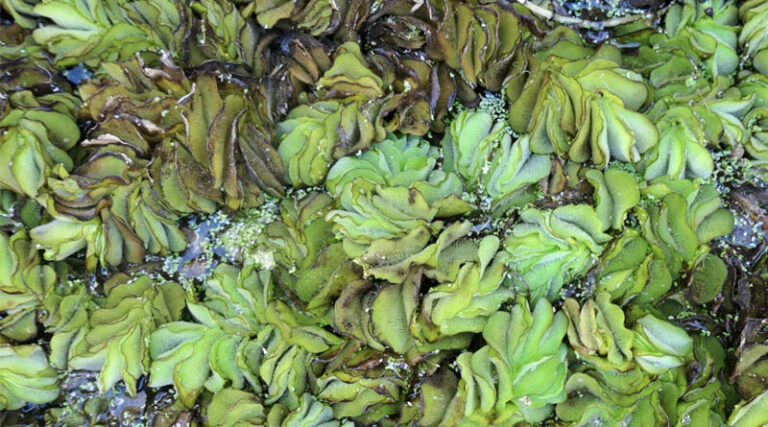
12 August 2026, New Delhi: The ICAR-Directorate of Weed Research (ICAR-DWR), Jabalpur, has developed and successfully demonstrated an environmentally sustainable biological control technology for the management of Salvinia molesta, one of India’s most invasive aquatic weeds.
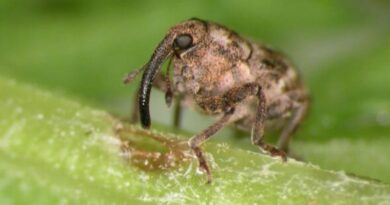
The technology uses the host-specific weevil Cyrtobagous salviniae to suppress Salvinia molesta populations and restore affected water bodies. Field demonstrations across several states have shown that the approach can provide long-term weed control while reducing the need for repeated mechanical removal.
Salvinia molesta forms dense floating mats on water surfaces, restricting water flow and reducing reservoir storage capacity. Heavy infestations can affect water quality, aquatic biodiversity and ecosystem functions, while also disrupting fisheries, aquaculture, irrigation systems, drinking-water sources, inland transportation and wetlands.
The dense weed mats can reduce dissolved oxygen and plankton productivity, affecting fish populations and the livelihoods of fishing communities. Conventional management methods, including mechanical removal and chemical herbicides, can be expensive, labour-intensive and require repeated intervention. The use of herbicides is also constrained in water bodies used for fisheries and drinking water.
Host-Specific Weevil Used for Biological Control
To address these challenges, ICAR-DWR developed a biological control programme based on Cyrtobagous salviniae, a weevil that feeds specifically on Salvinia molesta. Adult weevils feed on and tunnel into the plant’s foliage, buds and rhizomes, weakening its growth and reproductive capacity.
As the plants lose their ability to remain buoyant, they eventually deteriorate and decompose naturally. Under suitable environmental conditions, the biological control agent can achieve close to complete suppression of Salvinia populations.
According to ICAR-DWR, the technology has been demonstrated across Madhya Pradesh, Maharashtra, Chhattisgarh and Haryana, contributing to the restoration of around 4,000 hectares of affected water bodies. The Directorate has also supported the mass production and supply of Cyrtobagous salviniae for deployment across more than 2,000 additional hectares.
Satpura Reservoir Demonstrates Economic Benefits
A major demonstration of the technology was undertaken at Satpura Reservoir near Sarni in Betul district, Madhya Pradesh, following a consultancy project commissioned by Madhya Pradesh Power Generating Company Limited (MPPGCL).
The reservoir, covering approximately 2,900 acres, had been heavily affected by Salvinia molesta. Mechanical management was estimated to require an investment of around ₹15 crore, along with repeated operations over approximately five years.
Following the release of Cyrtobagous salviniae, a significant reduction in Salvinia infestation was recorded within five to six months. Within approximately 15–18 months, the intervention resulted in complete control of the weed and restoration of open water surfaces, at an intervention cost of about ₹49 lakh.
The results highlighted the potential of biological control as a lower-cost and longer-term alternative to repeated mechanical removal.
Fisheries and Livelihoods Recover
The restoration of Satpura Reservoir also generated measurable socioeconomic benefits. Following biological control, average monthly fish production increased by 137.1%, while catch per unit effort (CPUE) increased by 123.1%.
Average monthly income of fishing households increased from ₹7,390 to ₹13,614, representing an 84.2% increase. Improved access to fishing areas also increased the number of fishing days and provided regular employment for 209 fishers and associated workers.
During the first year following restoration, approximately 572 tonnes of fish were produced, generating an estimated revenue of ₹8.01 crore.
The restored reservoir also supports drinking-water requirements. According to ICAR-DWR, more than 22,000 families in Sarni municipality and the townships associated with Satpura Thermal Power Station and Western Coalfields Limited receive approximately 18 million litres of drinking water every day from the reservoir.
The restoration has additionally increased the recreational value of the reservoir, with an estimated 80–120 visitors arriving each day, creating opportunities for local employment and tourism-related income.
Field Demonstrations Across Four States
The biological control technology has been demonstrated under different agro-climatic and aquatic conditions across Madhya Pradesh, Maharashtra, Chhattisgarh and Haryana.
Sites where restoration has been reported include Hatti Lake, Lanjhad Lake, Irai Dam, Ghodapeth Pond and Junona Lake in Maharashtra; Pachmarhi Lake, Satpura Reservoir, Lonia Lake, Murwari Pond and Giduraha Pond in Madhya Pradesh; Talpuri Lake in Chhattisgarh; and Jhajjar Reservoir in Haryana.
Across these demonstrations, more than 3,000–4,000 hectares of heavily infested water bodies have been restored, with reported improvements in water quality, fisheries productivity and aquatic biodiversity.
The technology has received the ICAR Best Technology Award, while Down To Earth magazine has also recognised the work at the national level.
Potential for Wider Adoption
The results from Satpura Reservoir and other field locations indicate that biological control could provide a scalable option for managing invasive aquatic weeds in lakes, reservoirs, wetlands and other freshwater ecosystems.
ICAR-DWR is working on the continued mass production of the biological control agent and wider dissemination of the technology in collaboration with state governments, fisheries departments and other institutions.
For India, where invasive aquatic weeds can affect water security, fisheries, biodiversity and rural livelihoods, the approach offers a potential pathway towards reducing recurring management costs while supporting ecological restoration and productive use of freshwater resources.
Global Agriculture is an independent international media platform covering agri-business, policy, technology, and sustainability. For editorial collaborations, thought leadership, and strategic communications, write to pr@global-agriculture.com