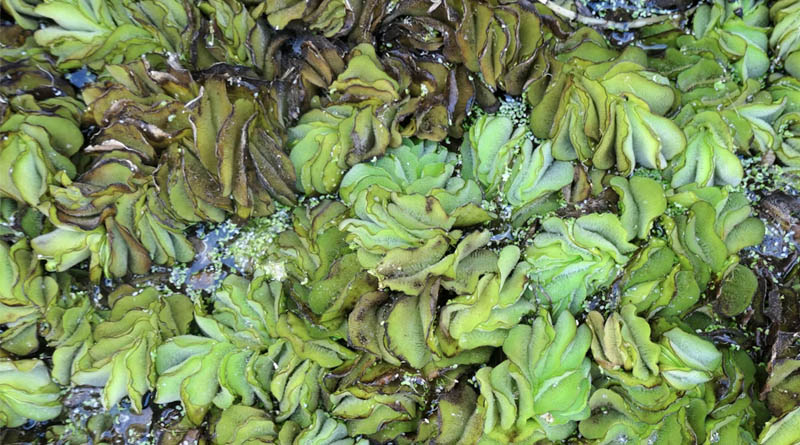
Salvinia molesta

ind the latest research, scientific studies, invasive weed management strategies, biological control developments, and environmental updates related to Salvinia molesta. Stay informed on aquatic weeds, invasive species, biological control, water bodies, weed management, biodiversity, and sustainable environmental management.

Salvinia molesta, commonly known as giant salvinia or water fern, is a fast-growing, free-floating aquatic fern native to southeastern Brazil. It has spread widely across tropical and subtropical regions and can form dense mats on freshwater bodies, particularly in stagnant or slow-moving water. These mats can interfere with navigation and fishing while reducing light and dissolved oxygen in the water, affecting aquatic ecosystems.

In India, Salvinia molesta has been reported in several regions and has become a significant invasive aquatic weed. ICAR’s Directorate of Weed Research has developed biological control approaches using the host-specific weevil Cyrtobagous salviniae. In central India, the biological agent achieved 50%, 80%, and 100% control of the weed at approximately 8, 11, and 18 months, respectively, demonstrating the potential of biological control as a sustainable management option.

Management of Salvinia molesta can involve mechanical removal, chemical control where approved, and biological control. Mechanical removal becomes difficult and expensive once dense infestations develop because the plant can rapidly regenerate. Biological control using Cyrtobagous salviniae has achieved successful suppression in several countries and is increasingly being explored for managing large infestations.

This category features scientific research, invasive-species management, biological control, aquatic weed control, ICAR research, environmental impacts, water-body restoration, biodiversity, and developments related to Salvinia molesta.