IRRI, CIMMYT, and FAS Strengthen Research Capacity Through Hands-on Internship Program
14 August 2026, Hyderabad: Strengthening the next generation of agricultural researchers, the International Rice Research Institute (IRRI), together with the International Maize and Wheat Improvement Center (CIMMYT) and the Foundation for Agrarian Studies (FAS), organized a five-week training program that equipped seven undergraduate students from Kerala Agricultural University (KAU) with practical research skills and interdisciplinary knowledge to address emerging challenges in sustainable agriculture and rural development.
Building the next generation of agricultural researchers
The training program, entitled “Agrarian Studies and Social Science Research Methods”, was held from 15 June to 17 July 2026 at the ICRISAT campus in Hyderabad, India, and brought together final-semester undergraduate students from four KAU Colleges of Agriculture (CoA) for an intensive learning experience under the Kerala Climate Resilient Agriculture Value Chain Modernisation Project (KERA) Project.
The program aimed to strengthen participants’ skills in research methodology, survey design, data analysis, scientific writing, and evidence-based decision-making to address challenges in agriculture, rural development, and sustainable food systems.
A comprehensive learning journey
The program guided participants through the entire research process, from developing research questions and hypotheses to survey design, literature review, research ethics, and statistical analysis. The curriculum also covered the responsible use of artificial intelligence, quantitative and qualitative research methods, sampling strategies, and questionnaire development using Kobo Toolbox.
Live Newsroom
Through lectures, practical exercises, assignments, and mentoring, participants built the skills needed to conduct high-quality socio-economic and agricultural research. The internship emphasized experiential learning through practical sessions on data management, statistical analysis using R and Stata, descriptive and inferential statistics, and data visualization. Participants also received training in scientific writing using the IMRAD framework. Individual mentoring helped interns refine research questions, develop concept notes, conduct empirical analyses, interpret results, and prepare mini manuscripts.
Learning from national and international experts
Experts from IRRI, CIMMYT, FAS, ICAR institutes, ICRISAT, ILRI, the World Bank, the Asian Development Bank (ADB), NITI Aayog, UNDP, and other organizations delivered lectures on climate change economics, remote sensing and GIS, sustainable agriculture, voluntary carbon markets, data science, and rural development. Career interaction sessions also introduced participants to opportunities across the CGIAR system, government, academia, development organizations, and the private sector.
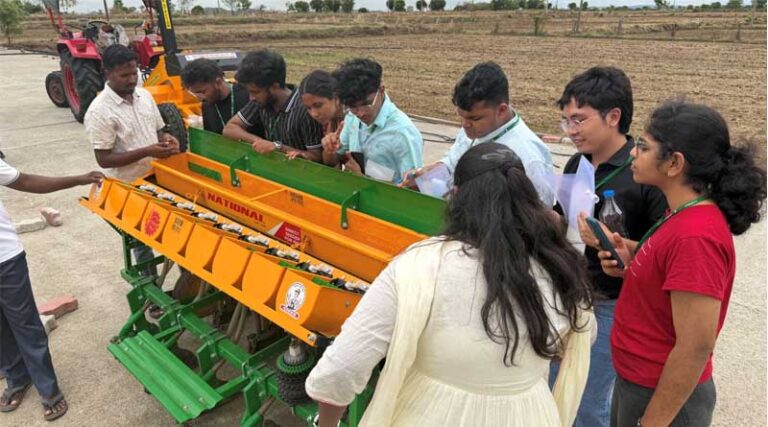
Interns visited Dr. Reddy’s Foundation project sites under the Action for Climate & Environment (ACE) Program, gaining practical exposure on regenerative agriculture and climate-smart farming. They also toured the ICRISAT and ICAR–CRIDA campuses, where interactions with scientists and visits to research facilities provided valuable insights into innovations in climate-smart and interdisciplinary agricultural research.
Showcasing research excellence
The internship concluded with a research symposium where all seven interns presented their independent research before scientists, KAU faculty members, and development partners.
The studies addressed a diverse range of socio-economic and agricultural issues, including women’s participation and empowerment in Kerala’s Self-Help Groups; fertilizer over-application among smallholder maize farmers in Bihar; factors influencing farmers’ readiness to adopt Alternate Wetting and Drying (AWD) in Kerala; willingness of rice farmers to participate in voluntary carbon markets; the role of cognitive ability and risk attitudes in climate-smart technology adoption; drivers of farmers’ adaptation to climate variability; and the influence of social inequalities on digital agriculture.
The symposium concluded with the presentation of the Best Intern Award, followed by certificate distribution and a post-program evaluation, celebrating the successful completion of the training.
Investing in future agricultural leaders
By combining scientific rigor with practical application, the internship reflected the shared commitment of IRRI, CIMMYT, and FAS to building the next generation of agricultural researchers. The program equipped participants with the technical, analytical, and communication skills needed to generate evidence-based solutions for sustainable and resilient agri-food systems.
Also Read: Paraquat and the Future of Pesticide Regulation in India
Global Agriculture is an independent international media platform covering agri-business, policy, technology, and sustainability. For editorial collaborations, thought leadership, and strategic communications, write to pr@global-agriculture.com