Paraquat and the Future of Pesticide Regulation in India
Author: A Amarender Reddy, Joint Director, School of Crop Health Policy Support Research, ICAR–National Institute of Biotic Stress Management (ICAR-NIBSM) & Arun Reddy Anugu,Carnegie Mellon University, USA
12 August 2026, New Delhi: The Government of India’s proposal to ban paraquat dichloride is one of the most important pesticide policy decisions in recent years. While the debate has centred on a single herbicide, the implications go much further. It is also a test of how India manages difficult regulatory transitions, protecting public health without creating unnecessary disruption for farmers and businesses.
The Ministry of Agriculture and Farmers Welfare has invited public comments on the draft Banning of Paraquat Dichloride Order, 2026 until13 August 2026. At this stage, the discussion should move beyond whether paraquat should be banned. That decision is expected to have been guided by scientific evidence and a careful balancing of public health concerns with farmers’ weed management needs. The stronger case is to focus on how the transition can be carried out smoothly, fairly and with minimum disruption.
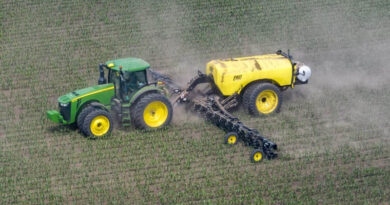
Paraquat became popular for understandable reasons. It acts quickly, controls a wide range of weeds and reduces labour requirements, particularly in plantations, orchards and commercial agriculture where labour shortages have become increasingly common. For many farmers, it has been an efficient and affordable weed management tool.
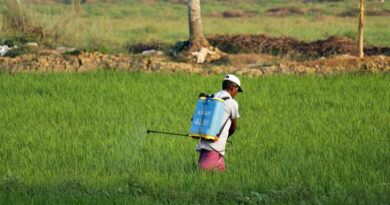
But paraquat also has a darker side. It is among the most acutely toxic herbicides still in agricultural use. Even small amounts can be fatal if swallowed, and unlike many other pesticides, there is no specific antidote. Doctors have long known that once poisoning occurs, treatment options are limited and survival is uncertain.
Scientific evidence over several decades has consistently pointed in the same direction. Paraquat poisoning has a high fatality rate, and survivors often suffer permanent lung damage. Research has also linked long-term exposure with neurological disorders and reproductive health concerns. Countries such as Sri Lanka and South Korea have shown that restricting highly hazardous pesticides, including paraquat, can substantially reduce pesticide-related suicides without harming agricultural production.
Environmental concerns reinforce the public health case. Paraquat binds tightly to soil, may persist for years under some conditions, and poses risks to aquatic organisms, birds and beneficial insects. As safer alternatives become available, continuing to rely on one of the world’s most hazardous herbicides becomes increasingly difficult to justify.
Even so, a sound policy does not end with announcing a ban. The success of any regulation depends just as much on how it is implemented.
The proposed ban will affect farmers, importers, formulators, distributors and manufacturers differently. Industry representatives have warned that removing paraquat could hurt India’s agrochemical sector. Those concerns should not be dismissed outright, but they also need to be viewed in perspective.
India’s paraquat market is estimated to be in the range of ₹600 crore to ₹1,200 crore, accounting for only a small share of the country’s ₹34,000–40,000 crore agrochemical market. The broader agrochemical sector includes insecticides, herbicides, fungicides, and other crop protection products.Large companies such as UPL, Dhanuka Agritech, Rallis India and Coromandel International have diversified product portfolios that extend well beyond paraquat. For them, adjusting to the new regulatory environment should be manageable.
The bigger challenge is likely to be faced by smaller formulators and regional distributors whose businesses depend more heavily on paraquat. It is also worth remembering that India imports almost all technical-grade paraquat, while domestic firms primarily formulate and market the product. Consequently, much of the upstream commercial impact will be outside India rather than within its manufacturing sector.
The real policy challenge, therefore, is not whether the industry can adapt, it almost certainly can but whether the transition is managed in a predictable and orderly manner.
Many companies imported raw materials and built inventories under a regulatory framework that permitted paraquat. Existing stocks, contractual commitments and consignments already in transit should be dealt with pragmatically to avoid unnecessary financial losses and potential litigation. Likewise, requiring hundreds of licence holders to complete regulatory formalities within a short timeframe could create avoidable administrative bottlenecks (based on personal communication with Dr. Donthi Reddy Narsimha Reddy, Public Policy Expert).
That is why transitional arrangements should be treated as an essential part of effective regulation, not as concessions to industry. A clearly defined sell-through period for legally acquired inventories, transparent rules for consignments already under import, and a phased compliance schedule for different categories of licence holders would make implementation smoother while fully preserving the intent of the ban.
The proposal also raises a larger ethical question. India has, on several occasions, allowed the manufacture of pesticides for export after prohibiting their domestic use. If scientific evidence establishes that paraquat presents unacceptable risks to Indian farmers and farm workers, continuing to manufacture it solely for export deserves a fresh policy debate. Public health standards should remain consistent regardless of where the product is ultimately used.
Farmers must also remain at the centre of the transition. Many adopted paraquat because it is affordable, reliable and helps address labour shortages. Replacing it requires more than a government notification. Farmers will need access to effective alternatives, field demonstrations, extension support and practical guidance on integrated weed management. Without these, some may simply switch to costlier herbicides or unregulated products, creating new challenges.
More broadly, the paraquat debate exposes a weakness in India’s pesticide regulatory system. Decisions often come only after years of accumulating scientific evidence. A stronger framework would periodically review registered pesticides, systematically monitor poisoning incidents, assess environmental impacts and encourage the adoption of safer alternatives. Such a system would make regulation more predictable for farmers, industry and investors alike.
Paraquat, therefore, should not be viewed as an isolated regulatory action. It offers an opportunity to build a more responsive and science-based pesticide regulatory system that protects public health while encouraging innovation and safer technologies.
With public consultation open until 13 August 2026, the government has an opportunity to refine the implementation framework without reopening the scientific case for action. If managed well, the proposed ban can become more than the withdrawal of a hazardous herbicide. It can mark an important step towards a regulatory system that is transparent, evidence-based and capable of balancing the interests of farmers, industry, consumers and the environment.
Also Read: Novonesis To Acquire Remaining Share Of Microbiogen To Strengthen Yeast Capabilities
Global Agriculture is an independent international media platform covering agri-business, policy, technology, and sustainability. For editorial collaborations, thought leadership, and strategic communications, write to pr@global-agriculture.com