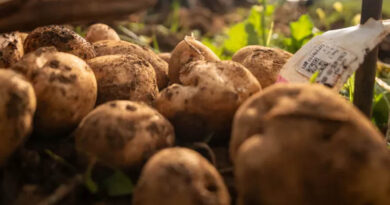
UK Approves Field Release of Gene-Edited, Bruise-Resistant Potato
13 November 2026, Harpenden, UK: Britain’s environment department has cleared a gene-edited potato engineered to resist bruising for release into the environment, one of the first commercial-track approvals under the country’s new precision breeding regulatory system.
The UK Department for Environment, Food and Rural Affairs (Defra) published a release notice on October 30, 2026, confirming that Phytoform, an agricultural biotechnology company based at the Lawes Open Innovation Hub in Harpenden, Hertfordshire, had met the requirements of the Genetic Technology (Precision Breeding) Act 2023 for its edited potato line. The notice states the release will take place in England on or after November 19, 2026.
According to the notice, Phytoform’s scientists isolated protoplasts (plant cells stripped of their outer wall) from young potato plants and introduced a site directed nuclease enzyme along with a synthetic guide RNA. The guide RNA directs the enzyme to a specific location in the potato’s genome, where it cuts the DNA. Because the cell’s own repair process, known as non-homologous end joining, is error-prone, the repair introduced small deletions that disabled both copies, or alleles, of the targeted gene. The enzyme and guide RNA are later broken down by the plant cell and do not remain in the finished plant. Defra’s notice does not name the specific gene that was disabled, but confirms the result: potato tubers from the edited line showed reduced bruising compared with unedited plants.
Bruising is a longstanding cause of financial loss in the potato supply chain. Tubers damaged during harvest, storage or transport are routinely downgraded or rejected by processors and retailers, and the discoloration that follows bruising is a cosmetic defect that does not affect the potato’s safety or nutritional value. A variety that resists bruising without a yield or quality trade-off would let growers and packers avoid some of that downgrading, though Defra’s notice does not disclose data on the scale of the improvement or whether the trait has been tested across multiple growing seasons or varieties.
Precision breeding versus conventional GM
The approval matters chiefly because of the regulatory route involved. The Precision Breeding Act, which took effect in England in 2025, created a lighter-touch pathway for crops and animals edited using techniques that could, in principle, have arisen through conventional breeding or natural mutation, as distinct from crops carrying inserted genes from another species. Developers must still notify Defra and its advisory committee before each release and confirm the organism meets the Act’s technical criteria, but the process avoids the lengthier case-by-case risk assessment required for conventional genetically modified crops under retained EU-derived rules. Phytoform’s notice confirms the company met both the marketing-prevention requirement, meaning the released plants will not enter the food chain at this stage, and the Act’s core precision breeding criteria.
Phytoform filed its potato notice alongside two separate release notices for gene-edited tomato lines, published by Defra on November 3, 2026. Defra’s summary pages for those filings, referenced PBR/26/011 and PBR/26/013, confirm only that both involve tomato plants intended for release in England on or after November 19, 2026; the specific traits and underlying gene targets were not detailed in the published summaries. Taken together, the three filings within days of each other point to Phytoform running a broader pipeline of edited potato and tomato traits through the UK’s precision breeding register rather than a single one-off project.
Phytoform has not published its own account of the potato work beyond what appears in the Defra filing, and the company’s website could not be accessed for this report (its settings block automated access). The gene-editing method described, a site directed nuclease delivered into protoplasts rather than via Agrobacterium-mediated transformation, is a route several plant biotech companies have adopted because it avoids inserting foreign DNA delivery machinery into the plant genome during the editing step itself.
For now, the approval covers only a release into the environment for further testing and development, not a commercial variety ready for growers. Defra’s register shows the clock on this specific trait starting November 19, 2026, when Phytoform’s edited potato plants are due to go into the ground in England.
Also Read: UPL Launches NeoTackler Bioinsecticide With Aurivis Tech
Global Agriculture is an independent international media platform covering agri-business, policy, technology, and sustainability. For editorial collaborations, thought leadership, and strategic communications, write to pr@global-agriculture.com