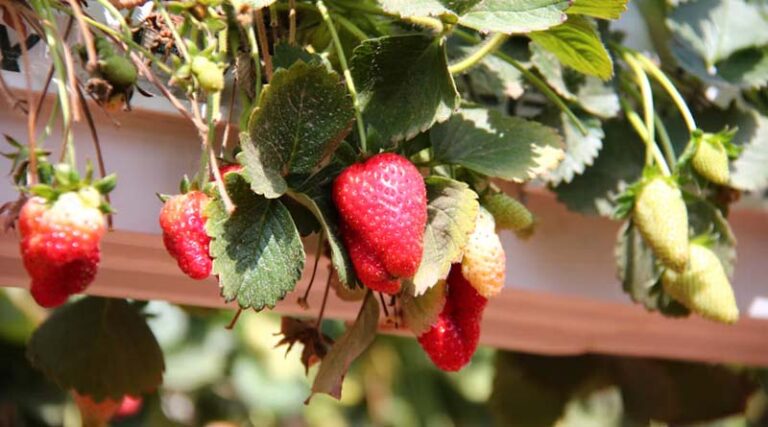
10 October 2026, England: Idaho-based food and agriculture company J.R. Simplot has used gene editing to create strawberry plants that keep fruiting over a longer stretch of the growing season, and the lines have now cleared an early regulatory step in England that moves them closer to field trials and eventual sale.
The UK’s Department for Environment, Food and Rural Affairs (Defra) published a marketing notice on August 21, 2026, confirming eight Simplot strawberry lines as “precision bred organisms” under England’s Genetic Technology (Precision Breeding) Regulations 2025. That law is separate from, and considerably lighter-touch than, the European Union’s rules for genetically modified organisms. It allows gene-edited crops to reach the market without the years-long dossier required for conventional GMOs, provided the edits only create genetic changes that could, in principle, have arisen through natural breeding or conventional mutation, rather than inserting foreign DNA.
The trait Simplot engineered is called remontancy, a breeding term for a plant’s ability to flower and fruit repeatedly through the season instead of producing one concentrated harvest. Many wild strawberries and some breeding lines are naturally remontant, and commercial strawberry breeders have long sought ways to extend the fruiting window without sacrificing fruit size or quality. Simplot’s approach targets a single gene, Terminal Flower 1 (Tfl1), which in many plants acts as a brake on continuous flowering. Switching it off removes that brake.
How the edit was made
According to the Defra filing, Simplot used CRISPR-Cas9, the gene-editing tool that works like a pair of molecular scissors guided to a precise spot in the genome, to knock out one or more copies of the Tfl1 gene across eight strawberry lines (identified in the filing as S4A-115, S4A-210, S4A-293, S4A-334, S4A-336, S4A-444, S4A-448 and S4A-480). Commercial strawberries are octoploid, meaning they carry eight copies of each chromosome rather than the two most crops have, so disabling a trait reliably usually means editing multiple gene copies at once. In one of the eight lines, S4A-210, the parent plant carried seven copies of Tfl1, and the editing process altered all seven, through a mix of small deletions of one to four base pairs, one 15-base-pair insertion, and a handful of single-letter substitutions. Notably, every piece of inserted genetic sequence came from the strawberry’s own genome rather than from another species, which is part of why the edits qualify under the UK’s precision breeding framework rather than being treated as a conventional transgenic GMO.
The editing tool itself was delivered using Agrobacterium, a soil bacterium long used in plant science to carry genetic material into cells, but only to express the CRISPR components temporarily. No Cas9 gene or other foreign DNA was left behind in the final plants once the editing was done, a method often called transient expression. Simplot then verified, across three generations of vegetative propagation (strawberries are typically grown from runners and plantlets rather than seed), that the edited Tfl1 sequences stayed stable and that no unintended changes had crept into the rest of the genome. That verification used standard PCR testing alongside nanopore sequencing, a newer DNA-reading technology that can scan long stretches of genetic code relatively cheaply, to cross-check the results.
Path to market
The Defra notice itself does not name an individual scientist; it is a regulatory filing rather than a scientific paper, and the company is the named applicant. Simplot has said it plans line-selection field trials in England during 2026, including taste testing to make sure the extended fruiting trait has not come at the cost of flavor, a common trade-off breeders watch for with remontant varieties. Commercial marketing is planned for England, Wales and Scotland once the lines complete the registration process, though they would still need to clear the UK Food Standards Agency’s food-safety review before reaching supermarket shelves.
Global Agriculture is an independent international media platform covering agri-business, policy, technology, and sustainability. For editorial collaborations, thought leadership, and strategic communications, write to pr@global-agriculture.com