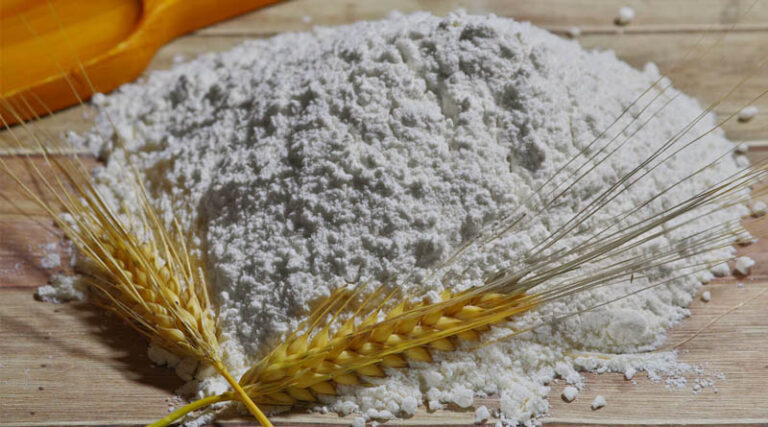
21 November 2026, London, UK: Non-wholemeal wheat flour milled for the UK market must contain added folic acid from December 13, 2026, when a 24-month transition period for the new fortification rules comes to an end. The government expects the measure to prevent around 200 cases a year of neural tube defects, serious birth defects of the brain and spine such as spina bifida.
Under the amended bread and flour rules, non-wholemeal wheat flour, which covers white and brown flour, must be fortified with 0.25 milligrams of folic acid per 100 grams of flour, equal to 250 micrograms. Folic acid is the synthetic form of folate, a B vitamin that is essential in the earliest weeks of pregnancy, often before a woman knows she is pregnant, when the baby’s neural tube forms and closes.
The Food Standards Agency, which updated its guidance in July 2026, says fortification is estimated to cut neural tube defect rates by around 20%. When the policy was announced in November 2024, the government also estimated savings to the National Health Service of about £20 million over 10 years.
What millers and bakers must change
The new requirement sits on top of fortification that UK millers already carry out. Non-wholemeal wheat flour has long been required by law to contain added calcium carbonate, iron, niacin and thiamine, and folic acid will now be added alongside those nutrients in the same milling step.
Each nation of the UK has passed its own legislation. The Food Standards Agency lists the Bread and Flour (Amendment) (England) Regulations 2024, equivalent 2024 regulations for Scotland and Northern Ireland, and the Bread and Flour (Wales) Regulations 2025. The trade body UK Flour Millers says the regulations set a 24-month transition period that ends on December 13, 2026, and food research organization Campden BRI says the folic acid provision comes fully into force on that date.
The scope is narrow by design. Wholemeal wheat flour is not covered, and neither are non-wheat flours such as maize, rice and spelt, so gluten-free products and many specialty breads will not carry added folic acid. According to Campden BRI, the transition period applies only to the change in composition; businesses were not given extra time to update product labels.
Much of the industry has already switched. Campden BRI reported in December 2025 that most UK millers made the change during 2025, and the Food Standards Agency said it expected some products to contain fortified flour from autumn 2025. That means many shoppers have been eating bread made with fortified flour for months without a visible change on the shelf.
The move also affects trade across the Irish Sea. Ireland’s food safety authority issued guidance in October 2025 allowing temporary over-stickers on labels of UK flour products sold in Northern Ireland and the European Union, where labelling rules differ, according to Campden BRI.
Joining a long list of countries
The UK joins a long list of countries with similar rules. The Food Fortification Initiative, cited by Campden BRI, says more than 80 countries may already require folic acid in flour or other staples. Supporters of fortification argue that folic acid supplements, which women are advised to take before conception and in early pregnancy, do not reach everyone, particularly where pregnancies are unplanned.
Fortifying a staple food reaches people through what they already eat. Wheat flour is used across bread, pastries, biscuits, pizza bases and many processed foods, which is why governments in many countries have chosen it as the vehicle for nutrients such as iron and folic acid rather than relying only on individual supplements.
The policy has also drawn criticism from some campaigners, who argue that people should be able to choose flour without synthetic additives. Under the rules, wholemeal and non-wheat flours remain unfortified, which gives consumers who wish to avoid added folic acid an option on the shelf.
Women who could become pregnant are still advised by UK health authorities to take a daily folic acid supplement. The government’s 2024 announcement said the changes would apply across the whole of the UK, with each nation introducing its own regulations, a process now complete ahead of the December 13 deadline.
Global Agriculture is an independent international media platform covering agri-business, policy, technology, and sustainability. For editorial collaborations, thought leadership, and strategic communications, write to pr@global-agriculture.com