20 November 2026, Bangladesh: Rice accounts for about 75% of cropped area and supports more than 16 million farming households in Bangladesh, making it central to the country’s food security, rural livelihoods, and environmental sustainability. Rice is also a major contributor to methane emissions, accounting for 47% of agricultural and 36% of total methane emissions in Bangladesh. Reducing emissions from rice cultivation therefore is critical but requires approaches that protect yields and farm incomes while contributing to national climate goals. A critical foundation is a credible system for tracking where the mitigation practices are adopted, how much emissions are reduced, and how accurately emissions are measured and reported.
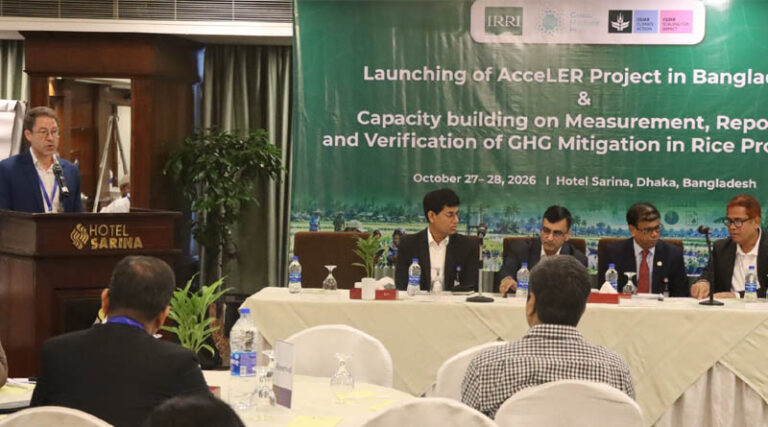
To support this effort, the International Rice Research Institute (IRRI) officially launched the Accelerating the Scaling of Low-emissions Rice Production in South and Southeast Asia (AcceLER) project in Bangladesh, a Global Methane Hub-funded initiative that supports countries in developing and implementing roadmaps for rice-sector methane reduction and strengthening systems to monitor progress toward national climate goals.
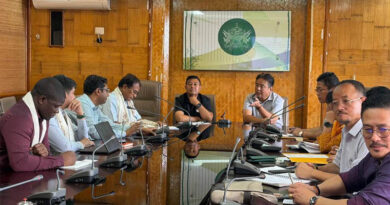
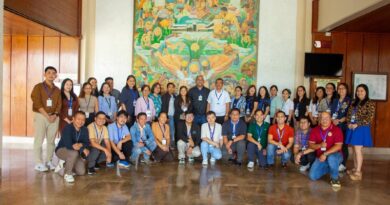
The project launch was held alongside a capacity-building workshop on measurement, reporting, and verification (MRV) of greenhouse gas (GHG) mitigation in rice production in Bangladesh, bringing together around 60 participants from the Ministry of Agriculture, the Ministry of Environment, research institutions, BBS, BADC, development partners, and other stakeholders. The event introduced AcceLER’s objectives and planned activities in Bangladesh while strengthening national engagement around low-emission rice production and climate action.
Organized under the AcceLER project and CGIAR’s Climate Action Science Program and Scaling for Impact Program, the workshop combined technical training with discussions on institutional coordination, GHG inventory, digital MRV systems, and the development of Bangladesh’s methane mitigation roadmap for the rice sector.
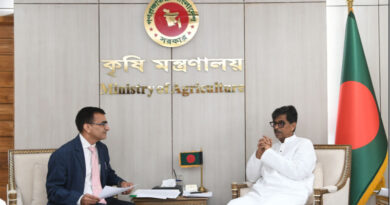
Opening the workshop, Agriculture Secretary Md Salim Khan stressed that Bangladesh must reduce emissions without compromising food security or farmers’ livelihoods.
“What we cannot measure, we cannot manage,” he said, highlighting how a transparent MRV system could strengthen Bangladesh’s greenhouse gas inventory and reporting under its Nationally Determined Contributions (NDCs), while creating opportunities for climate finance.
MRV systems help translate changes in agricultural practices into measurable evidence of emissions reductions. They provide information that governments can use to track climate commitments, identify priorities for investment, and assess where low-emission technologies can be scaled.
Md. Abdur Rahim, Director General of the Department of Agricultural Extension, linked field-level data to national ambition. He said reliable information from extension services is essential for scaling climate-smart agricultural practices and accessing international climate finance.
Building a system suited to Bangladesh
A central theme of the workshop was the need to match MRV approaches with Bangladesh’s institutional capacities, resources, and agricultural conditions.
Dr. Md Rafiqul Islam, Director General of the Bangladesh Rice Research Institute (BRRI) called for an MRV system that is cost-effective, scalable, and transparent. He identified alternate wetting and drying (AWD), climate-smart rice varieties, improved fertilizer management, direct-seeded rice, and better residue management as potential measures for reducing emissions. Tracking these practices requires clear monitoring indicators, consistent data collection, and coordination among the institutions that generate, manage, and report agricultural information.
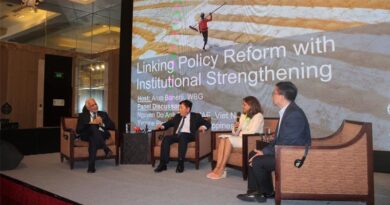
Technical discussions examined Bangladesh’s existing agricultural reporting systems, institutional responsibilities, and data flows for the GHG inventory. Participants identified the gaps a national rice MRV framework would need to fill. The sessions provided a basis for exploring how emissions monitoring could build on existing systems and strengthen connections between agricultural and environmental institutions. Participants also drew lessons from Cambodia and Viet Nam, where IRRI has supported similar efforts to advance low-emission rice cultivation and emissions reporting.
Linking research, digital tools, and implementation
IRRI Bangladesh Country Representative, Dr. Humnath Bhandari, highlighted the role of digital MRV systems in generating reliable emissions data at farm, project, and national levels. He said Bangladesh already has strong research and extension institutions and innovations. The task now is to connect them, so that what farmers do in their fields is reflected in national climate reporting and can attract investment to scale proven low-emission practices. Choosing the right tools means balancing data quality, costs, and the ability of institutions to share information.
Dr. Bjoern Ole Sander, IRRI scientist and AcceLER project leader, presented practical, research-tested approaches to reduce rice methane. He also emphasized that methane is a potent driver of both global warming and ground-level ozone, reinforcing the importance of action in the rice sector.
Dr. Sharif Ahmed, agronomist, IRRI, presented the key findings of the stock-taking study on MRV for agricultural management practices and GHG inventory in Bangladesh. His presentation highlighted the importance of rice production in the national GHG inventory and climate reporting framework, existing data flows and GHG estimation methodologies, and key bottlenecks affecting rice-sector MRV implementation. He also discussed potential mitigation options and opportunities for scaling low-carbon rice production through strengthened MRV systems, improved data management, and evidence-based climate action.
Advancing a coordinated approach to low-emission rice
The workshop brought emissions monitoring and mitigation planning into a shared discussion. Sessions on the suitability of water-management practices and methane mitigation roadmap development connected reporting needs with opportunities for action in rice fields. Together, these discussions supported a common understanding of the technical and institutional requirements for credible MRV. They also highlighted the importance of matching monitoring strategies and tools to national capacities and ensuring coordination across institutions.
Over the coming two years, AcceLER will work with national partners to develop Bangladesh’s rice mitigation roadmap and pilot MRV approaches. Through these efforts, IRRI aims to help Bangladesh in developing a coordinated, science-based approach to tracking agricultural emissions and scaling low-emission rice production -connecting climate commitments with the needs of the farmers who sustain the country’s rice sector.
Global Agriculture is an independent international media platform covering agri-business, policy, technology, and sustainability. For editorial collaborations, thought leadership, and strategic communications, write to pr@global-agriculture.com