Chief Minister Dr. Mohan Yadav is courting global investors to develop integrated industrial clusters, expand agrochemical and fertiliser manufacturing, and turn major projects into engines of sustainable economic growth.
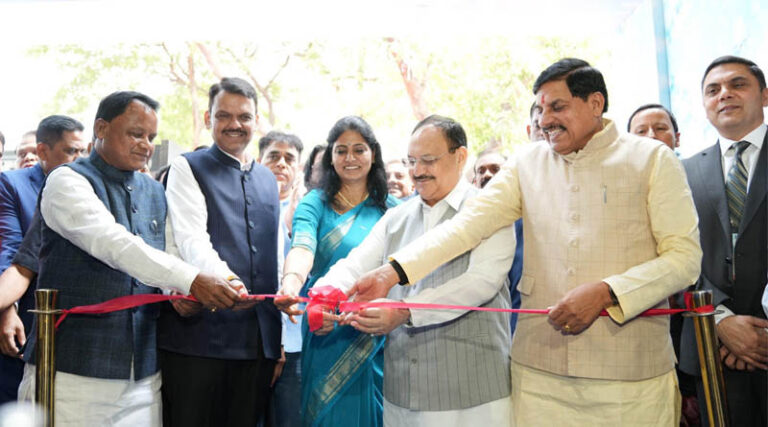
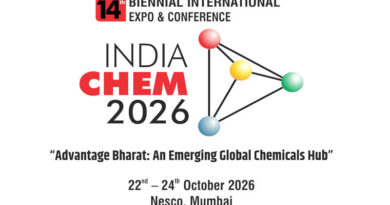
23 October 2026, Mumbai: Madhya Pradesh is seeking to strengthen its position in India’s chemicals and petrochemicals industry. Chief Minister Dr. Mohan Yadav’s participation in INDIA CHEM-2026 in Mumbai on October 22 reflects an investment strategy focused on petrochemicals, speciality chemicals, agrochemicals, fertilisers, pharmaceuticals and downstream manufacturing.
The state’s ambition extends beyond attracting large investments. It aims to build interconnected industrial clusters that generate local business opportunities, skilled employment and stronger links with domestic and global supply chains. Dr. Yadav has invited investors to explore the state’s potential and participate in the Global Investors Summit scheduled for January 2027, assuring them of transparent policies and government facilitation.
Bina: The Anchor of Petrochemical Growth
Bina in Sagar district is central to this strategy. A proposed downstream petrochemical development involving approximately ₹50,000 crore is expected to produce more than 2.2 million tonnes of petrochemical products annually. BPCL’s approximately ₹49,000-crore ethylene cracker and refinery expansion is expected to further strengthen the region’s industrial potential.
Proposed downstream petrochemical development (2.2 million+ tonnes a year)₹50,000
BPCL ethylene cracker and refinery expansion₹49,000
Combined, Bina (Sagar district)≈ ₹99,000 crore
Source: Government of Madhya Pradesh, statements at INDIA CHEM-2026, Mumbai. Figures are approximate and refer to proposed or planned investment.
Dr. Yadav has urged companies including Indian Oil, Reliance and Haldia Petrochemicals to explore downstream opportunities in polymer processing and distribution. The state’s plastic parks at Tamot and Bilaua, together with the PM MITRA textile park in Dhar, could connect petrochemical inputs with plastics, packaging, synthetic fibres and textiles.
The Chief Minister has also highlighted industrial opportunities linked to GAIL’s facilities at Vijaypur, its petrochemical project at Ashta, Grasim Industries’ complex at Nagda and a proposed petrochemical project at Dewas.
The strategic challenge is to translate these investments into a wider manufacturing ecosystem. The economic gains will depend on downstream industries, competitive logistics, local supplier participation and the timely development of supporting infrastructure.
Connecting Industry with Agriculture
For an agriculture-intensive state, agrochemicals and fertilisers offer an important link between industrial expansion and farm productivity.
Dr. Yadav has invited agrochemical companies including UPL, PI Industries, Dhanuka and Syngenta to consider Madhya Pradesh for manufacturing. He has also approached Indian and international speciality chemical companies to explore investment opportunities.
A stronger manufacturing base could support domestic supply chains, create technical jobs and expand opportunities in formulation, packaging and distribution. However, benefits for farmers will depend on product quality, affordability, reliable availability and responsible use.
The Chief Minister’s discussions also covered proposed fertiliser investments by Madhya Bharat Phosphate Private Limited, approximately ₹350 crore at Meghnagar and ₹700 crore in eastern Madhya Pradesh and an additional investment of around ₹350 crore by Lupin, including opportunities in bulk-drug manufacturing.
Source: Government of Madhya Pradesh. Proposals remain subject to approvals, financing and implementation.
These proposals could diversify the state’s industrial base, subject to approvals, financing and implementation.
Investment Proposals Must Become Operational Projects
The Madhya Pradesh government reports investment proposals exceeding ₹34 lakh crore over nearly three years, with proposals worth more than ₹12 lakh crore moving towards implementation. These figures indicate the scale of reported investor interest, but proposals must be distinguished from realised investment and operational capacity.
From Investment Proposals to Projects
Investment proposals received by Madhya Pradesh over nearly three years, ₹ lakh crore
Source: Government of Madhya Pradesh. Proposals and implementation-stage projects are not the same as realised investment or operational capacity.
The state is promoting its central location, industrial land, power availability, transport connectivity and investor facilitation as competitive advantages. Dr. Yadav’s direct engagement with industry leaders seeks to convert these advantages into concrete projects.
At INDIA CHEM-2026, Union Minister Jagat Prakash Nadda highlighted India’s ambition to expand its petrochemical industry and proposed support for major chemical parks and advanced industrial research. These initiatives could create further opportunities for states offering suitable infrastructure and a predictable investment environment.
Sustainability Will Shape Competitiveness
Chemical and petrochemical expansion also demands efficient water use, emissions control, effective effluent treatment and stringent industrial safety. Cleaner production and responsible resource management will be essential to long-term competitiveness, particularly where industrial growth must coexist with agricultural water requirements.
Dr. Yadav’s investment drive gives Madhya Pradesh an opportunity to move from individual industrial projects towards an integrated manufacturing ecosystem. Its success will ultimately be measured not by investment announcements alone, but by projects commissioned, jobs created, local enterprises engaged and products competing successfully in domestic and global markets.
The opportunity is substantial; execution will determine whether Madhya Pradesh becomes a more influential force in India’s chemicals and petrochemicals industry.
Global Agriculture is an independent international media platform covering agri-business, policy, technology, and sustainability. For editorial collaborations, thought leadership, and strategic communications, write to pr@global-agriculture.com