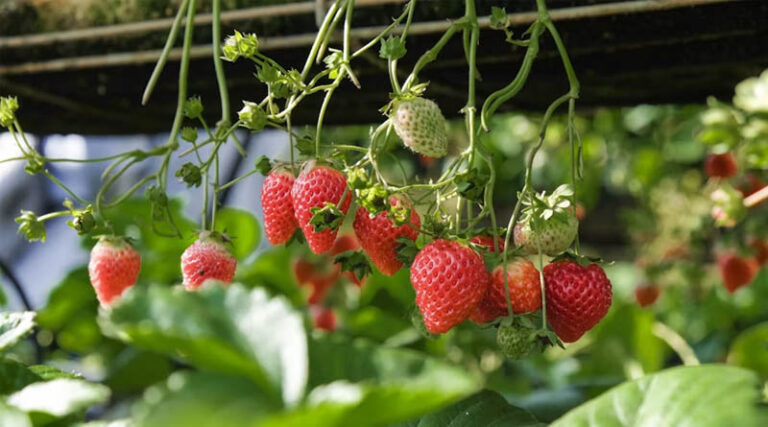
29 September 2026, Netherlands: Two European agricultural biotech companies, Plantik Biosciences of France and Hudson River Biotechnology of the Netherlands, announced on September 28 that they are extending a gene-editing partnership from tomatoes into strawberries, targeting heat tolerance as extreme temperature events become more frequent across major growing regions. The announcement was first reported by AgFunderNews, and validation trials on the edited strawberry material are already underway.
The two companies bring complementary pieces of the same puzzle. Plantik, based at the Genopole biotech cluster near Paris, has built a machine learning platform called ATLANTIS that scans what scientists call the “dark genome,” the large share of a plant’s DNA that does not directly code for proteins but instead controls when, where and how strongly nearby genes switch on. Rather than searching for a single gene to disable or insert, ATLANTIS is designed to identify small tweaks to these regulatory regions that adjust a plant’s existing traits without introducing foreign DNA. Hudson River Biotechnology, based at Wageningen Campus in the Netherlands, supplies the execution side through its BioMaas platform, which performs the actual genome edits in crop tissue using transgene-free methods, meaning the final plant carries no inserted genetic material from another species, only altered versions of its own DNA sequence.
From Tomato to Strawberry
The strawberry project builds directly on an earlier collaboration between the two companies that produced a heat-tolerant tomato line. According to the companies, that tomato was developed in roughly 12 months using the ATLANTIS-BioMaas combination, compared with the five to eight years a conventional breeding program would typically need to introduce and stabilize a similar trait. The edited tomato has since shown improved yield preservation under high-heat conditions in real-world trial settings, according to the companies, giving them a proof point to apply the same approach to a new crop.
Strawberries present a different breeding challenge than tomatoes. Commercial strawberry varieties are complex, high-value fruiting plants that are typically propagated clonally rather than from seed, and heat stress during flowering and fruit set can sharply cut both yield and fruit quality, a problem already visible in strawberry-growing regions from California to southern Europe during recent hot growing seasons. Plantik cofounder and chief executive Ying Shao said heat tolerance has become “a must-have trait for many crops across the globe” as extreme heat events grow more common, a rationale that applies as much to fruit and vegetable crops as to the row crops that have historically received more breeding investment.
Neither company disclosed financial terms of the expanded partnership or named specific funding behind the strawberry work. Hudson River chief executive Fernando Los and chief of staff Lotte Westerhof, both quoted in the original report, described the company’s ability to execute complex regulatory-region edits in a matter of months once a target is identified, underscoring that the current bottleneck in this style of crop improvement is increasingly the target-discovery step that ATLANTIS is built to speed up, rather than the editing itself.
The approach illustrated by this partnership, editing regulatory DNA rather than protein-coding genes, is part of a broader shift in plant biotechnology that regulators in several markets, including the European Union and India, have begun treating differently from conventional transgenic GM crops, since no foreign gene is inserted into the final plant. That distinction matters commercially: precision-bred or gene-edited varieties of this kind can often reach farmers faster and with a lighter regulatory path than first-generation GM crops, which is part of why venture-backed biotechs are racing to apply the model across specialty and fruit crops, not just the commodity row crops that dominated the first wave of agricultural biotechnology. For seed companies, nurseries and horticultural input suppliers serving strawberry and other high-value fruit sectors in India, the Gulf and Southeast Asia, where rising temperatures are already squeezing flowering and fruit-set windows, a validated method for compressing trait development from years to months is a preview of how climate-adaptation traits may increasingly reach the market.
Global Agriculture is an independent international media platform covering agri-business, policy, technology, and sustainability. For editorial collaborations, thought leadership, and strategic communications, write to pr@global-agriculture.com