23 November 2026, Zimbabwe: A new finger millet variety is expected to help Zimbabwe’s smallholder farmers significantly increase their harvests and incomes, creating new opportunities for rural economic growth and the commercialization of traditional grains.
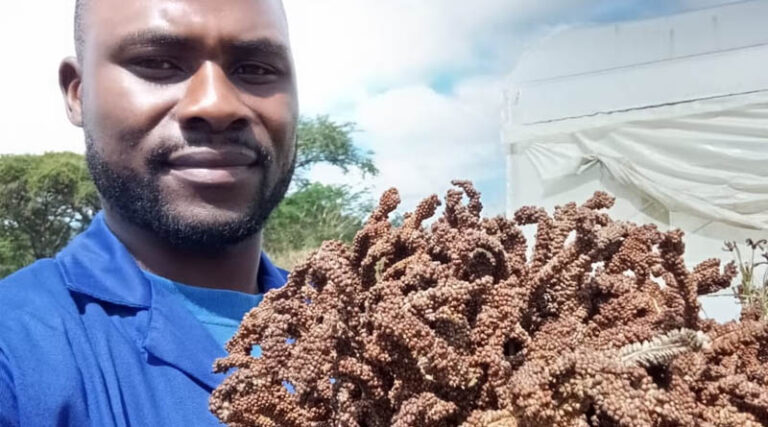
Named Muchekeranwa, the variety was introduced by the International Crops Research Institute for the Semi-Arid Tropics (ICRISAT) in partnership with Marondera University Seed Company Pvt Ltd.
Approved for release in Zimbabwe on 12 November 2026, Muchekeranwa has produced yields of 2.9 tonnes per hectare, more than ten times the national average of 0.28 tonnes.
Based on April 2026 market prices (US$364.75 per tonne), farmers achieving these yields could earn approximately US$956 more in gross revenue per hectare, before production costs.
For smallholder households, higher productivity could mean more food, better nutrition, greater marketable surpluses and additional income for education, healthcare and farm investments.
Highlighting the variety’s economic potential, ICRISAT Director General Dr Himanshu Pathak said improved productivity could make finger millet a more profitable crop for Zimbabwe’s smallholder farmers, strengthening household food security while expanding commercial production.
“This variety with the potential to deliver ten times the national average yield could fundamentally change the economics of growing finger millet, creating new opportunities for farmers, seed producers and food processors.
“I commend our scientists and partners at Marondera University for translating pioneering agricultural research into an innovation with the potential to deliver tangible economic and development benefits to rural communities,” said Dr Pathak.
With increasingly unpredictable rainfall and recurring droughts threatening agricultural production, early-maturing crops are becoming essential for Zimbabwean farmers.
Muchekeranwa flowers within 65–70 days and matures in approximately 100 days. Its high yield potential, short duration, broad adaptability and tolerance to disease and lodging make it a promising option for farmers facing shorter and less predictable growing seasons.
The next challenge is ensuring that improved varieties reach farmers at scale, allowing the benefits of higher productivity to translate into stronger rural economies.
“It is a game-changer for Zimbabwe’s farmers, offering an early-maturing, high-yielding variety that can help them cope with recurring droughts while boosting production and unlocking the commercial potential of this nutritious traditional grain,” said Mr Tinovonga Gonhi, Plant Breeder at Marondera University of Agricultural Sciences and Technology.
Finger millet is an important traditional grain in Zimbabwe, valued for its nutritional benefits, drought tolerance and use in local foods and beverages. However, limited access to improved varieties and quality seed has constrained productivity and commercial production.
“Muchekeranwa shows how crop improvement can help farmers achieve higher yields under increasingly challenging growing conditions.
Through its research and breeding programmes, ICRISAT continues to work with national and private partners to identify, evaluate and promote improved crop varieties that respond to farmers’ needs and changing climatic conditions.
“The release of Muchekeranwa demonstrates the institute’s commitment to strengthening the diversity of climate-resilient crops and supporting the transformation of traditional grain value chains said Dr Henry Ojulong, Finger Millet Breeder at ICRISAT.
Higher production could also stimulate demand for quality seed, expand opportunities for food processors and create new markets for rural enterprises. Realizing these benefits will depend on ensuring farmers have access to improved seed and stronger links to markets.
Muchekeranwa shows the potential returns from investing in agricultural research.
“The next priority is getting quality seed into farmers’ hands and building reliable supply chains that can support commercial production and attract investment in processing,” said Dr Albert Tsindi, Seed Systems Specialist at ICRISAT.
Global Agriculture is an independent international media platform covering agri-business, policy, technology, and sustainability. For editorial collaborations, thought leadership, and strategic communications, write to pr@global-agriculture.com