31 July 2026, Zimbabwe: Zimbabwe’s seed sector has reached an important moment. The recent conversation on Seed Production Technology (SPT) was not simply another technical workshop. It was a test of whether the country can move promising agricultural science from evidence to responsible use. For CIMMYT, the discussion was key as Seed Production Technology for Africa (SPTA) has moved from concept to a multi-country validation, to line conversion, to stakeholder engagement, and now to the point where national guidelines are needed to let the technology move through the seed system with clarity and confidence. The call for action begins with a practical problem in hybrid maize seed production. Hybrid seed depends on crossing selected parents, and the female parent must be prevented from shedding pollen so that the harvested seed is a pure hybrid seed. In much of sub-Saharan Africa, that is still done by manual detasselling. The process is labour-intensive, time-sensitive and imperfect. When tassels are removed late, purity is compromised. When leaves are removed with the tassel, seed yield falls. When quality is lost, the farmer pays for it through lower productivity, higher risk and less confidence in formal seed systems.
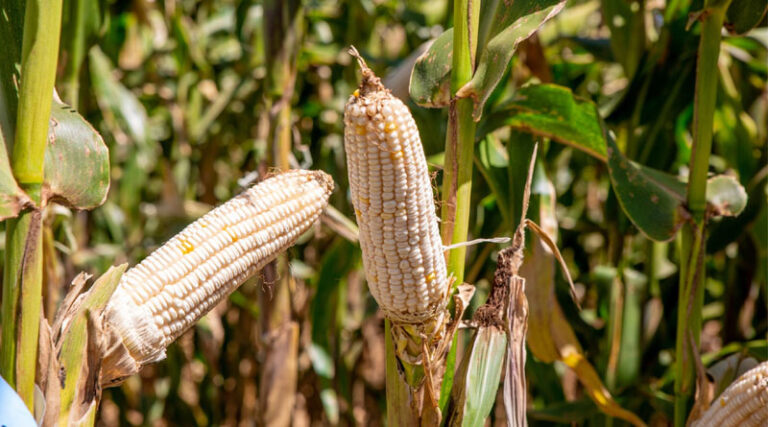
As a result, SPT responds to that problem through a simple but powerful biological idea that makes the female parent non-pollen producing. The SPTA system uses the Ms44 non-pollen-producing trait to produce female parent seed that does not require detasselling, making cross-pollination more reliable and helping seed companies produce high-purity hybrid seed more efficiently. A transgenic maintainer line is used upstream in the process, but the inbred non-pollen-producing seed, the basic seed and the final commercial hybrid seed sold to farmers are non-transgenic when the system is properly managed and verified. This distinction is the scientific heart of the regulatory conversation. It is also the point that must be communicated clearly to farmers, regulators, and seed companies.
The evidence is no longer theoretical. Field evaluations in Kenya, South Africa and Zimbabwe have shown that fifty percent of non-pollen-producing hybrids can deliver an average grain yield benefit of about 200 kg per hectare, equal to roughly 10 percent at national average yield levels in sub-Saharan Africa. More recent work on Ms44-SPT also showed that manual detasselling can reduce seed production yields by about 14 percent, largely because leaves are often removed along with the tassel. In practical terms, SPT is not only a seed production tool, but a food security tool, a seed quality tool and a cost-efficiency tool.
This is where CIMMYT’s value addition has been central. CIMMYT has helped turn SPTA from a scientific concept into a deployable platform, working with partners in a consortium that includes ARC, KALRO, Corteva and QualiBasic Seed Company. The project was designed to strengthen small and medium seed companies so that they can produce modern hybrid maize seed at lower cost and in sufficient quantities for smallholders. CIMMYT’s contribution has included evidence generation, testing, conversion of public-good germplasm, connection to breeding pipelines, structured engagement with seed companies and regulators, and translation of complex biology into a usable pathway for African seed systems.
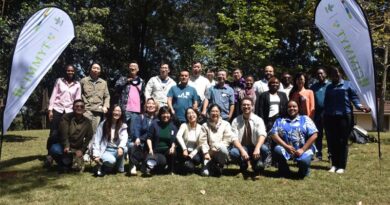
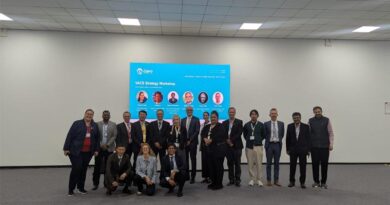
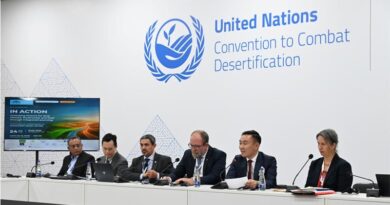
In Zimbabwe, that pathway has been deliberately built. CIMMYT’s engagement with the National Biotechnology Authority began with the concept of the technology, moved into stakeholder consultations and seed sector dialogue, and advanced to importation and testing of initial inbred non-pollen-producing materials under controlled conditions. The recent workshop brought regulators, researchers, seed companies and farmer representatives into one room because responsible deployment cannot be done by science alone. It requires institutions that can speak to each other, from biosafety regulators, seed certification authorities, breeders, industry and farmer organizations.
What is missing now is not evidence, but a predictable national guideline that tells applicants and regulators exactly how SPT materials will be assessed, processed and advanced through product development. Zimbabwe already has regulatory institutions that oversee biotechnology, biosafety compliance, permits, screening and seed-related controls. Seed Services also administers seed certification, testing, variety recognition and quality control. The gap is that SPT sits between familiar categories. It uses transgenic technology in the production and maintenance process, but the target seed class for farmers is non-transgenic. That requires a guideline specific enough to avoid confusion and flexible enough to support innovation.
The regulatory question should therefore be framed around status determination. What must be assessed is whether the progeny line or seed class contains recombinant DNA from the maintainer construct. The applicant should submit a clear description of the technology and breeding system, information on the maintainer construct, evidence of its regulatory history in other jurisdictions, the segregation and sorting system used, validated molecular data, quality-control records, identity preservation and chain-of-custody documentation. Confirmatory testing should be available where gaps appear, but regulation should not require unnecessary repetition where robust evidence already exists.
This is not a call for weaker oversight. It is a call for sharper oversight. A risk-proportionate SPT guideline would protect biosafety while preventing innovation from being trapped under the wrong label. It should distinguish SPT from conventional GMO release, from genome editing and from routine seed certification, while linking clearly to each where needed. It should also define scope: when one maintainer construct has been assessed and the absence of recombinant DNA has been demonstrated in defined progeny lines, the process should not restart from zero for every subsequent line without scientific reason.
The regional dimension is equally important. Seed does not stop at borders, and neither should regulatory learning. COMESA seed harmonization already aims to make regional seed movement more transparent, efficient and quality-assured. For SPT, Zimbabwe can learn from countries such as Kenya and South Africa, accept transportable data where standards are comparable, and help shape a Southern African pathway that reduces duplication while maintaining public confidence.
The next step is clear. Zimbabwe needs to give SPT a responsible go-ahead through national guidelines that enable processing, product development, stewardship and eventual deployment. CIMMYT and its partners have done the science, built the evidence and supported the conversation. The question now is whether policy can move at the pace of readiness. For farmers, the promise is simple: purer seed, better hybrids and a stronger seed system. For regulators, the task is equally clear: make the pathway science-based, transparent and workable. That is how innovation reaches the last mile and the farmer who is the ultimate end-user.
Global Agriculture is an independent international media platform covering agri-business, policy, technology, and sustainability. For editorial collaborations, thought leadership, and strategic communications, write to pr@global-agriculture.com