From Innovations To Impact: Cgiar Scaling Fund Selects Eight Promising Innovations
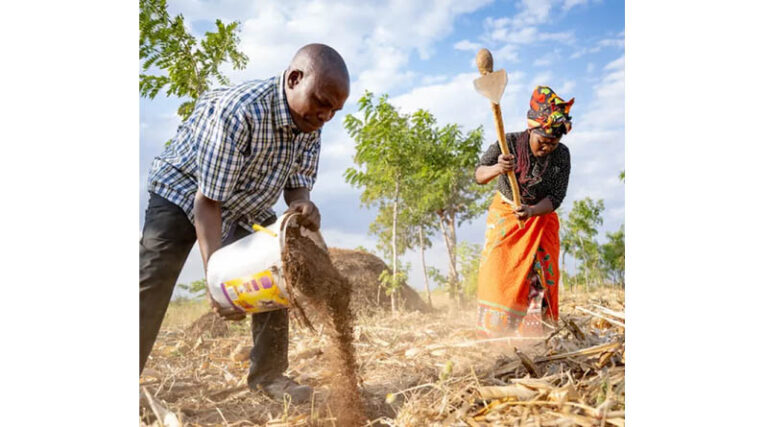
29 October 2026, Kenya: One winner, My Farm Trees, makes that potential tangible. Developed by the Alliance of Bioversity International and CIAT, the platform has enabled 9,000 farmers to plant 440,000 trees across 4,500 hectares of restored land. Piloted through 30 projects in 14 countries, it connects seed systems, nurseries and farmers with monitoring and performance-based digital payments. Kenya’s Ministry of Environment and Forestry is integrating it into national verification systems, while the World Bank is investing in its digital infrastructure.
These achievements demonstrate the promise of an innovation selected for support. The challenge now is to turn successful applications into lasting systems that can grow. That is where the Scaling Fund comes in.
Making the leap to lasting adoption
Promising agricultural solutions can stall between successful trials and widespread use: the innovation “valley of death”. A technology may work, yet lack the finance, delivery partners or institutional backing needed to reach more communities.
Now in its third year, the Fund combines catalytic grants with hands-on technical scaling support, expert guidance and peer learning. Operated by CGIAR’s Scaling for Impact program and coordinated by the Impact at Scale program at the International Livestock Research Institute (ILRI), it helps teams address the practical barriers between research and impact.
The Fund also connects teams with opportunities to learn from one another. This matters because expanding use requires choices about who delivers an innovation, who pays for it, and how it fits the needs and capacities of local communities.
The 2026 winners illustrate how varied those barriers are. For some, the next step is integrating services into government budgets; for others, it is attracting investment, adapting technologies or strengthening delivery networks.
Advice that reaches farmers
In Tanzania and Nigeria, AKILIMO is bringing rice and cassava advice together. Led by the International Institute of Tropical Agriculture (IITA) with the International Rice Research Institute ( IRRI) and AfricaRice, the team has integrated RiceAdviceLite into a platform already working with more than 100 cassava value-chain partners. Tailored recommendations can help farmers improve planting, fertilizer use and other decisions where extension services are stretched.
In Rwanda, the Smart Nkunganire System Fertilizer Recommendation Tool operates within a system serving 3.2 million registered farmers and more than 3,000 agro-dealers ordering subsidized inputs. Anchored in a public-private partnership between the Rwanda Agriculture and Animal Resources Development Board and BK Techouse, it has partners ready to co-invest. Further scaling design support is needed to develop three components and advance a sustainable, inclusive national advisory service.
Affordable water and stronger local services
The Solar-Based Irrigation Bundle tackles a major obstacle to irrigation: upfront costs. Developed and scaled in Ghana since 2021, its pay-as-you-go approach offers a route to reliable water. Wider adoption across Africa requires adaptation to local conditions, private investment, enabling policies and inclusive finance.
Nepal’s Village Livestock Promoters embed livestock advice and services within farmer organizations, building trust and ownership. Farmers have seen improved productivity and income, but training and establishment still depend on external development funding. By 2027, the team aims to secure budget commitments from four provincial governments, each supporting 15 promoters annually, alongside training modules in four provincial centers.
In the Horn of Africa, One Health Units bring human health, livestock and rangeland staff together in coordinated outreach. By October 2025, 25 units were operational across Ethiopia, Kenya and Somalia. Expansion to more than 40 units would bring services to more pastoralists facing remoteness, insecurity and limited public provision.
More value from fish and rice
On Lake Victoria, WorldFish’s Climate-Smart Fish Processing innovation promotes solar tent dryers, solar-powered and hybrid freezers, and improved smoking kilns. Early evidence points to better quality, longer shelf life, reduced firewood dependence and new processor income. Working with Homa Bay and Migori county governments, the team supports women and youth through CGIAR’s Sustainable Animal and Aquatic Foods program and Gender Equality and Inclusion accelerator.
Africa Rice Center’s GEM Parboiling System improves rice quality, milling recovery, nutrient retention and market value while reducing losses. Its rice husk-fueled configuration turns a by-product into renewable energy. Despite strong demand and more than a decade of development, adoption remains below its potential.
Across these winners, the Fund’s proposition is clear: finance innovation alongside the partnerships and delivery systems that make adoption last. Its support emphasizes responsible, demand-driven scaling, measurable benefits and attention to social and environmental risks.
Also Read: India Tops $4.39 Billion Emerging-Market AgTech Funding
Global Agriculture is an independent international media platform covering agri-business, policy, technology, and sustainability. For editorial collaborations, thought leadership, and strategic communications, write to pr@global-agriculture.com