Global Methane Hub Unveils $100 Million Strategy to Cut Rice Methane Emissions by 50% by 2040
The Rice Methane Innovation Accelerator will prioritise five research areas and establish research “Super Sites” across Asia to develop and validate emission-reduction solutions without compromising yields.
29 October 2026, Singapore: The Global Methane Hub has released a research strategy to reduce methane emissions from rice cultivation by 50% by 2040 while maintaining yields and meeting global food demand.
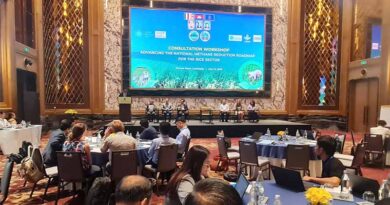
Unveiled during Singapore International Agrifood Week, the strategy outlines five research priorities for the Global Methane Hub’s Rice Methane Innovation Accelerator, launched in 2025 with an initial commitment of $30 million and a target of mobilising at least $100 million from philanthropic, public and private funders.
The five research areas cover agronomic practices, soil amendments, plant genetics, methane-reducing agents and measurement tools. The initiative will also establish research “Super Sites” across South, Southeast and East Asia to complement existing research infrastructure.
These sites will support field research and generate emissions data to validate technologies and models under conditions that reflect real-world farming. They will use scientific instrumentation and data management systems to evaluate the performance of different approaches and determine how they can be combined for practical application.
Rice Cultivation and Methane Emissions
Rice is a staple food for approximately half of the global population, particularly in Asia, sub-Saharan Africa and Latin America. For millions of people, it accounts for up to 70% of daily calorie intake.
However, rice cultivation contributes an estimated 8–12% of total human-caused methane emissions. China, India, Bangladesh, Vietnam and Thailand together account for nearly 80% of global methane emissions from rice cultivation.
Rice production is also facing increasing pressure from climate variability and extreme weather. The anticipated El Niño conditions in 2026 could affect production in several rice-producing countries. Authorities in the Philippines have warned of a potential 17% decline in rice production compared with the previous year, while production in India and Thailand is also expected to face challenges.
Hayden Montgomery, Agriculture Program Director at the Global Methane Hub, said reducing methane emissions from rice cultivation would require a combination of technologies and farming practices.
He said the strategy would focus on developing and validating solutions across agronomy, plant genetics and other research areas, while assessing how these approaches could be combined to make them practical and affordable for farmers without affecting harvests.
Research Priorities for Low-Emission Rice Production
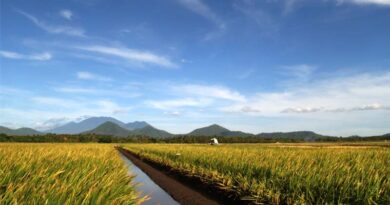
Methane emissions from rice cultivation primarily originate in flooded paddy fields. Waterlogged soils create oxygen-deficient conditions that support microbes which break down organic matter and release methane. Much of this methane enters the atmosphere through rice plants.
Without additional mitigation measures suited to different farming conditions, methane emissions from rice cultivation could increase by an estimated 7% by 2030.
One established approach is alternate wetting and drying (AWD), a water-management practice that allows paddy fields to dry intermittently rather than remain continuously flooded. The method has been reported to reduce methane emissions by 30–70%, depending on field conditions and implementation.
Other areas under investigation include soil amendments such as gypsum and biochar, methane-reducing agents, and genetic traits that could support the development of low-emission rice varieties.
The Accelerator will assess these approaches and their potential combinations, with a focus on reducing emissions while maintaining crop productivity, improving water-use efficiency and supporting farmers’ resilience.
Masa Iwanaga, a member of the Accelerator’s Science Oversight Committee, said the strategy provides a roadmap for developing a range of tools that farmers can adopt according to their needs and resources.
He noted that reducing methane emissions without compromising yields would be important for the long-term sustainability of rice production.
Funding and Research Partnerships
The Rice Methane Innovation Accelerator was launched with an initial $30 million commitment and aims to mobilise at least $100 million in total funding. Its funders and supporters include the Gates Foundation, Philanthropy Asia Alliance, Quadrature Climate Foundation, Rockefeller Foundation and Temasek Life Sciences Laboratory, among others.
The initiative is the Global Methane Hub’s second flagship research programme, following its Enteric Fermentation Accelerator. The latter has raised more than $200 million in pooled and aligned funding from philanthropic, public and private sources, with over $120 million deployed in research projects to date.
Floor Overbeeke, Director of Regenerative Agriculture at the Rockefeller Foundation, said the strategy would provide funders with a roadmap for supporting research and accelerating the deployment of validated methane-reduction solutions at scale.
The programme aims to translate research findings into approaches that farmers can implement across diverse rice-growing systems, supporting lower methane emissions while maintaining food production.
Also Read: India Tops $4.39 Billion Emerging-Market AgTech Funding
Global Agriculture is an independent international media platform covering agri-business, policy, technology, and sustainability. For editorial collaborations, thought leadership, and strategic communications, write to pr@global-agriculture.com