New wearable technology is designed to help companies, researchers, governments and farmers measure emissions from individual cattle more affordably and at scale
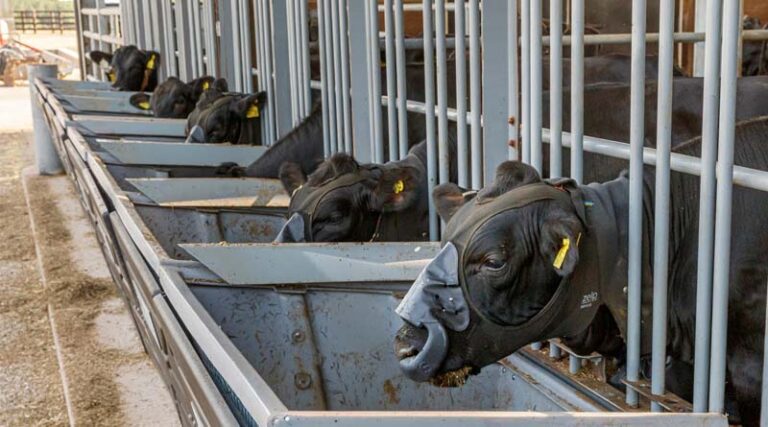
26 August 2026, London: ZELP has commercially launched ZELP Sense™, a wearable system designed to measure methane emissions from individual cattle in real-world farm conditions, marking a step forward in the practical measurement of livestock greenhouse gas emissions at scale.
The system combines a wearable device, automated data transfer and a mobile-optimised web application to provide continuous emissions data from individual animals. ZELP says the technology is designed for use in both commercial farming and research environments.
Traditional livestock methane measurement methods can be costly and operationally complex, and some require controlled environments or lengthy animal adaptation periods. ZELP Sense is designed to operate in real farm conditions without requiring cattle to enter measurement chambers or repeatedly visit fixed feeding stations, allowing animals to continue their normal feeding and drinking behaviour.
Methane is a potent greenhouse gas and is considered a major contributor to near-term global warming. Livestock digestion is a significant source of agricultural methane emissions, making reliable measurement important for assessing and validating methane-reduction technologies and strategies.
ZELP Sense collects emissions-related data from around the cow’s nostrils, which is processed using ZELP’s proprietary algorithms. The resulting estimates are presented in grams per day through ZELP Insight, a mobile-optimised web application.
According to ZELP, the system has undergone more than 20,000 hours of real-world use. Initial evaluation trials indicate that ZELP Sense can generate emissions estimates with reliability comparable to established measurement approaches.
The technology could support a range of applications, including large-scale livestock emissions inventories, development of emission factors, selective breeding programmes and the generation of data for emissions reporting, incentives and regulatory programmes. It could also help organisations developing methane-mitigation technologies assess the effectiveness of feed additives, vaccines and other interventions under commercial farm conditions.
“ZELP Sense is a practical, scalable way for the industry to measure emissions from individual cows,” said Francisco Norris, co-founder and CEO of ZELP. “We are already working with partners who want to measure Scope 3 emissions, run large-scale inventory programmes, accelerate the development of methane-mitigating feed additives and vaccines, and verify which strategies are working for their clients in the field.”
ZELP Sense was developed with co-funding from the Global Methane Hub’s Enteric Fermentation R&D Accelerator, which supports the development of practical solutions aimed at reducing methane emissions from livestock.
“This launch is an important milestone for our Accelerator programme and for the methane-reduction ecosystem more broadly,” said Hayden Montgomery, Agriculture Program Director at the Global Methane Hub. “Effective measurement is foundational to progress, and ZELP Sense promises to help generate the real-world evidence needed to identify, validate and scale effective enteric methane solutions.”
Animal welfare and ease of operation were also considered during the development of ZELP Sense. The wearable system features a breathable headpiece, a flexible nosepiece and a gas-sensing unit equipped with a breakaway safety mechanism designed to allow the device to detach if it becomes caught.
During development and testing, cattle generally displayed only a brief behavioural response when the device was fitted before returning to normal behaviour, according to ZELP.
Global Agriculture is an independent international media platform covering agri-business, policy, technology, and sustainability. For editorial collaborations, thought leadership, and strategic communications, write to pr@global-agriculture.com