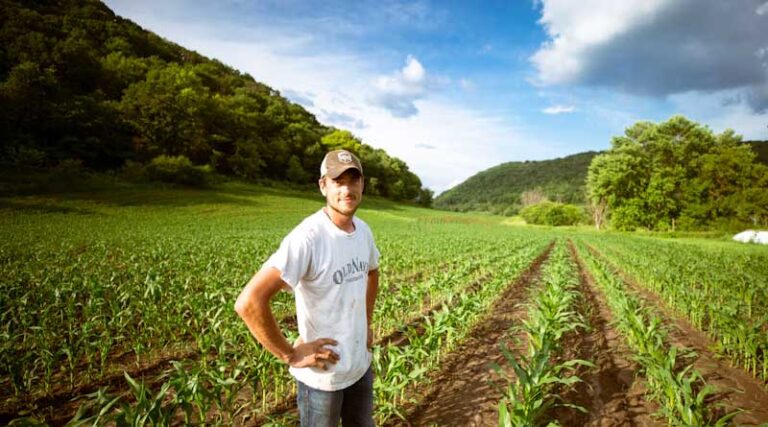
Report Exposes Exploitation Facing 1.4 Billion Food Workers
12 October 2026, Brussels: A new report from the International Panel of Experts on Sustainable Food Systems (IPES-Food), launched on October 5, finds that nearly 30 percent of the world’s food system workers, about 416 million people, earn less than a living wage, and describes the global food sector as exploiting more workers than any other industry on earth. The report, titled “Food Work,” estimates that the food system employs close to 1.4 billion people worldwide, roughly two in every five workers globally, making it the single largest employer on the planet.
IPES-Food is a Brussels-based international panel of food system researchers and policy experts, co-chaired by Olivier De Schutter, a former United Nations Special Rapporteur on extreme poverty and human rights. The panel’s report draws on case studies and data from across the food chain, from farms to retail to delivery platforms, spanning countries including South Africa, Malaysia and the United States, and argues that exploitation runs through the entire system rather than being confined to any single country or crop.
Six forces driving exploitation
The report identifies six overlapping forces that it says drive poor conditions for food workers worldwide. These are discrimination based on gender, class and race; migration systems that tie migrant workers tightly to a single employer, limiting their ability to leave abusive situations; concentrated corporate market power across food supply chains; digital technologies such as automated monitoring and gig-work platforms that intensify surveillance and reduce worker autonomy; the effects of a changing climate; and legal loopholes paired with weak enforcement of existing labour protections.
On the climate dimension specifically, the report finds that agricultural workers are increasingly exposed to heat stress, more variable and reduced working hours, and greater pesticide exposure as growing seasons and weather patterns shift. Raj Patel, an IPES-Food expert and research professor at the University of Texas, is among those associated with the report’s findings, alongside labour rights expert Susan Longley.
The report also highlights the scale of unpaid labour underpinning the food system: women are estimated to perform about 12.5 billion hours of unpaid care work every day, work that the report argues effectively subsidises the broader food economy without being counted or compensated. Sumitha Shaanthinni Kishna, an advocate and director of the migrant worker rights group Our Journey, is cited in connection with the report’s findings on migrant labour conditions.
Farms and warehouses under strain
The report cites specific examples to illustrate its broader argument. In South Africa, it points to a labour dispute involving retail group Makro and its parent Massmart, in which nearly 600 workers were dismissed after a strike, after which the company sued the union for damages. In the United States, the report cites worker surveys at Walmart in which close to three-quarters of workers reported feeling pressure to work faster under increased digital surveillance. It also flags conditions facing app-based delivery drivers globally, estimating that around 1,000 accidents occur daily among this workforce, with most drivers denied workplace injury compensation because of their classification as independent contractors rather than employees. In Malaysia, the report draws on testimony from migrant farmworkers to illustrate how recruitment and visa systems can leave workers dependent on a single employer for both their job and their legal right to remain in the country.
Taken together, the report argues that these conditions are not isolated failures but structural features of how the modern food system is organised, from field labour through processing, retail and last-mile delivery.
For readers in India and across the Global South, the report’s findings carry direct relevance, since India is itself one of the world’s largest agricultural employers, with large numbers of migrant and seasonal farm workers, informal labour arrangements, and growing use of digital monitoring in both farming and food delivery platforms, areas the report explicitly names as risk factors. The report’s point about pesticide exposure rising alongside climate stress is also pertinent for agrochemical and crop protection companies operating in India and Latin America, both regions where smallholder and seasonal labour remains central to how crops are grown, harvested and brought to market, and where worker safety standards and enforcement vary widely between large commercial operations and smaller farms.
The report does not propose a single fix, but argues that addressing exploitation will require action on labour law enforcement, migrant worker protections, and limits on the market power that lets large buyers push risk and cost down the supply chain onto the workers least able to absorb it.
Also Read: Syngenta Launches New Fungicide Kadexa SC in Canada
Global Agriculture is an independent international media platform covering agri-business, policy, technology, and sustainability. For editorial collaborations, thought leadership, and strategic communications, write to pr@global-agriculture.com