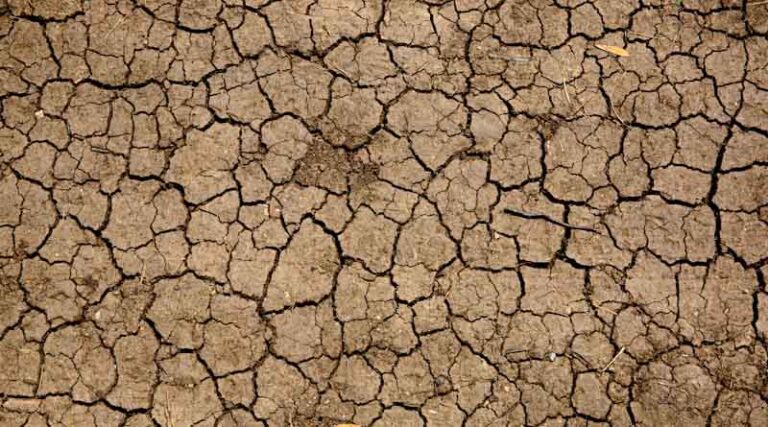
12 October 2026, Bengaluru: Karnataka’s government has told the Centre that drought losses across the state have reached roughly Rs 46,000 crore, as 217 of its 240 taluks remain officially declared drought-affected following a severely deficient monsoon. The state has formally sought about Rs 7,500 crore in relief under standard disaster-assistance norms, according to figures confirmed independently by The South First and NewsKerala, both citing the state’s second memorandum to the central government.
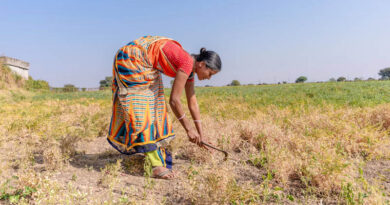
Deputy Chief Minister and Revenue Minister G. Parameshwara, who has led the state’s response, visited drought-hit fields in Sindhanur taluk of Raichur district on October 8 and said he had never, in forty years of public life, witnessed a drought of this severity. In Kalamangi village he inspected a farmer’s tur (pigeon pea) crop that had stayed around two feet tall, dried out, and produced no grain at all, an outcome he said was repeated across the state, with some areas reporting close to total crop destruction. Without waiting for central funds to arrive, Karnataka has announced Rs 1,250 crore in immediate state-funded aid and a payout of Rs 2,500 per farmer from its own resources, well short of the roughly Rs 8,500 combined union-and-state assistance that existing norms prescribe, pending the Centre’s share.
Central assessment still under way
Three central assessment teams, drawn from the ministries of Agriculture and Environment among others, began field visits across Karnataka’s regions on October 3 and completed their first round of evaluations by October 6, checking the state’s submitted figures against ground conditions in Tumakuru, Chitradurga, Davanagere, north Karnataka and the Mysuru region. Of the 217 declared drought-hit taluks, the state’s second memorandum covers losses assessed in 177 of them at close to Rs 46,000 crore; once the remaining taluks, including 40 added as recently as October 1, are fully assessed, the state expects total losses to climb to between Rs 50,000 crore and Rs 60,000 crore. Congress president Mallikarjun Kharge separately wrote to Prime Minister Narendra Modi seeking his direct intervention, citing crop losses across more than 19.5 lakh hectares and an estimated economic loss of around Rs 40,000 crore, a figure that differs somewhat from the state’s own tally, underlining how preliminary and contested these numbers still are. The state says roughly 49 lakh farmers have enrolled for crop insurance this season, and a third, final memorandum covering all 217 taluks is expected once central teams complete their work and local ground-truthing of a further 22 taluks is finished.
Maharashtra facing a parallel crisis
Karnataka is not alone. Maharashtra declared drought across 265 talukas in late September, concentrated in the Marathwada districts of Latur, Beed, Dharashiv, Nanded, Parbhani and Chhatrapati Sambhajinagar, and the Vidarbha districts including Yavatmal, Amravati, Akola and Nagpur. Soybean, maize and cotton were named as the worst-affected crops, with agriculture officials estimating at least a quarter of standing crops in Marathwada damaged after a roughly 45-day dry spell. Chief Minister Devendra Fadnavis toured affected districts in Latur, Dharashiv and Solapur, and the state has so far offered land revenue concessions, loan restructuring, suspended recovery on farm loans, and electricity bill relief, with direct cash compensation still pending a completed ground assessment. Maharashtra’s own monsoon deficit stood at roughly 18 percent through late September, with pockets like Solapur recording a 57 percent shortfall; researchers at IIT Gandhinagar’s India Drought Monitor found 84.1 percent of the state under dry or drought conditions in late September, against a national figure of 51.2 percent.
For India’s agri-input sector, two of the country’s most important farm states simultaneously reporting severe kharif crop failure carries direct commercial consequences. A near-total loss of pulses such as tur in Karnataka threatens to tighten domestic dal supplies and prices heading into winter, while Maharashtra’s soybean and cotton losses could dent India’s oilseed and fibre output at a time when global soybean and cotton markets, including major producers in Brazil and Argentina, are already adjusting to shifting demand patterns. Both states’ farmers will now lean more heavily on the rabi season to recover lost income, which typically means stronger-than-usual demand for seed, fertiliser and crop protection inputs once planting begins, provided water and credit constraints ease. Input suppliers and agri-retailers operating in these states should expect compressed farmer purchasing power through the rest of 2026, even as relief funds begin to flow.
Global Agriculture is an independent international media platform covering agri-business, policy, technology, and sustainability. For editorial collaborations, thought leadership, and strategic communications, write to pr@global-agriculture.com