Chinese Researchers Edit Rice Genes for Better Taste and Texture
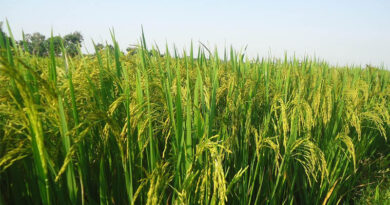
13 October 2026, Beijing: A research team from Henan Agricultural University, the Chinese Academy of Agricultural Sciences (CAAS) and Nanjing Agricultural University has used CRISPR/Cas9 gene editing to develop new rice germplasm with reduced levels of a grain protein linked to eating and cooking quality, according to a paper published in the Journal of Integrative Plant Biology.
The paper, titled “Development of low-prolamin rice germplasm via CRISPR/Cas9 editing to improve eating and cooking quality,” appeared in the September 1, 2026 print issue of the journal, after going online on August 20, 2026. It was accepted on August 11, 2026, roughly three months after submission in May. The corresponding authors are Yulong Ren, based at the CAAS Institute of Crop Sciences in Beijing, and Jianmin Wan, who holds joint appointments across Henan Agricultural University in Zhengzhou, the CAAS institute in Beijing and Nanjing Agricultural University. Three researchers, Zhihui Chen, Yu Chen and Gexing Wan, share credit as first authors.
Targeting a Little-Known Grain Protein
Rice grain stores much of its protein in a handful of distinct families, the best known of which are glutelins, globulins, albumins and prolamins. Prolamins make up a comparatively small share of total grain protein in rice, especially compared with wheat, where prolamin-type proteins dominate and shape dough quality. In rice, however, earlier research has linked prolamin content to grain hardness and to how the grain behaves during cooking and eating, including texture and stickiness. Breeders have long wanted a reliable way to dial down prolamin levels without disturbing other aspects of grain development, since conventional cross-breeding for this trait is slow and can bring along unwanted genetic baggage from donor lines.
The team’s approach was to apply CRISPR/Cas9 editing across multiple prolamin-encoding genes within rice at once, rather than knocking out a single gene. Multiplex editing of this kind lets researchers address redundancy in a gene family. Rice, like many crops, often carries several closely related copies of a gene with overlapping functions, so disabling just one copy may have little visible effect because the others compensate. By editing several prolamin genes simultaneously, the researchers were able to generate germplasm lines with substantially reduced prolamin content, creating new genetic material that plant breeders can use as a starting point for new varieties.
Because the paper was published as a brief communication, a shorter format the journal uses for concise, time sensitive results, the openly available summary does not include the full quantitative detail on exactly how much prolamin content fell in each line or the specific sensory and cooking tests used to evaluate eating quality. Readers wanting that level of detail will need to consult the full paywalled text. What is clear from the publication record is that the work produced usable low-prolamin germplasm, rather than a single proof of concept plant, giving breeding programs multiple lines to evaluate and cross into locally adapted varieties.
A practical advantage of the CRISPR/Cas9 approach, compared with older mutagenesis or transgenic methods, is that when the edited lines carry no foreign DNA inserted into the genome, they can in some jurisdictions, including parts of Asia, Europe and the Americas, qualify for lighter regulatory review than conventional genetically modified crops. This is particularly relevant in China, where gene-edited crop varieties have moved through a dedicated approval pathway separate from older GM rules since 2022. If the low-prolamin lines described in this paper follow that path, it could shorten the distance between a research result like this one and a commercial variety reaching farmers.
Also Read: FMC Wins UK Approval for New Cyantraniliprole Formulations in Potatoes and Carrots
Global Agriculture is an independent international media platform covering agri-business, policy, technology, and sustainability. For editorial collaborations, thought leadership, and strategic communications, write to pr@global-agriculture.com