Chinese Researchers Launch AI Tool That Predicts Crop Gene-Trait Links Across Species
14 September 2026, Anhui Province, China: A research team at Anhui Agricultural University in China has released Crop-GPA 2.0, a deep learning tool designed to help plant breeders predict which specific points in a crop’s genetic code are linked to important traits like yield, disease resistance and grain quality, and to do so across multiple crop species at once. The work, led by Professor Zhenyu Yue with first author Yujia Gao, was published in the journal The Crop Journal on September 10, 2026, and is offered as a free online platform that breeders can use without needing their own high powered computing infrastructure.
The tool addresses a long standing bottleneck in plant breeding known as genotype to phenotype prediction, essentially the challenge of figuring out which of the tens of thousands of small genetic variations in a plant’s DNA actually cause a visible or measurable trait, such as higher yield or drought tolerance. These small variations are called single nucleotide polymorphisms, or SNPs, and are effectively single letter differences in the genetic code between individual plants. Sifting through a genome to find which SNPs matter for a given trait has traditionally required large, trait specific datasets that take years and significant funding to assemble, something that is often unavailable for less commercially prioritized traits or for crops grown mainly in the developing world.
A model built to learn across species, not just within one
Crop-GPA 2.0 improves on the team’s earlier Crop-GPA 1.0 platform, which analyzed genetic associations at the broader gene level, by working at the much finer SNP level and by using three linked techniques. The first, called hierarchical genomic representation, means the model examines DNA sequence and structural information at multiple scales around each candidate SNP, rather than looking only at an isolated single letter change, allowing it to capture both immediate sequence context and broader genomic patterns. The second, cross species pre-training, means the model is first trained on genomic data spanning multiple crop species, so it learns genetic patterns and rules that tend to hold true across different crops before being fine-tuned for a specific one. The third, trait-aware learning, refines the model’s understanding for individual traits, allowing it to distinguish, for example, a SNP linked to disease resistance from one linked to drought tolerance, even when the underlying sequence signals are subtle.
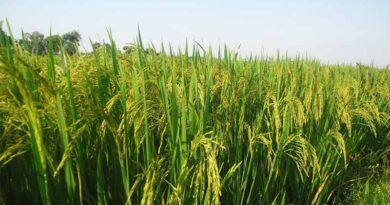
In testing across rice, maize and wheat, three of the world’s most important staple crops, and across traits including yield, disease resistance, stress tolerance and grain quality, the researchers reported that Crop-GPA 2.0 outperformed competing prediction methods and, importantly, kept working reasonably well even when transferred to a new species or given limited training data, a common real world constraint for breeders working on less well studied crops or regional varieties. The team also cross checked the model’s SNP predictions against previously documented quantitative trait loci, meaning genome regions already confirmed by earlier research to influence specific traits, and found the predictions aligned with this existing evidence, lending confidence that the tool is identifying biologically meaningful variation rather than statistical noise.
Practical value for breeding programs with limited resources
For plant breeding programs, the practical value lies in speed and accessibility. Rather than commissioning a dedicated, years-long genetic study for every new trait of interest, breeders can use Crop-GPA 2.0’s online platform to generate a ranked list of candidate SNPs linked to a trait of interest, which can then guide marker assisted selection, a breeding method that uses genetic markers rather than only visual observation to choose which plants to cross. Because the tool works reasonably well even with limited existing data, it is particularly useful for traits or crops that have historically been under-researched, extending modern genomic breeding tools to programs that could not otherwise afford to build them from scratch.
Also Read: UPL Expands Nature-Based Agriculture Portfolio with Investment in Japan’s PhytoChrome
Global Agriculture is an independent international media platform covering agri-business, policy, technology, and sustainability. For editorial collaborations, thought leadership, and strategic communications, write to pr@global-agriculture.com