Indian Students Win HACK CORE 2026 With AI Solution for Smarter Biologicals Adoption
Team SeedCoders wins national AI competition with AgroVani platform focused on crop residue monetisation and biological product recommendations
12 September 2026, New Delhi: Young Indian innovators are turning to artificial intelligence to address practical challenges in agriculture, with Team SeedCoders winning HACK CORE 2026, a national AI competition focused on developing technology-led solutions for farmers.
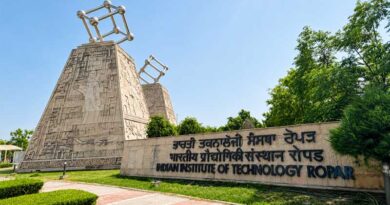
Organised jointly by IIT Ropar’s ANNAM.AI and Syngenta Biologicals, the three-day hackathon brought together students, researchers and technology enthusiasts to develop AI-based solutions for Indian agriculture.
Team SeedCoders emerged as the winner for AgroVani AI, a solution designed to help farmers monetise crop residue and stubble while providing timely recommendations on Syngenta biological products. The platform is supported by AgroSaathi, an AI chatbot designed to assist farmers.
As part of the winning prize, the four-member team will visit Syngenta Biologicals’ site in Atessa, Italy, gaining exposure to its facilities and tools used in biologicals research.
Dr. Pushpendra P. Singh, Project Director, ANNAM.AI, IIT Ropar, said the competition demonstrated the potential of bringing emerging technology talent closer to real-world agricultural challenges.
“I congratulate the winning team and all the participating teams for the innovative and ground-breaking ideas that can help accelerate the adoption of AI in India’s agriculture sector,” Singh said. He added that ANNAM.AI’s focus on skilling and capacity building under the Digital Agriculture Mission is aimed at strengthening India’s agricultural technology ecosystem.
The HACK CORE 2026 challenge was structured around three tracks: risk intelligence, biological product innovation engine, and outcome tracking and continuous learning.
Participants worked on solutions integrating climate, soil, crop and disease-risk data to generate recommendations for biological interventions and track field-level outcomes.
Biological solutions can perform differently depending on crop, soil, climate, disease pressure, geography and season, making contextual decision-making important for their effective adoption.
Eladio Robles, Country Head & Managing Director, Syngenta India, said, “Innovation in agriculture creates real value when it becomes useful at the farm level. Biologicals have an important role to play in supporting more sustainable and resilient agriculture.”
“By bringing together agricultural science, AI and field data, we can explore new ways to make these solutions more precise, relevant and actionable for farmers,” Robles added.
He said India’s diverse agricultural conditions require solutions that can adapt to local circumstances rather than rely on a one-size-fits-all approach.
“Combining Syngenta’s agricultural expertise with AI and open innovation gives us an opportunity to make agricultural decision-making more contextual – and to continuously improve it through real-world field outcomes,” Robles said.
The collaboration between IIT Ropar’s ANNAM.AI and Syngenta Biologicals highlights the growing role of AI in moving agricultural innovation beyond product development towards more contextual, data-driven decision-making at farm level.
Also Read: UPL Expands Nature-Based Agriculture Portfolio with Investment in Japan’s PhytoChrome
Global Agriculture is an independent international media platform covering agri-business, policy, technology, and sustainability. For editorial collaborations, thought leadership, and strategic communications, write to pr@global-agriculture.com