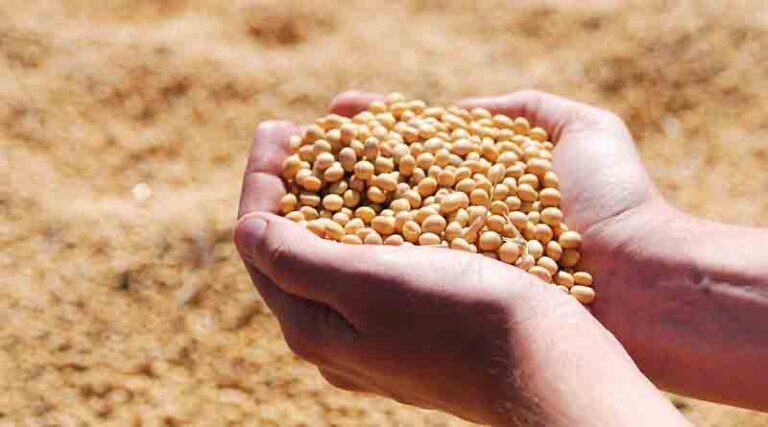
26 October 2026, Beijing: China’s state-owned grain trading companies have stepped up purchases of US soybeans for a second consecutive week, pushing cumulative commitments for the 2026-27 marketing year to roughly 15 million tonnes, trade sources told Reuters, as a trade truce reached when Presidents Trump and Xi met in late September continues to play out unevenly across different crops. The buying is real and has helped absorb harvest-season selling pressure in US grain markets, but it still falls well short of the 25 million tonne annual target the White House says Beijing committed to, and it comes with a structural catch: ordinary commercial buyers are largely staying away because of tariffs, leaving the trade dependent on state intervention.
Reuters reported that Chinese state buyers booked 8 to 10 Panamax cargoes of US soybeans in one week in mid-October, followed by 10 to 13 more cargoes days later, for combined purchases of roughly 1.2 to 1.5 million metric tons scheduled to ship between December and March. Bloomberg separately put one week’s bookings at around 20 cargoes, or about 1.3 million tonnes, loading from both the US Gulf and the Pacific Northwest. The USDA later confirmed a large share of the sales in its official daily and weekly export reporting. Trade analysts tracking the market said buying continued into the week of October 23, with several more cargoes booked, though an updated, independently confirmed cumulative total was not available at the time of writing.
A Tariff Gap Keeps Private Buyers on the Sidelines
The reason China’s private crushing companies have largely stayed out of the US market, even as state firms buy, comes down to cost. On September 28, China’s Ministry of Commerce announced tariff reductions on a range of US farm goods, but it specifically excluded commercial soybean shipments. US soybeans entering China still face a combined tariff of around 13%, which includes a roughly 10-percentage-point retaliatory levy added during the trade dispute on top of a smaller base rate. Brazilian soybeans, by contrast, enter under a 3% most-favoured-nation tariff. That roughly 10-point gap makes US beans uncompetitive for private buyers who have a choice of supplier, according to analysis from S&P Global, which expects the gap to persist and to keep state-linked purchases as the main channel for US sales in the near term.
Corn tells a starker story: China has bought essentially none. Zhang Dalong, agricultural products research director at COFCO Futures, said US corn is “not an option yet” for Chinese buyers, because even with a preferential 1% in-quota tariff, the import margin on US corn delivered between November 2026 and March 2027 remains negative, ranging from a loss of roughly 15.5 to 60 yuan (about $2.30 to $9) per tonne by one Reuters-cited calculation. Wider grain markets reflected the mixed picture heading into the weekend of October 23: wheat closed lower for an eighth consecutive week, pressured partly by hopes of Black Sea peace talks, while US corn export pace was reported running about 34% behind last year, due in part to slower-than-usual buying from Mexico.
The purchases are the second substantial round since the Trump-Xi meeting, following a earlier lull that traders partly attributed to China’s prolonged National Day holiday in early October. For now, the arrangement looks less like a reopened market and more like a managed, state-directed flow calibrated to hit a political target while leaving the underlying tariff structure, and therefore the private trade, largely untouched.
Global Agriculture is an independent international media platform covering agri-business, policy, technology, and sustainability. For editorial collaborations, thought leadership, and strategic communications, write to pr@global-agriculture.com