Robotics Testbed Network Backed by John Deere Expands to Washington Orchards
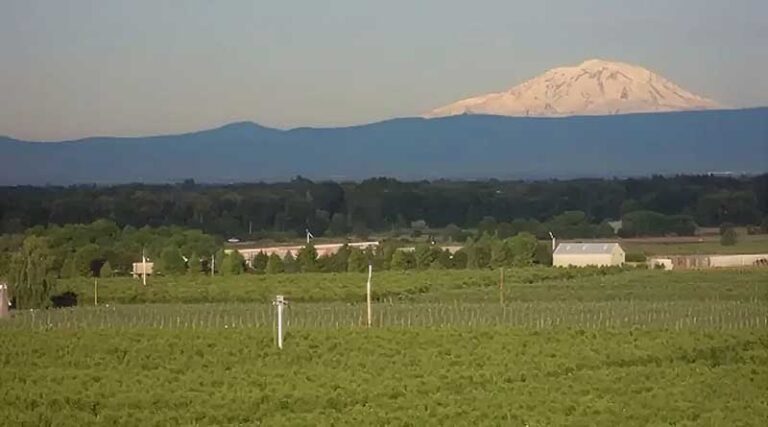
26 October 2026, Washington, D.C.: Reservoir Farms, a network that lets agricultural robotics startups test machines on working farms, is opening a new site in Washington’s Yakima Valley, expanding beyond its original locations in California and Arizona. The site, expected to open in spring 2027, will focus first on apples, pears, cherries and cultivated blueberries, with wine grapes and hops planned as later additions.
The expansion is backed by a mix of equipment manufacturers, grower groups and regional development bodies. John Deere has pledged 10 million dollars over three years to Reservoir’s broader network, while Western Growers, a trade group representing fresh produce growers, committed 1.5 million dollars over three years earlier in 2026. The Washington site itself draws additional support from the Tri-City Development Council, a regional economic development body, along with the Washington Tree Fruit Research Commission and the North American Blueberry Council, both grower-funded research organizations. Reservoir founder Danny Bernstein said he is also exploring a research partnership with Washington State University’s Prosser Irrigated Agriculture Research and Extension Center, though that tie-up is not yet confirmed.
How the Testbed Model Works
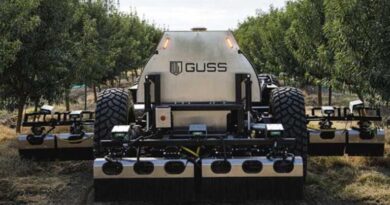
Reservoir’s approach is built around what is often called a living lab: a working commercial farm where early-stage robotics companies can trial machines under real field conditions, uneven terrain, dust, variable canopy density and unpredictable weather, rather than only in a lab or greenhouse. Growers and researchers observe the trials directly and feed back practical issues in real time, which can shorten the gap between a prototype that works in controlled conditions and one that survives an actual harvest season. Reservoir already operates sites in Salinas and Sonoma, California, and Yuma, Arizona, and says its startup membership has now passed 30 companies. It charges for access through a tiered system, ranging from a free entry-level tier up to a top package priced at 6,000 dollars a month.
Four startups have already signed on to join the Washington site. Bonsai Robotics is developing AI-powered field robots, Sky Sense builds drone-based systems to deter birds from damaging fruit crops, Cordon focuses on precision spraying, and Rootline Robotics is developing a weeding method that kills weeds using electric current rather than herbicide or cultivation. Ines Hanrahan, executive director of the Washington Tree Fruit Research Commission, said a machine that has not been through a full Washington growing season is not ready for one, adding that growers will not adopt technology that has not been developed and tested locally. That point speaks to a chronic problem in farm robotics: machines that perform well in one region’s orchards or climate often fail when moved to another, and local testing before commercial launch is meant to close that gap.
Why Equipment Makers and Growers Are Buying In
For Washington’s tree fruit industry, the appeal is tied directly to labor economics. Labor costs make up roughly half to just under 60 percent of variable production costs in Washington apple orchards, a cost structure that has pushed growers to seek automation for tasks such as picking, pruning, spraying and bird deterrence that are currently done by hand or by machines that require significant manual oversight. Bernstein said few companies are currently trying to build complete robotic systems for these tasks, and that Reservoir is particularly interested in supporting components that handle physical manipulation, the actual gripping, cutting or placing of plant material, which remains one of the hardest unsolved problems in field robotics. He said the next five to nine years are likely to see significant innovation in that specific area.
For John Deere and other large equipment makers, backing a network like Reservoir offers early visibility into robotics startups years before they would otherwise appear on a major manufacturer’s radar, potentially informing future acquisitions, partnerships or in-house product development. For grower organizations like the Washington Tree Fruit Research Commission and the North American Blueberry Council, funding a local testbed gives growers a say in shaping which tools get built and how they are tested, rather than simply receiving finished products designed for other regions or crops.
The model has relevance well beyond the Pacific Northwest. Labor-intensive horticulture, fruit, vegetables and berries in particular, faces similar labor availability and cost pressures in India and other major producing countries, and the testbed structure, pairing growers, research institutions and equipment capital around real field trials before commercial launch, offers a template that agricultural technology incubators, grower cooperatives or horticulture boards elsewhere could adapt. It also signals where global equipment manufacturers are currently placing early-stage bets, information that matters to agri-input and machinery companies anywhere trying to anticipate which automation categories will mature first.
Also Read: India: FSSAI Proposes New Residue Limits for Acetamiprid and Imidacloprid in Tea
Global Agriculture is an independent international media platform covering agri-business, policy, technology, and sustainability. For editorial collaborations, thought leadership, and strategic communications, write to pr@global-agriculture.com