26 October 2026, Kakinada: The Asian Development Bank and the Government of Japan have signed financing agreements for a $100 million loan backing one of the world’s largest green ammonia projects, a plant in Kakinada, Andhra Pradesh, that will convert a formerly gas-powered fertilizer facility to run on renewable energy.
The loan comes from the Leading Asia’s Private Infrastructure Fund 2, which is financed by the Japan International Cooperation Agency (JICA) and administered by the ADB, and goes to AM Green Ammonia (India) Pvt Ltd, the company developing the Kakinada project. ADB President Masato Kanda framed the investment around fertilizer supply, saying “ammonia is used every day to produce the fertilizer that helps feed the world.” Japan’s Finance Minister Satsuki Katayama said the project reflects the importance of “strengthening resilience of Asia’s energy supply chains,” linking it to Japan’s broader Partnership On Wide Energy and Resources Resilience (POWERR) Asia initiative.
First deal under a new energy security fund
The agreement marks the first investment under ACCEL (Action for Creating Energy Security for Long-term Resilience), a joint ADB-Japan initiative launched in May 2026 to help countries across Asia and the Pacific manage volatile energy prices and build more sustainable, secure energy systems. By channelling its debut investment into fertilizer production rather than power generation or transport, the initiative is signalling that agricultural input security sits alongside electricity and fuel supply as a strategic priority for the region, a notable shift given how exposed fertilizer costs have been to natural gas price swings over the past several years.
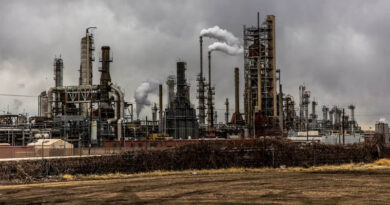
The Kakinada facility itself was originally a conventional ammonia and urea complex running on natural gas feedstock. AM Green Ammonia is converting it to produce green ammonia, made using renewable electricity to split water into hydrogen, which is then combined with nitrogen rather than relying on fossil-fuel-based processes. The project is planned in two phases, each centred on an ammonia production train with a capacity of roughly 547,500 tonnes a year, taking total planned output to about 1.1 million tonnes annually once fully built out. The article detailing the financing did not specify a timeline for Phase 2, noting that it depends on AM Green securing additional long-term offtake agreements, essentially binding commitments from buyers, before construction proceeds on that second train.
Decarbonising a famously carbon-intensive industry
Conventional ammonia production, the backbone of the world’s nitrogen fertilizer supply, is one of the most energy- and emissions-intensive processes in the chemical industry, typically relying on natural gas both as fuel and as the hydrogen source. Green ammonia projects like Kakinada aim to strip the carbon out of that process by substituting renewable power and electrolysis for the gas-based route, though the economics have historically been challenging without concessional financing of the kind ADB and Japan are now providing. Beyond supplying India’s domestic fertilizer market, the project is also being positioned as the seed of a new green ammonia export industry for India, which could eventually supply shipping fuel and industrial feedstock markets in Japan, South Korea and Europe that are themselves under pressure to decarbonise.
For India’s fertilizer sector, which remains heavily dependent on imported natural gas and, in turn, on global gas price swings to keep urea and ammonia production affordable, a credibly financed renewable-ammonia project is a meaningful signal that blended public financing, pairing a concessional loan with a private developer, can work at scale in this sector. It also arrives as India continues to push domestic capacity expansion under its broader fertilizer self-reliance push, giving policymakers a live example of a decarbonisation pathway that does not require building an entirely new greenfield plant from scratch.
Global Agriculture is an independent international media platform covering agri-business, policy, technology, and sustainability. For editorial collaborations, thought leadership, and strategic communications, write to pr@global-agriculture.com