Is Green Steel Within Reach? TERI-Transition Asia Study Charts Course for India’s First Hydrogen-DRI Hub in Andhra Pradesh
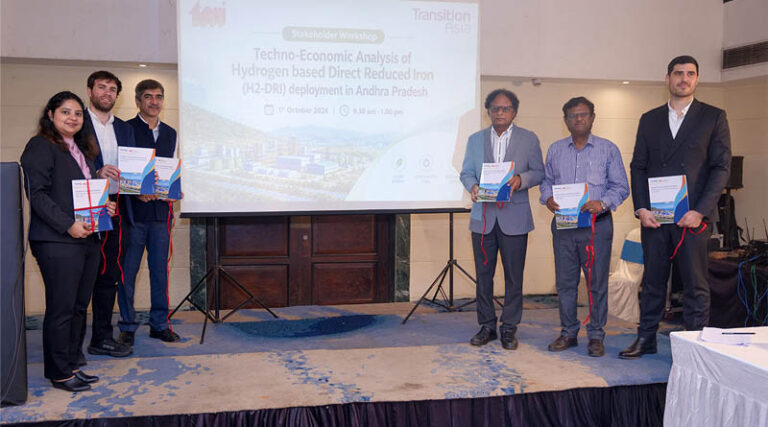
05 October 2026, Visakhapatnam: The Energy and Resources Institute (TERI) and Transition Asia today released a landmark study, ‘Is Green Steel within reach in India? Green DRI Economics, Policy Drivers and Site Feasibility in Andhra Pradesh,’ at a stakeholder workshop held here. The report presents a techno-economic analysis of deploying commercial-scale Hydrogen-based Direct Reduced Iron (H₂-DRI) technology in the state, examining production pathways, renewable energy integration, infrastructure needs, costs and the policy interventions required to make green steel commercially viable.
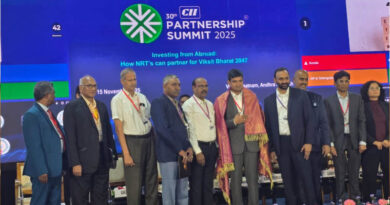
The workshop brought together senior officials from the Government of Andhra Pradesh, state power utilities, industry leaders from the steel, energy and technology sectors, and academia to discuss the report’s findings and validate its recommendations.
Why Andhra Pradesh
The global iron and steel sector contributes nearly 7–8% of energy-related CO₂ emissions, making it one of the hardest sectors to decarbonise. With the European Union’s Carbon Border Adjustment Mechanism (CBAM) reshaping global trade and India advancing its own Carbon Credit Trading Scheme (CCTS) and Greening the Steel Sector roadmap, hydrogen-based ironmaking is emerging as a strategic lever for a globally competitive, low-carbon steel industry. Andhra Pradesh’s strategic ports, abundant renewable energy resources, industrial ecosystem and Integrated Clean Energy (ICE) Policy — spanning renewable energy, green hydrogen, green ammonia, storage and transmission — position the state as a potential hub for green steel manufacturing and exports.
Key Findings
1. The green premium is modest and the routes have converged at 100% hydrogen green steel costs $571–606/tcs (₹49,800–52,800) against $536 (₹46,700) for the BF-BOF. The routes sit within $35 /tcs (₹3,100/tcs) of one another, so the reactor is chosen on iron feed, maturity and emissions.
2. The domestic carbon market works through the pace of its targets: A greenfield plant earns no CCTS credit in its first years; its gain is the certificate cost placed on the BF-BOF fleet, $10–45/tcs (₹870–4,900) by 2035 ($24/tCO2; ₹2,100/tCO2 with targets tightening 2% a year, to $50;₹4,400 with 5%). A common emission-intensity threshold would reward it directly.
3. The EU border helps on exported tonnes only CBAM lands hydrogen-based steel $179–209/tcs (₹15,600–18,200) below Indian BF-BOF steel in 2033; India exports 3–5% of its steel.
4. Hydrogen is the plan; natural gas is only a fallback: Hydrogen beats gas in the same reactor at $1.70–2.11/kg (₹148-184/kg). A gas start costs $531–553/tcs (₹46,300–48,200/tcs) but emits 0.8–1.2 tCO2/tcs with dependence on imported LNG.
5. Procurement matters more than technology: The power contract rests on two concessions, the group-captive surcharge exemption ($81–94/tcs; ₹7,100–8,200/tcs) and utility banking ($50–57/tcs; ₹4,400–5,000/tcs). Only the base case with both clears a 1.3 times debt service covenant.
6. Hub hydrogen is the largest lever in the plant’s own hands: Buying at $2/kg (₹174/kg) takes $1.2 billion (₹10,500 crore) of electrolyser capital off the balance sheet and lifts debt cover from 1.65 to 1.93 times. The session commenced with welcome remarks by Mr Girish Sethi, Senior Director, TERI, who spoke about the significance of the study and TERI’s role in supporting India’s green steel transition. He highlighted the commercial challenge facing green hydrogen, noting that companies will naturally look for viable returns and that many emerging projects in Andhra Pradesh are linked to export markets. He described the current situation as a “chicken and egg” challenge, where green hydrogen may be available but at a higher cost, while buyers are not yet willing to pay that price, creating a challenge for producers seeking to bring costs down.
Mr Alastair Jackson, Head of Research, Transition Asia, in his opening remarks on the techno-economic case for H₂-DRI in Andhra Pradesh and Transition Asia’s collaboration with TERI, highlighted that India’s growing steel demand makes low-carbon steel production “not just a climate or environmental obligation but a strategic national priority.” He emphasised India’s opportunity to leapfrog conventional pathways by leveraging its abundant renewable energy resources, iron ore, and emerging green hydrogen capabilities to build a globally competitive low-carbon steel industry.
This was followed by a detailed presentation on national and state-level policies by Ms Meenu Saini, Associate Fellow, TERI, and a presentation on the techno-economic case for H₂-DRI in Andhra Pradesh by Mr Alastair Jackson, Head of Research, Transition Asia.
On the power sector’s role in enabling green hydrogen and green steel deployment, Mr Surya Prakash T.V., Director (Operations), Eastern Power Distribution Corporation Limited (APEPDCL), highlighted the crucial role of reliable and competitively priced renewable electricity in enabling the commercial viability of green hydrogen projects. Referring to the Andhra Pradesh Clean Energy Policy 2025, he highlighted incentives such as exemptions on intrastate transmission charges, cross-subsidy and additional surcharges, as well as financial support for infrastructure development in designated green hydrogen hubs. He also highlighted the options available to procure renewable power through open access, third-party procurement, and power exchanges. He reaffirmed APEPDCL’s commitment to supporting the state’s green hydrogen and green steel production through reliable and affordable power supply, renewable energy integration, and grid strengthening for emerging industrial clusters. On Andhra Pradesh’s renewable energy and clean-energy policy readiness, Mr Srinivas K., General Manager, NREDCAP, highlighted the significant growth potential for green hydrogen demand in the coming years, particularly in the refinery, steel, and transport sectors. He also noted the opportunities for green ammonia exports, particularly to markets such as Japan and European countries.
AM Green, NTPC Green Energy, and Danieli subsequently presented technology perspectives covering different aspects of the H₂-DRI value chain, highlighting the opportunities associated with its deployment in Andhra Pradesh.
The technical and policy presentations were followed by a roundtable discussion moderated by Mr Sobhanbabu PRK, Senior Fellow, TERI, with participation and valuable contributions from AM/NS India, GAIL, APEPDCL, Andhra University, Indian Institute of Petroleum and Energy (IIPE), Danieli, and NTPC Green Energy Limited.
Also Read: Indonesia Raises October Palm Oil and Cocoa Reference Prices
Global Agriculture is an independent international media platform covering agri-business, policy, technology, and sustainability. For editorial collaborations, thought leadership, and strategic communications, write to pr@global-agriculture.com