ICAR Scientists Identify Eight Stable, High-Yield Onion Genotypes Across India
05 October 2026, Pune: Scientists at the ICAR-Directorate of Onion and Garlic Research (DOGR) in Rajgurunagar, Pune, working under the All India Network Research Project on Onion and Garlic, have identified eight onion genotypes that combine high yield with unusually stable performance across India’s varied growing conditions, according to findings published in the Indian Journal of Genetics and Plant Breeding and reported on October 2.
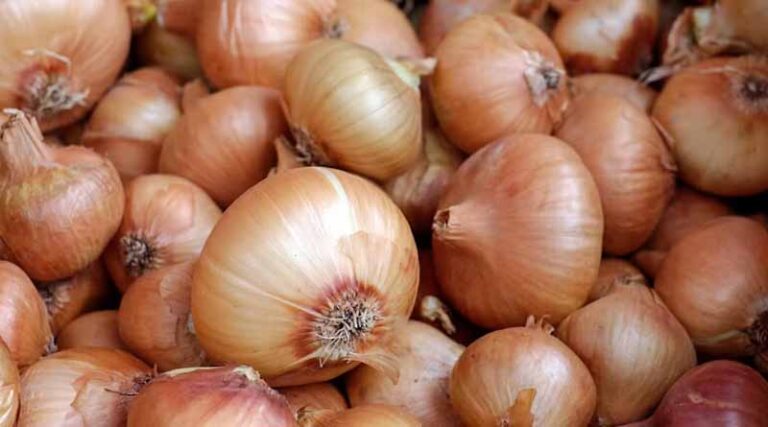
The genotypes, drawn from trials conducted across five contrasting agro-climatic locations during the rabi season, include five red onion lines, RO-1769, RO-1773, RO-1783, Bhima Kiran and NHRDF Red-2, and three white onion lines, W-444, W-500 and W-045. Researchers describe these genotypes as showing minimal genotype-by-environment interaction, meaning their yields stayed close to expected levels regardless of where they were grown, a trait breeders prize because it reduces the risk a variety will underperform when it moves from a research station to a farmer’s field in a different region.
Why stability matters as much as yield
Onion breeding programmes globally have historically chased raw yield gains, but a variety that performs brilliantly in one location and poorly in another is of limited practical use to a seed company or a national breeding programme trying to recommend a single line across multiple states. By explicitly screening for genotype-by-environment stability across five distinct agro-climatic zones, the DOGR-led study set out to identify lines that extension officials and seed producers could recommend with more confidence to farmers in regions the lines were not originally bred for.
India is the world’s largest onion producer and, in most years, among its largest exporters, with growing regions spanning Maharashtra’s Nashik belt, Karnataka, Madhya Pradesh, Gujarat, Rajasthan and parts of eastern India, each with markedly different soil, rainfall and temperature profiles. A genotype that performs reliably across that range has more immediate value to India’s seed sector than one that excels only under the specific conditions of a single research station.
From trial plot to seed sector
The identification of stable genotypes is typically an intermediate step rather than a finished product. Lines that clear this kind of multi-location stability screening are usually the ones that advance toward formal varietal release, after which they can be multiplied and licensed to seed companies, cooperatives or state agriculture departments for commercial distribution to farmers. DOGR has historically played this role in India’s onion sector, having released several widely grown varieties over the decades through the same network trial system used in this study.
The research adds to a steady stream of work coming out of India’s onion breeding establishment in recent years, much of it aimed at addressing the price volatility that periodically grips India’s onion markets. Unstable yields across regions are one contributor to that volatility, since a shortfall concentrated in one growing belt during an unfavourable season can sharply tighten national supply even when other regions produce normally, a pattern that has repeatedly triggered export restrictions and consumer price spikes in India over the past decade.
Also Read: Indonesia Raises October Palm Oil and Cocoa Reference Prices
Global Agriculture is an independent international media platform covering agri-business, policy, technology, and sustainability. For editorial collaborations, thought leadership, and strategic communications, write to pr@global-agriculture.com