ICAR-IARI and ICAR-IVRI Enter QS World Rankings 2026, Boosting India’s Agricultural Education Status
30 March 2026, New Delhi: India’s agricultural higher education sector has achieved a notable global breakthrough, with leading institutions under the Indian Council of Agricultural Research (ICAR) making their debut in the QS World University Rankings by Subject2026.
The latest rankings, released by UK-based analytics firm QS Quacquarelli Symonds, evaluated more than 21,000 academic programmes across over 1,900 universities worldwide. Institutions were assessed on key indicators including academic reputation, employer perception, research impact, and international collaboration.
First Global Recognition for ICAR Institutions
For the first time, two ICAR-affiliated institutions have secured positions in the global rankings.
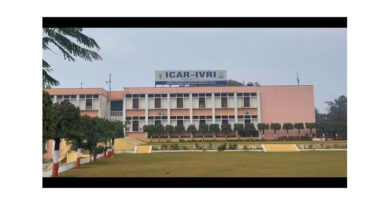
The ICAR-Indian Veterinary Research Institute (IVRI) has been placed in the 51–100 band in the Veterinary Science category, making it the only Indian institution to feature within the top 100 globally in this discipline.
Live Newsroom
Meanwhile, the ICAR-Indian Agricultural Research Institute (IARI) has been ranked in the 151–200 band in the Agriculture & Forestry category, marking its first appearance in the rankings.
Broader Indian Presence in Agriculture Rankings
India’s overall representation in the Agriculture & Forestry category has also expanded, with 10 universities featured among 475 globally ranked institutions.
Alongside IARI, institutions such as Banaras Hindu University, University of Delhi, and Indian Institute of Technology Kharagpur are placed in the 151–200 band. The Tamil Nadu Agricultural University appears in the 201–250 band, while Chaudhary Charan Singh Haryana Agricultural University has entered the rankings in the 301–350 band for the first time.
Strengthening India’s Agricultural Research Ecosystem
The inclusion of ICAR institutions reflects ongoing efforts to enhance the quality and global competitiveness of India’s agricultural research and education ecosystem. ICAR has been working to strengthen multidisciplinary research, improve academic infrastructure, and promote stronger linkages between science, extension, and field-level impact.
Experts note that institutions such as IARI and IVRI have gained recognition for their integrated approach—combining fundamental research with applied science and outreach programmes—particularly in areas such as crop improvement, livestock development, and climate-resilient agriculture.
A Step Toward Global Leadership
The entry of ICAR institutions into global rankings signals growing international recognition of India’s agricultural science capabilities. It also highlights the country’s focus on building skilled human capital and advancing innovation in agri-food systems.
As global challenges such as food security and climate change intensify, the rising visibility of Indian agricultural universities is expected to strengthen their role in international research collaborations and knowledge exchange.
Also Read: MIT-WPU Researchers Develop AI Models to Boost Oil Recovery Amid Global Energy Volatility
Global Agriculture is an independent international media platform covering agri-business, policy, technology, and sustainability. For editorial collaborations, thought leadership, and strategic communications, write to pr@global-agriculture.com