UC Trial Finds Microbial Biostimulant Boosts Bok Choy Nitrogen Uptake
05 October 2026, California: A field trial run by University of California Cooperative Extension (UCCE) specialists in Stanislaus County found that a microbial biostimulant, a product designed to enhance a plant’s own natural processes rather than directly supply nutrients, helped bok choy plants take up substantially more nitrogen than untreated plants receiving the same fertilizer program, with no added yield benefit once application rates climbed above a moderate threshold.
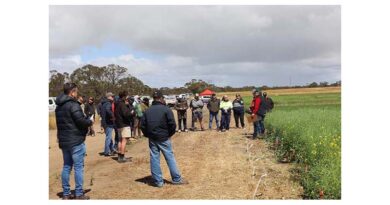
The trial was run on a commercial bok choy field near Modesto, California, and the results were published through UCCE Stanislaus County’s own research outlet on September 20, 2026. The product tested was a microbial soil and foliar inoculant containing two genera of free-living, nitrogen-fixing bacteria, Azospirillum and Azotobacter, species often grouped under the term PGPR, short for plant growth-promoting rhizobacteria. Unlike rhizobia, which fix nitrogen inside root nodules on legumes, these bacteria live freely in soil and on plant surfaces and convert atmospheric nitrogen into forms plants can use without a symbiotic root relationship, which is why they can be applied to non-legume vegetable crops such as bok choy.
Researchers Ajay Dhukuchhu, Yaritza Castrejon and Navneet Kaur of UCCE Stanislaus County, working with vegetable crops farm advisor Zheng Wang, laid out a randomized complete block trial with four replicated blocks and five treatments: an untreated control and four rates of the biostimulant, 25, 50, 100 and 150 grams per acre, applied as sequential foliar sprays. The 20 plots, each 50 feet long on 40-inch beds in loam and sandy loam soil, were seeded on April 16, 2026 and harvested 60 days later on June 15. Every plot received the same base fertility program of 115 pounds of nitrogen per acre from conventional fertilizer, so any difference in plant nitrogen status could be attributed to the biostimulant rather than to extra feeding.
By harvest, bok choy in the inoculated plots had accumulated 15 to 20 pounds more nitrogen per acre in aboveground biomass than the untreated control, even though both received identical fertilizer rates. Soil nitrate-nitrogen levels told a similar story: they rose from about 28.6 parts per million four days after seeding to a peak of roughly 47 to 53 parts per million at 28 days after seeding, before tapering off later in the cycle as the crop consumed it. The researchers also found that yield plateaued once the application rate reached 50 grams per acre, with the two higher rates of 100 and 150 grams per acre producing almost identical yield to the 50-gram rate, meaning growers would gain little practical benefit from applying more than the moderate rate.
Why the plateau matters for growers
The yield-rate plateau is arguably the most commercially useful finding in the trial. Biostimulant products are typically priced per unit of active ingredient applied, so a result showing no added benefit above 50 grams per acre gives growers and their agronomists a concrete, independently generated benchmark for setting cost-effective application rates rather than defaulting to label-maximum doses. The trial did not test or name a single commercial brand, since Azospirillum and Azotobacter based inoculants are sold by multiple suppliers as a generic microbial category rather than as one proprietary product, which limits how directly the findings map onto a specific purchase decision but broadens their relevance across the wider biostimulant category.
The researchers framed the work as an early step rather than a final answer. A single-season, single-location trial cannot establish how consistently these nitrogen gains would hold across different soils, climates or bok choy varieties, and the team did not report whether the extra nitrogen uptake translated into measurable differences in marketable yield, crop quality or input cost savings beyond the plateau observation itself. Multi-site, multi-season replication would be needed before the result could support a broad fertilizer-reduction recommendation for commercial growers.
Also Read: Indonesia Raises October Palm Oil and Cocoa Reference Prices
Global Agriculture is an independent international media platform covering agri-business, policy, technology, and sustainability. For editorial collaborations, thought leadership, and strategic communications, write to pr@global-agriculture.com