USDA Breaks Ground on $3.7 Billion Louisiana Ammonia Plant in Push for Fertilizer Independence
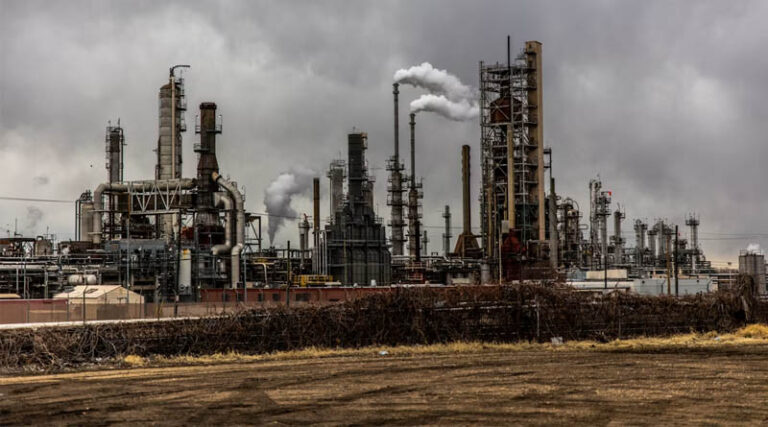
01 September 2026, Washington, D.C.: US Secretary of Agriculture Brooke Rollins and Deputy Secretary Stephen Vaden joined industry and state officials on August 26 to break ground on Blue Point One, a $3.7 billion low carbon ammonia plant on the west bank of the Mississippi River near Donaldsonville, Louisiana. Once complete, the facility is expected to be the world’s largest ammonia plant by capacity, producing 1.4 million metric tons of ammonia a year, enough nitrogen, according to Rollins, to support roughly 6.7 million acres of American corn production.
The project is a joint venture between CF Industries, which holds 40 percent, Japan’s JERA at 35 percent, and trading company Mitsui at 25 percent. CF Industries is putting up the $3.7 billion in direct project costs, plus an additional $550 million over four years for shared infrastructure covering storage, vessel loading, and future expansion capacity. Construction is expected to run four years, creating 3,900 construction jobs and more than 100 permanent positions once the plant begins operating in 2029.
Rollins called the groundbreaking part of the administration’s push toward what officials are branding “fertilizer independence.” She said the United States currently imports roughly half of the 20 million tons of fertilizer American farmers use each year, down from a period decades ago when domestic plants supplied nearly all of it. Vaden framed the issue in security terms, saying dependence on foreign fertilizer inputs leaves the country’s food supply vulnerable. Rollins added that federal permitting for the project was compressed to about 45 days, a fraction of the timeline companies say they typically face.
The Blue Point groundbreaking coincided with new detail on a second, related project. CHS Inc. and Morocco’s OCP Group confirmed plans for what would be the first new US phosphate fertilizer plant built in roughly 40 years, at Cornerstone Energy Park in Waggaman, Louisiana. The companies put capacity at up to 1.3 million metric tons a year and investment at up to $450 million, with construction targeted to begin before the end of 2026 and production possible by late 2028. CHS executives said the joint venture has applied for funding under USDA’s new Fertilizer Investment and Expansion for Long-term Domestic Supply program, known as FIELDS, though no award has been made.
FIELDS is a $500 million grant program USDA launched on July 1 through Rural Development, using Commodity Credit Corporation authority. It offers individual awards of $15 million to $150 million to shovel ready projects that expand domestic production of nitrogen, phosphate, potash, sulfur, and other crop nutrients. USDA has said the program favors projects with private financing already in place that can be accelerated quickly, rather than early-stage proposals.
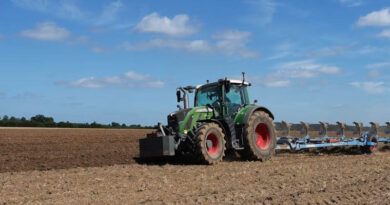
For American farmers, the announcements land during a period of elevated nitrogen and phosphate costs, with USDA data showing fertilizer accounting for roughly a fifth of production costs for corn and wheat. Whether Blue Point One or the Louisiana phosphate project change that picture is a question for the back half of this decade, since both are years from commercial output. In the near term, the announcements function mainly as a policy signal that Washington intends to keep domestic fertilizer capacity as a standing priority alongside trade and tariff policy.
Global Agriculture is an independent international media platform covering agri-business, policy, technology, and sustainability. For editorial collaborations, thought leadership, and strategic communications, write to pr@global-agriculture.com