Science-Based Scaling Strategies and Mapping to Accelerate Dry Direct-Seeded Rice Adoption in Central Luzon, PH
01 September 2026, Philippines: The International Rice Research Institute (IRRI) and the Bataan Peninsula State University (BPSU) have launched a new research initiative to accelerate the adoption of Enhanced Dry Direct-Seeded Rice (eDDSR) Project in Central Luzon, particularly in rainfed and tail-end irrigated areas.
Funded by the Department of Agriculture National Rice Program through the Bureau of Agricultural Research (DA-BAR), Philippines, the eDDSR Project or the “Adoption of Innovation Packaging and Scaling Readiness (IPSR) and Development of a Suitability Map for Dry Direct-Seeded Rice (DDSR) for Scaling Pathways,” intend to develop science-based scaling strategies, generate a regional DDSR suitability map, and strengthen the capacity of local stakeholders to promote climate-resilient and cost-efficient rice farming.
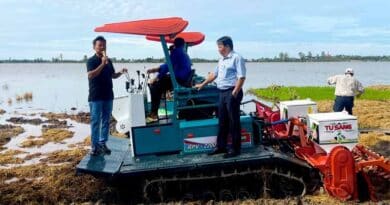
Direct seeding is where rice seeds are sown directly into the field, as opposed to the traditional method of growing seedlings in a nursery, then transplanting into flooded fields. Among its types, dry direct-seeded rice (DDSR), is sowing ungerminated seeds directly into dry soil while mechanized dry direct seeded rice (mDDSR) involves sowing rice seeds directly into the field using specialized machinery.
Direct-seeded rice, all types combined, is already practiced on about 1.9 million hectares, or roughly 40% of the Philippines’ harvested rice area. Studies show that proper implementation of DDSR can reduce labor requirements by up to 50% and lower production costs by US$ 120 ha –1 compared with traditional transplanting methods
Meanwhile, mDDSR has shown yield advantages compared with traditional broadcasting methods. For one, BPSU demonstrations in Central Luzon observed approximately 0.57 tons per hectare higher yields from mDDSR compared with manual broadcast DDSR, a variation of DDSR where seeds are manually broadcasted into the field.
Over the next year, the project will assess the current adoption of eDDSR, a complete science-based production package, in seven key provinces in Central Luzon, namely; Aurora, Bataan, Bulacan, Nueva Ecija, Pampanga, Tarlac, and Zambales. From land preparation to harvesting, eDDSR involves precision technologies and management practices that will help increase yield and lower production costs across rainfed and tail-end irrigated rice fields.
The eDDSR Project will identify barriers and opportunities for scaling among farmers, extension workers, and value chain actors. It will also determine where the technology is most suitable and where it can deliver the greatest impact and return on investment. The project team will also co-develop science-based scaling strategies and policy options with partners.
“Labor scarcity, water scarcity, rising production costs, and climate change are driving the need to adopt dry DSR. Dry DSR will help reduce production costs, strengthen climate resilience, lower greenhouse gas emissions, and potentially create new opportunities through carbon markets,” said Dr. Alisher Mirzabaev, IRRI Senior Scientist and eDDSR Project Lead.
“National data show that only about 8% of DSR adopters in the Philippines currently practice dry DSR. Suitability mapping will help identify locations and the full potential for scaling,” he added.
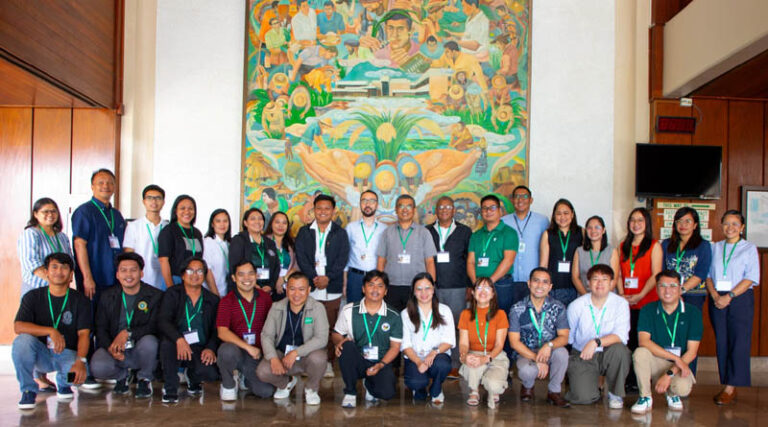
The eDDSR Project was launched during the inception meeting held at IRRI headquarters in Los Baños, Laguna, where representatives from the DA Regional Field Office III, DA Agricultural Training Institute–Regional Training Center III, the Philippine Rice Research Institute (DA-PhilRice) and provincial local government units in Central Luzon attended.
“It is an opportunity for us at BPSU, working with our farmers, to work hand in hand with the IRRI and its experts, to deliver the right technology for our farmers. Hopefully, we can help enhance DSR and eventually bring this to the ground to make it more usable to our farmers, especially in rainfed areas—not only in Central Luzon, but in the whole country, experiencing problems on water scarcity,” said Dr. Jonathan Lacayanga, BPSU Project Lead.
Global Agriculture is an independent international media platform covering agri-business, policy, technology, and sustainability. For editorial collaborations, thought leadership, and strategic communications, write to pr@global-agriculture.com