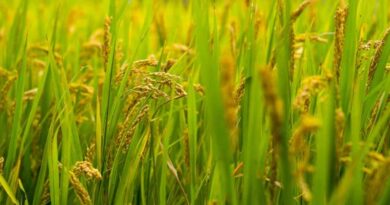
New direct-seeded rice varieties developed by ICAR and IRRI aim to cut water use, reduce labor, and strengthen climate resilience as India shifts toward more sustainable rice production systems.
02 June 2026, Hyderabad: Two new rice varieties developed for dry direct-seeded rice (DSR) systems have been identified for release in India, marking an important step toward helping farmers grow rice with less water, less labor, and lower greenhouse gas emissions.
One of the newly identified lines, DRR Dhan 92, combines traits for crop establishment, stress tolerance, pest and disease resistance, and grain quality. In national trials, it yielded 5.8 t/ha under direct-seeded conditions, about 18% higher than the popular variety, MTU 1010, and 5.74 t/ha under transplanted conditions. The variety has been identified for release in northeastern India through the All India Coordinated Research Project on Rice (AICRIP).
A second line, CR Dhan 217, has also shown strong promise, delivering average yields of about 5.9 t/ha in national trials and up to 8.7 t/ha under favorable conditions in eastern India. With a maturity period of approximately 118 days, the variety is well-suited to regions where planting and harvesting schedules are closely aligned with the monsoon. Its performance has led to its identification for release in eastern and central India through AICRIP.
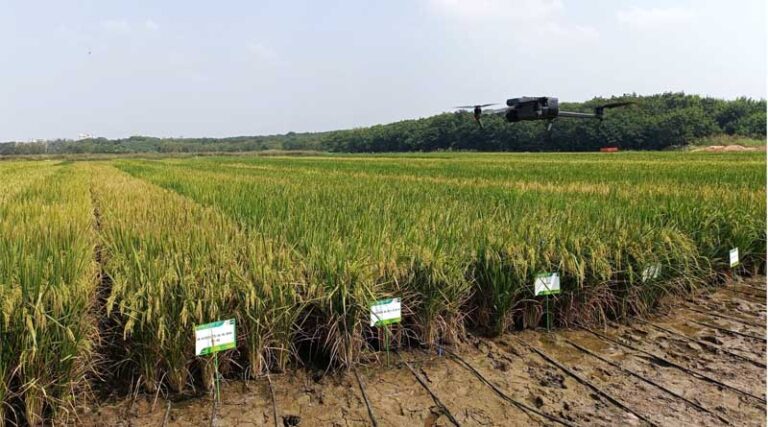
Unlike traditional rice cultivation, which typically involves transplanting seedlings into flooded fields, DSR sows seeds directly into the soil. This method can lead to a 20-30% reduction in water usage, lower labor requirements, and decreased methane emissions. However, the adoption of DSR has been limited because most rice varieties currently in use were not developed for the more challenging conditions associated with direct seeding.
To address this gap, researchers used genomic tools to combine more than 19 genes associated with crop establishment, stress tolerance, resilience, and grain quality. The resulting varieties were designed specifically for direct-seeded production systems, with traits such as the ability to establish under flooded or low-oxygen conditions, vigorous early growth to suppress weeds, stronger stems to reduce lodging, and stable performance across diverse environments.
For Dr. Michael Quinn, IRRI’s Research Director of Rice Breeding Innovations, this work removes one of the biggest bottlenecks in direct-seeded rice. “Many farmers recognize the benefits of direct-seeded rice. However, adopting this improved approach has been challenging without varieties specifically developed to perform well under direct-seeding conditions,” he said.
He emphasized, “These new varieties enable farmers to adopt a more productive, sustainable, and efficient rice production system.”
India’s National Agricultural Research Systems under ICAR has played a central role in partnering in their development and evaluation across diverse agro-ecological zones.
“What is important here is not just a single high-performing trial, but consistent performance across environments,” said Dr. R. M. Sundaram Director of the ICAR-Indian Institute of Rice Research (IIRR).
“This is where long-term collaboration between ICAR and IRRI, supported by funding from ICAR-IRRI collaborative workplan and through India’s national testing system, becomes critical in moving innovations from breeding pipelines to farmers’ fields,” he added.
Support from public research funding has also been key to the development process.
“Sustained investment in genomic-assisted breeding has allowed us to design varieties for emerging production systems like DSR, rather than retrofitting older ones. It’s driven by vision of more crop per drop,” said DBT Program Officer Sanjay Kalia. “The outcome is not just improved genetics, but technologies that are aligned with everyday constraints in farmers’ fields.”
DRR Dhan 92 and CR Dhan 217 were selected for release after three years of national testing, representing a significant advance in the development of rice varieties tailored for direct-seeded production systems. DRR Dhan 92 was developed through support from India’s Department of Biotechnology (DBT) under the ICAR-IRRI partnership, while CR Dhan 217 was developed with financial support from the Asian Development Bank (ADB), Manila, and the Government of Finland.
The release of the two varieties, expected following formal notification from the Government of India, comes at a time when groundwater depletion, labor shortages, and erratic rainfall are reshaping how rice must be grown. If adopted at scale, they could help make DSR a more viable mainstream option, offering farmers a way to maintain productivity while using fewer resources and reducing environmental impact.
More broadly, they signal a transition in rice breeding itself, from incremental adaptation to system-focused design, shaped jointly by ICAR, IRRI and India’s biotechnology programs over more than a decade of collaboration.
Global Agriculture is an independent international media platform covering agri-business, policy, technology, and sustainability. For editorial collaborations, thought leadership, and strategic communications, write to pr@global-agriculture.com