Beyond Pesticides: Understanding the Real Causes of India’s Agricultural Export Rejections
Guest Author – Harish Mehta, Senior Advisor, Crop Care Federation of India (CCFI)
19 July 2026, New Delhi: Despite having a multitude of export promotional bodies, there is no official source in India on Indian agriculture export rejections. Limited and repetitive information available in the print and social media often lead to disinformation and misinformation that drive public opinion and policy decisions. Unknown to many, the United Nations Industrial Development Organization (UNIDO) maintains a robust database on export rejections under the Harmonized System (HS) code. Analysis of the same provides useful insights into the most common causes behind India’s agriculture export rejections. Crop Care Federation of India (CCFI) has conducted one such analysis using UNIDO data.
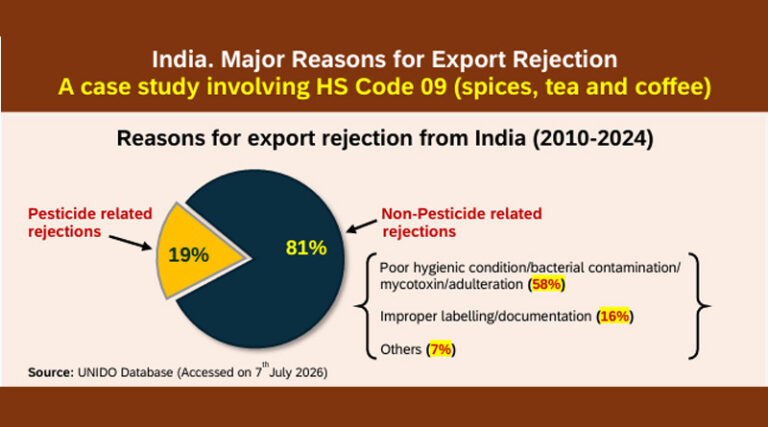
Analyzing last 14 years data it is evident 81% rejections are related to non-pesticides, whereas only 19% rejections can be attributed to pesticides.
It must be clearly understood that Chemical and Pesticide Residues could be due to
- Excessive MRLs:Exceeding the Maximum Residue Limits (MRLs) for pesticides set by importing nations which is at variance with our standards.
- Banned Substances:Traces of forbidden chemicals like ethylene oxide, methamidophos, or unauthorized preservation agents not supposed to be used.
- Heavy Metals:Dangerous levels of contaminants like lead, arsenic, or cadmium in soil and water transferring to crops.
- Antibiotics:Traces of unapproved veterinary drugs or growth hormones in livestock, fruits and aquaculture products.
Another reason reported is Biological and Microbial Contamination
- Pathogens:Presence of harmful bacteria like Salmonella, E. coli, or Listeria.
- Mycotoxins:Fungal toxins, such as aflatoxins, which develop due to poor drying or high-humidity storage.
- Pest Infestation:Detection of live insects, larvae, weeds, or internal parasites during border quarantine checks.
Labeling and Packaging Errors also contributed to rejections, mostly unintentional.
- Missing Allergens:Failure to clearly declare common allergens on the product packaging which is mandatory.
- Incorrect Formatting:Non-compliance with the specific nutrition panel styles or languages required by destination markets.
- Poor Insulation:Weak packaging materials that cause temperature fluctuations, leading to structural rot or moisture buildup during transportation and storage
Documentation and Traceability Issues like:
- Missing Paperwork:Lack of authorized phytosanitary certificates, origin records, or required testing reports from accredited/ approved laboratories.
- Traceability Failure:Inability to map out a clear “farm-to-fork” supply trail requested by strict trade zones like the European Union.
- GMO Presence:Detection of Genetically Modified Organisms in shipments designated or labeled as non-GM which should not be the case for Indian imports as we have not approved GM crops for commercial use.
Physical Product Quality and Presentation affects exports:
- Uneven Maturity:Inconsistent color, size, or ripening stages within a single commercial batch.
- Adulteration:Mixing foreign matter, insect fragments, rodent hair, or unauthorized dyes into processed food goods.
Diversified Exports
We export several agriculture commodities like Rice (Basmati and Non-Basmati), Spices (Black pepper, Saffron, Turmeric, Cinnamon), Cereals, Fresh Fruits (Mangoes, Banana, Dragon fruit), Millets, Sugar, Tea, Coffee, Marine Products, Buffalo meat, Raw cotton and high value processed foods including ready to eat meals, ethnic groceries, beverages are witnessing a progressive shift in value added growth.
Spices: Rejected for high levels of unapproved pesticides (like ethylene oxide), heavy metals, and traces of pathogens like Salmonella.
Rice: Rejected by authorities in countries like China due to excessive pesticide residues, high moisture content, or pest infestations.
Mangoes: Consignments sent to countries like Japan and the US face bans or destruction over fumigation lapses, quarantine compliance failures, or incorrect/missing customs documentation.
Marine Products (Shrimps/Fish): Often face import alerts in the US and EU due to banned veterinary drug residues, unapproved antibiotics, and filth or decomposition.
Vegetables & Nuts: Products such as grapes, peanuts, and okra are frequently held up at borders for containing fungal infections.
Our Destination Markets
As observed Indian agri-exports frequently face rejections in major markets like EU, UAE, Saudi Arabia, US, and China. Primary reasons include excessive pesticide residues (e.g., ethylene oxide), microbial contamination (Salmonella), heavy metals, and documentation or labeling errors. Also at times unfair competition affects business transaction to malign the exporting country.
The rejection of Indian agri-products is often driven by non-compliance with the strict food safety standards and phytosanitary regulations of destination countries.
While pesticide residues often make headlines, bacterial contamination, poor hygienic condition, mycotoxins, adulteration and labeling are among the major reasons triggering export rejections.
Pesticide residue related rejection often arises due to adoption of MRLs that are not science based and inconsistent with the WTO-SPS Agreement. Narratives biased against pesticides misguide both the public and policymakers by distorting the reality. This requires to be corrected to facilitate evidence- based and proportionated policy decisions.
India’s agriculture exports are approximately $51.2 bn, which can be doubled in next 3 years provided the rejection rate is minimized by taking proactive steps both by the exporters and Government agencies like APEDA, MPEDA, Spice Board of India, Tea Board of India, Coffee Board of India, Exim Bank of India, DGFT, etc.
Also Read: Crystal Crop Protection Launches Six New Products for Kharif 2026
Global Agriculture is an independent international media platform covering agri-business, policy, technology, and sustainability. For editorial collaborations, thought leadership, and strategic communications, write to pr@global-agriculture.com