Multifunctional Landscapes drive climate-resilient agrifood systems transformation in Zimbabwe?
19 July 2026, Zimbabwe: For many researchers, funders, and development partners working in agriculture, conversations about transformation often begin with food systems: improving production, strengthening value chains, or expanding markets. While these are critical priorities, they represent only a fraction of the complex reality. Agriculture does not exist in isolation. It is deeply embedded within landscapes shaped by interconnected water systems, ecosystems, climate dynamics, institutions, and communities. When interventions focus exclusively on food production, the broader ecological and social dynamics that ultimately determine whether those systems succeed or fail are frequently overlooked.
This narrow focus has historically led to fragmented, sector-based responses to interconnected challenges such as food insecurity, biodiversity loss, land degradation, and climate vulnerability. For decades, investments have often pursued productivity, conservation, or climate mitigation in isolation. Consequently, these siloed approaches have frequently resulted in unintended trade-offs, where gains in agricultural yield undermine ecosystem health or water availability. The core challenge has not been a lack of solutions, but the absence of systems thinking and integrated approaches capable of managing these trade-offs and unlocking synergies at the scale where these challenges intersect: the landscape.
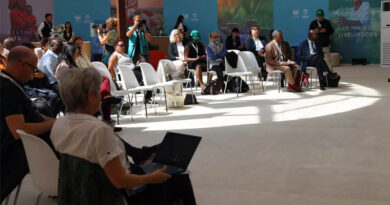
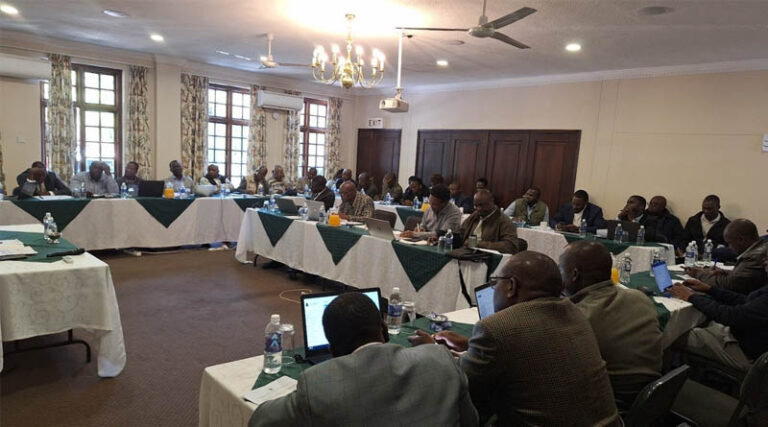
This broader perspective was reaffirmed during the recent Science–Policy dialogue on Climate-Resilient Agrifood Systems Transformation in Zimbabwe held in Harare. Building on the earlier Review of Zimbabwe’s Agricultural Policy Priorities Workshop, the dialogue brought together policymakers, researchers, and practitioners to reflect on how Zimbabwe can move from policy ambition to implementation. What emerged from both engagements was not that Zimbabwe lacks policy direction, but that the next critical step lies in strengthening coordination around how existing policy priorities are operationalised.
Zimbabwe currently possesses fit-for-purpose policy frameworks designed to guide agrifood transformation. National strategies, notably the Agriculture, Food Systems and Rural Transformation Strategy 2 (AFSRTS-2) for 2026-2030 and the National Development Strategy 2 (NDS2), explicitly recognise the interconnected roles of agriculture, water, natural resources, climate resilience, rural livelihoods, and social inclusion. Multifunctionality is, therefore, not absent from policy thinking. At first glance, some sectoral priorities within these frameworks may appear to pull in different directions, but this does not point to weak policy design. Rather, it highlights the urgent need for better coordination in operationalisation.
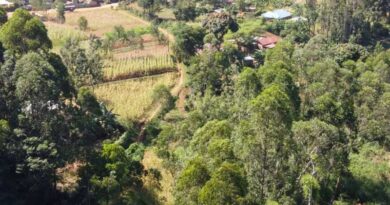
This is where the concept of Multifunctional Landscapes (MFL) becomes highly relevant. The challenge is not to introduce an entirely new framework, but to utilise MFL as a coordination lens for implementing policies across sectors that already share common development goals. A multifunctional landscapes approach helps shift attention from isolated sectoral delivery to shared outcomes within the same geographical space. It encourages stakeholders to view landscapes as complex, interlinked social-ecological systems where ecological processes, production systems, governance arrangements, markets, and social relations converge.
Operationalising AFSRTS-2 and NDS2 requires strategic entry points that address Zimbabwe’s specific vulnerabilities while leveraging new opportunities. The dialogue highlighted several critical enablers that must be integrated within the MFL framework:
Irrigation Development in response to climate variability: The drier regions of Zimbabwe experience drought in three out of every five years, a frequency exacerbated by climate change and intense El Niño events. Irrigation must be approached not merely as infrastructure expansion, but as an integrated component of water governance, energy use, ecosystem sustainability, and community resilience.
Digital Tools and Artificial Intelligence: Advanced technologies offer significant opportunities for optimising agricultural practices. AI and digital advisories can support the cultivation of opportunity crops that are drought-tolerant, providing farmers with timely information on climate, pests, and production. These tools are essential for monitoring landscape health and supporting decision-making in highly variable environments.
Unlocking opportunities for women and youth: Resilient agrifood systems cannot be built while key actors remain constrained. As food systems formalise, youth employment in traditional agriculture often declines. Drawing insights from the CGIAR Agroecology Initiative, interventions must focus on creating sustainable enterprises and off-farm employment within agricultural value chains, particularly for young women. This requires deliberate inclusion in access to land, finance, technology, and decision-making processes.
Production stability and nutrition security: Climate-resilient crops, particularly small grains, indigenous crops, and diversified cropping systems, must be evaluated beyond yield performance. Their integration into local food systems impacts markets, processing capabilities, and community nutrition, contributing to overall production stability.
Climate finance for sustainability incentives: The real challenge is often not the absolute absence of funding, but the capacity to access and structure it around transformation priorities. Climate finance must be aligned to incentivise sustainable practices, such as soil carbon sequestration and biodiversity conservation, providing tangible economic benefits for communities adopting regenerative approaches.
Operationalising NDS2 through the MFL thinking requires clear pathways that demonstrate what needs to be done, how it should be achieved, and who must be involved. The CGIAR Multifunctional Landscapes Science Program, which includes Zimbabwe as a strategic country, offers a practical blueprint for this transition. The key point is that agrifood transformation happens in real places, shaped by real interactions between land, water, ecosystems, markets, and people. Those interactions need to be managed intentionally. The pathways for implementation involve several key components:
Firstly, establishing landscape-level rules of engagement and coordination platforms. These do not require entirely new institutions but involve creating shared evidence systems and joint planning processes that help different actors align around common outcomes. Secondly, prioritising capacity building and knowledge management. There is a critical need to translate scientific research into practical toolkits for farmers and extension officers. Training must explicitly link agroecological principles with regenerative practices, ensuring land managers can assess soil health and evaluate the economic returns of their interventions.
Thirdly, engaging in policy coherence and interaction analysis. This involves deliberately examining where policies reinforce one another, where implementation mandates overlap, and where coordination is necessary to manage trade-offs and build synergies. Finally, implementation must occur at scale, guided by the 13 interconnected agroecological principles promoted by the CGIAR Agroecology Initiative. This system’s approach ensures that interventions manage trade-offs across production systems, biodiversity conservation, and social equity.
Ultimately, operationalising NDS2 and AFSRTS-2 through a multifunctional landscapes approach is not about replacing what already exists. It is about providing a coherent, systems-based methodology for implementing what is already there. If national strategies provide the development direction, then MFL offers the most robust blueprint for turning that ambition into coordinated, resilient action on the ground.
Also Read: Crystal Crop Protection Launches Six New Products for Kharif 2026
Global Agriculture is an independent international media platform covering agri-business, policy, technology, and sustainability. For editorial collaborations, thought leadership, and strategic communications, write to pr@global-agriculture.com