Where food, nature and livelihoods meet: CGIAR Multifunctional Landscapes at Tropentag 2026
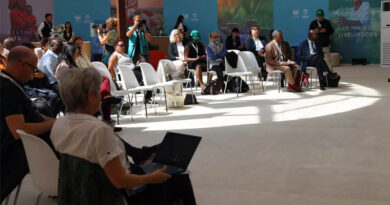
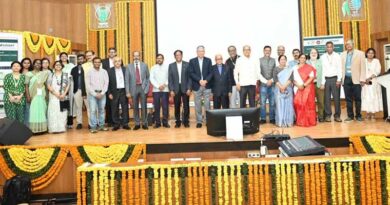
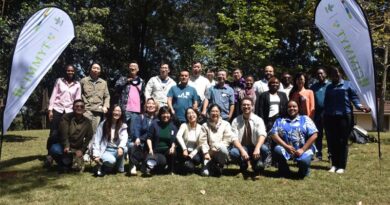
17 September 2026, Germany: From 15 September, when the pre-conference programme begins, through 18 September, CGIAR scientists and partners will join researchers, policymakers, practitioners and students from around the world in Göttingen, Germany, for Tropentag 2026. Hosted by Göttingen and Kassel universities for this year, Tropentag is an annual forum for scientific dialogue on sustainable agriculture, food security, natural resource management and rural development in the tropics.
This year’s hybrid gathering will bring together early-career researchers and senior scientists and practitioners from more than 70 countries into discussion for co-learning and experience sharing. Its theme, “Towards multi-functional agro-ecosystems promoting climate-resilient futures”, examines how agriculture, forestry and other land-use systems can remain productive, improve livelihood, while responding to climate and environmental pressures.
Why this conversation matters
For CGIAR, Tropentag matters because it is an opportunity to showcase advances in scientific research on land, water and food systems in the tropics, and highlight research gaps to inform further research priorities. CGIAR science is at its strongest when it connects the challenges and opportunities that shape landscapes and livelihoods. Drought-resilient agriculture depends on crops, water, grazing and household decisions; restoration endures when it is supported by secure tenure and community leadership; and promising innovations can scale when markets, institutions and incentives align. Tropentag creates space to examine these connections and turn scientific insight into practical pathways for action for applications, policies and investments.
The scientific case for looking at these connections together is strong. The IPCC Sixth Assessment Report documents how climate change is already affecting food and water security. The UNCCD Global Land Outlook 2 shows that reversing land degradation also depends on policy, tenure, governance and finance. The IPBES Nexus Assessment traces the links among biodiversity, water, food, health and climate. At Tropentag, CGIAR analyses what it takes to relate the evidence to decision-making across regions, sectors and disciplines.
The case for looking at the whole landscape
Tropentag 2026 spotlights the CGIAR Science Program on Multifunctional Landscapes in its agenda, making the conference one of the Program’s flagship moments of the year for sharing science, convening partners and building new collaborations.
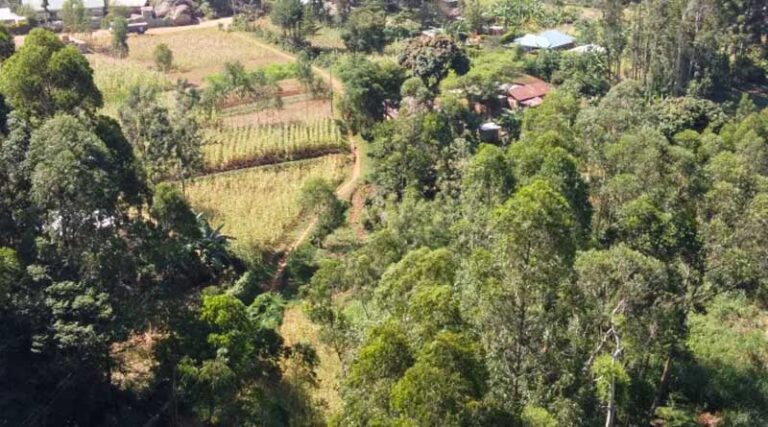
The 2026 theme closely matches the mandate of the CGIAR Science Program on Multifunctional Landscapes. CGIAR Multifunctional Landscapes begins from the reality that food production, water, biodiversity, restoration, livelihoods, governance and investment meet in the same landscapes, though the policies and institutions governing them are often fragmented. Our science helps partners understand the trade-offs created by those separate decisions and find opportunities to enhance synergies.
That work combines participatory planning and modelling with agroecological solutions, governance and tenure analysis, markets and sustainable finance, and better ways to monitor change. Through Living Landscapes, researchers work with landscape actors to design and test combinations of solutions that fit their priorities and conditions. This speaks directly to the conference theme: how can landscapes support people and production while recovering the ecological functions on which both depend?
What CGIAR is bringing to Göttingen
The preliminary programme features 134 CGIAR-affiliated contributions: 35 oral presentations and keynotes, 66 posters and 33 online presentations. CGIAR science runs through the wider programme, covering crop improvement, livestock and water management, climate adaptation, food and nutrition, biodiversity and restoration, digital innovation, gender and youth, markets and finance. This breadth helps connect evidence across agrifood and landscape systems.
Within that wider contribution, CGIAR Multifunctional Landscapes will bring science focused on the path from landscape ambition to implementation. In his keynote on connecting food, nature, livelihoods and governance at scale, CGIAR Multifunctional Landscapes Director Lulseged Tamene Desta will examine how separate projects and institutions make it difficult to manage linked decisions on land, water, food, markets and governance. He will present CGIAR MFL’s approach to developing context-specific combinations of solutions and making trade-offs more visible to decisionmakers, while optimizing synergies.
The hybrid workshop Towards Multifunctional Landscapes and Resilient Communities will focus on the conditions that allow those approaches to work. Participants will underscore the issues associated with fragmented governance, weak indicators, limited finance, insecure land tenure and unequal participation, and highlight practical entry points for stronger rights, participatory monitoring, policy integration and long-term partnerships.
The MFL scientific session on multifunctional agro-ecosystems, chaired by Cargele Masso, will bring together research on multi-actor planning, biodiversity and ecosystem services on smallholder farms, digital landscape investment planning, consumer demand for agroecological products and gaps in landscape-impact assessment. The common purpose is to improve how landscapes are planned, how investment is directed and how progress is measured beyond production or hectares restored. The session will ground this discussion in case studies from Kenya, Tunisia, Colombia and India, showing how landscape intelligence, participatory visioning, citizen deliberation, integrated water and soil restoration, and women-led agroecological models can help identify priorities, co-design solution bundles and generate evidence for scaling.
An online session on gender equality and inclusion in food, land and water systems by 2050 will examine the social and institutional conditions behind a fair transition. Research on resource rights, resilience, digital inclusion and young women’s agency will ask whose priorities shape change, who bears its costs and who is able to benefit. Those questions matter because transitions are more likely to endure when the people most affected have a meaningful role in them.
On the afternoon of 17 September, a Friends of CGIAR gathering will offer an informal space for CGIAR colleagues to reconnect with long-standing partners, engage new collaborators, exchange ideas emerging from the conference and explore opportunities to strengthen collaborative research.
What we will be listening for
Tropentag is also a learning opportunity for CGIAR participants. For instance, the CGIAR Multifunctional Landscapes science program will be looking for methods that make trade-offs visible before decisions are taken; indicators that capture changes in production, biodiversity, climate resilience and livelihoods together; and examples of governance, tenure and finance that have helped promising approaches continue beyond the life of a project. We also want to hear where methods have not worked, which elements can travel across contexts, and which must remain locally designed.
We hope to return with sharper research questions, stronger measures of change, tools worth adapting and testing in MFL’s Living Landscapes, and new collaborations that connect community priorities with policy and investment, for adaptive research. The clearest value of Tropentag will come after Göttingen, through the evidence, methods and relationships that strengthen the next phase of work, which will shape the science program planning for 2027 and beyond.
Explore CGIAR Multifunctional Landscapes at Tropentag 2026 to find the sessions, presentations and opportunities to connect with CGIAR scientists and partners in Göttingen and online.
Global Agriculture is an independent international media platform covering agri-business, policy, technology, and sustainability. For editorial collaborations, thought leadership, and strategic communications, write to pr@global-agriculture.com